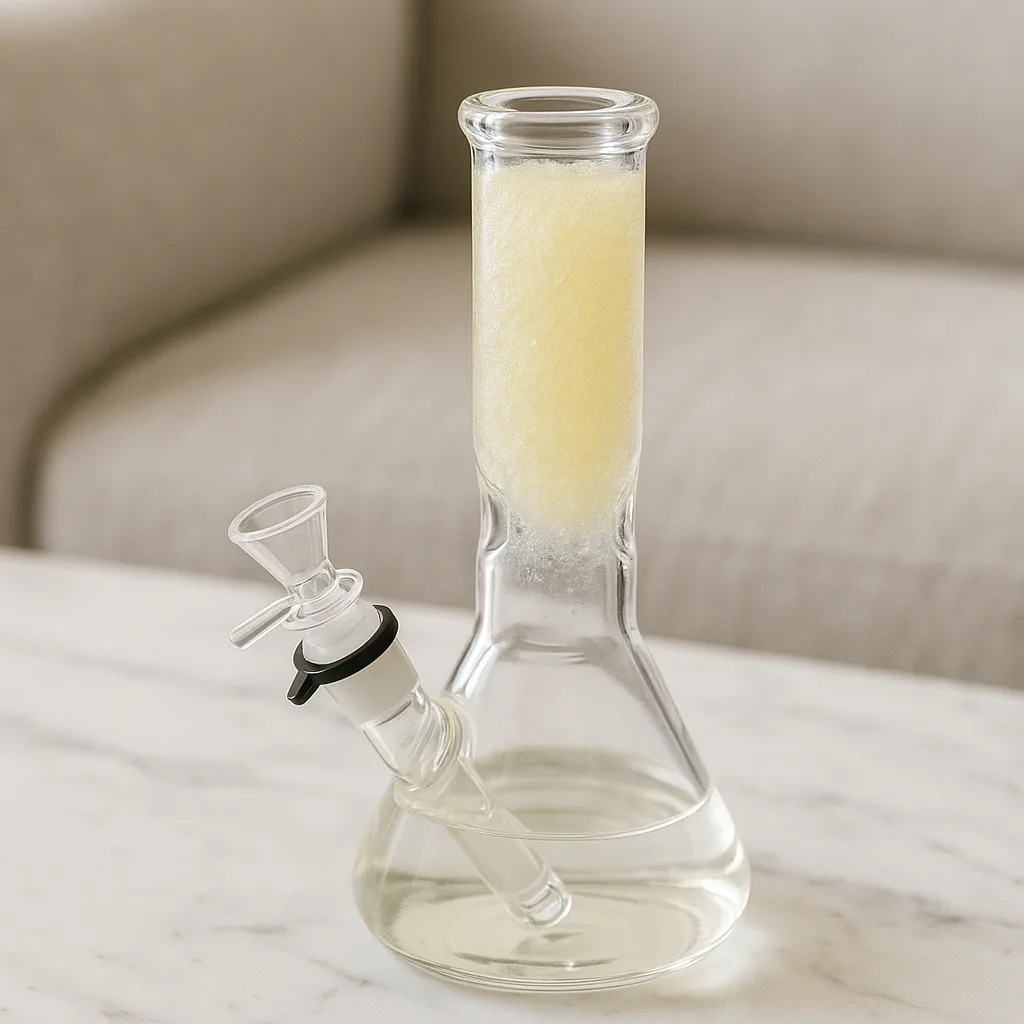
I get this question all the time from shop owners and curious smokers: “Does glycerin actually freeze? And if it does, why don’t my glycerin bong coils turn into a solid block?” It’s a fair question — because glycerin behaves differently from water, and most people expect it to act the same way.
Pure glycerin does freeze, but at a much lower temperature than water — around 17-18°C (62-64°F). However, the glycerin used in bong coils and freeze pipes is rarely pure. It’s mixed with water and sealed inside a glass tube. That mixture has a dramatically different freezing point — and it never turns rock‑solid like an ice cube.
I’m Frank from CloverGlass. I’ve shipped thousands of glycerin bongs and answered this same question for years. Let me clear up the confusion once and for all.
Contents
- 1 Does Glycerin Freeze? The Short Answer
- 2 Pure Glycerin vs. Glycerin‑Water Mixtures
- 3 The Freezing Point of Glycerin‑Water Solutions – By the Numbers
- 4 Why 66.7% Glycerin Is the Magic Number
- 5 What Does “Frozen” Glycerin Look and Feel Like?
- 6 How This Impacts Your Glycerin Bong or Freeze Pipe
- 7 Practical Tips for Freezing and Using Glycerin Coils
- 8 The Bottom Line for Smoke Shops and Daily Users
- 9 Conclusion + CTA
- 10 FAQ
Does Glycerin Freeze? The Short Answer
Yes, glycerin freezes — but not like water. Pure glycerin has a freezing (melting) point of approximately 17-18°C (62-64°F). That means it freezes at a temperature that is actually warmer than your kitchen countertop on a cool day. Wait — that sounds counterintuitive, right?
Here‘s the catch: pure glycerin is notoriously difficult to freeze in practice because it strongly tends to supercool — meaning it stays liquid even when the temperature drops below its freezing point. It resists forming ice crystals. Once it does freeze, it doesn‘t turn into a hard block like water; it forms a soft, gummy, paste‑like semi‑solid[reference:0].
But the glycerin used in your bong or freeze pipe is not pure. It‘s almost always a water‑glycerin mixture, and that‘s where the real science gets interesting — and useful.
Pure Glycerin vs. Glycerin‑Water Mixtures
When water is added to glycerin, the freezing point of the mixture drops dramatically. This is the same principle that makes antifreeze work in your car’s radiator.
- Pure glycerin: Freezes at around 18°C, but tends to supercool and forms a soft paste.
- Glycerin‑water mixture: The freezing point can be as low as -46.5°C, depending on the ratio[reference:1][reference:2].
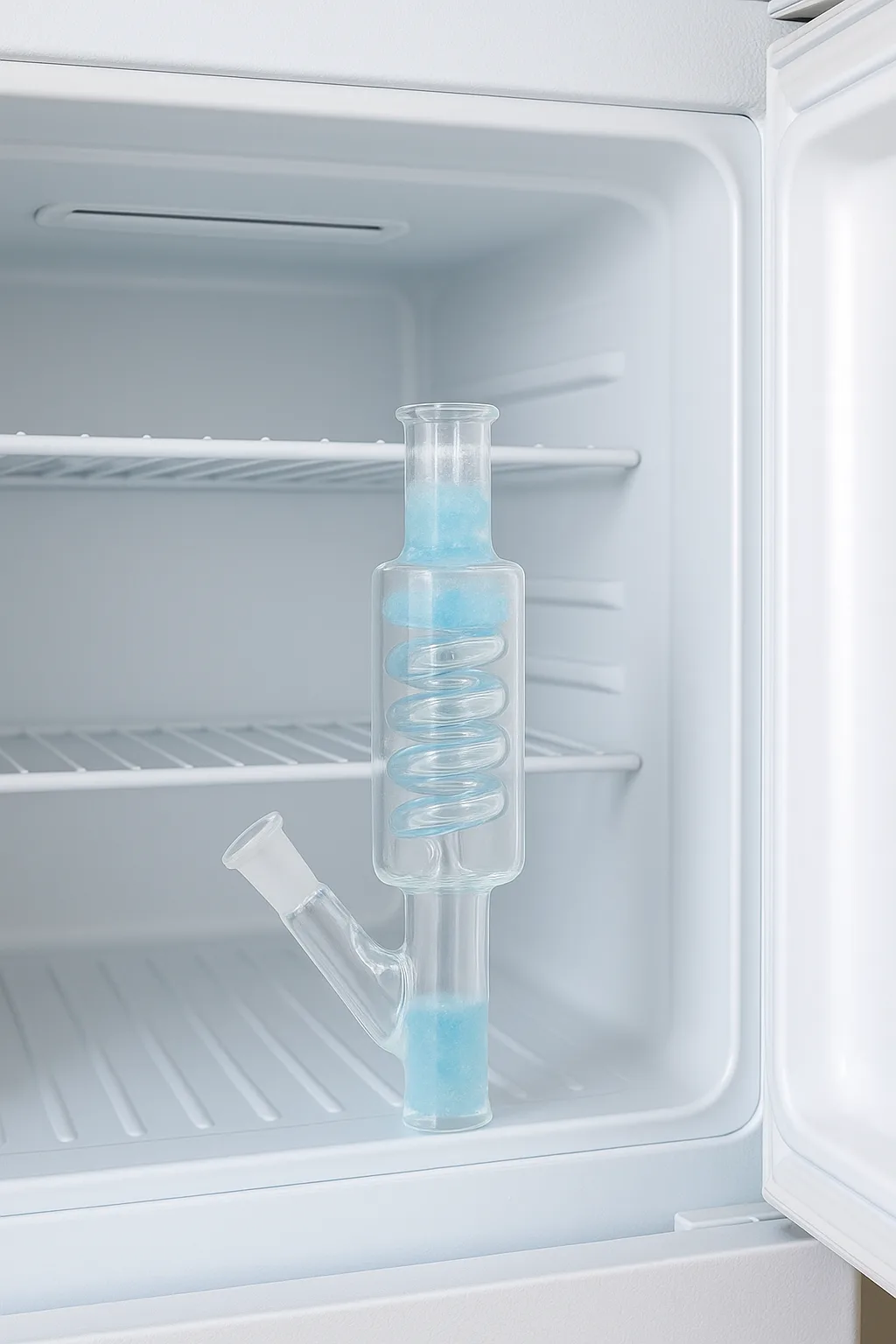
That‘s why your glycerin bong coil doesn’t turn into a solid brick in your freezer. The mixture is specifically formulated to stay in a thick, gel‑like, super‑cooled state — perfect for chilling smoke without the risks of a solid block of ice inside glass.
The Freezing Point of Glycerin‑Water Solutions – By the Numbers
Here’s a practical table showing how different glycerin/water ratios affect the freezing point. These values are well‑established in chemical engineering and are used to formulate everything from antifreeze to freeze pipes.
| Glycerin Concentration (% by weight) | Freezing Point (°C) | Freezing Point (°F) |
|---|---|---|
| 10% | -1.6°C | 29°F |
| 30% | -9.5°C | 15°F |
| 50% | -23.0°C | -9°F |
| 66.7% | -46.5°C | -52°F |
| 80% | -20.3°C | -5°F |
| 90% | -1.6°C | 29°F |
[0†L17-L18][1†L4-L5][4†L7-L9]
Why 66.7% Glycerin Is the Magic Number
The table shows something surprising: the freezing point keeps dropping until you reach a glycerin concentration of 66.7%. At that ratio, the freezing point hits its minimum — an incredibly low -46.5°C (-52°F)[reference:3][reference:4]. If you increase the glycerin concentration beyond 66.7%, the freezing point actually starts to rise again.
This is why many commercial freeze pipes and glycerin bong coils use a mixture very close to this ratio. It gives you the lowest possible freezing point without turning the liquid into a solid paste, and it also minimizes the risk of the coil cracking due to expansion.
What Does “Frozen” Glycerin Look and Feel Like?
Unlike water ice, which is hard, brittle, and expands, frozen glycerin is:
- Soft and gummy: It becomes a thick, gel‑like paste that doesn’t shatter[reference:5].
- Non‑expansive: It won‘t crack the glass tube as it freezes (a critical safety feature for sealed coils).
- Slow to melt: It stays cold much longer than ice, providing extended cooling for multiple hits.
If you shake a frozen glycerin coil, you’ll see the contents move slowly inside — a completely normal behavior that many people mistakenly think means it’s not frozen. It is frozen. It‘s just frozen in its unique, gummy way.
How This Impacts Your Glycerin Bong or Freeze Pipe
This unusual freezing behavior is actually a feature, not a flaw. Here’s why it matters for your product:
- No glass‑cracking expansion: Water expands when it freezes, which can crack glass. Glycerin doesn’t. Your bong coil is safe.
- Gentle on handling: A frozen glycerin coil is less brittle than ice. If you accidentally bump it, it’s less likely to break.
- Long‑lasting cold: The gummy frozen state releases cold slowly, giving you 30‑60 minutes of chilled hits.
- No messy meltwater: Unlike ice, it doesn‘t drip water into your bowl or downstem.
From a manufacturing standpoint, we specifically choose this chemistry because it delivers the best balance of cooling performance, safety, and durability.
Practical Tips for Freezing and Using Glycerin Coils
If you own a glycerin bong or freeze pipe, follow these simple guidelines:
- Freeze the coil only (if detachable), or place the whole neck section in the freezer. Never freeze the entire bong.
- Freeze for 1‑2 hours — that’s usually enough to reach optimal temperature. Overnight freezing won‘t hurt, but it’s not necessary.
- Don‘t over‑freeze: Longer freezing doesn’t make it colder after a point; the glycerin reaches thermal equilibrium.
- Handle gently: Even though it‘s less brittle than ice, a frozen coil is still glass. Avoid dropping it or knocking it against hard surfaces.
- Storage: Keep your bong at room temperature when not in use. Repeated freeze‑thaw cycles won’t damage the mixture — glycerin is remarkably stable.
The Bottom Line for Smoke Shops and Daily Users
For smoke shops: Glycerin bongs are safe, reliable, and have strong upsell potential. Customers love the ultra‑cool hits, and the unique freezing behavior is part of the appeal — not a flaw. Stock replacement coils too; they’re a high‑margin add‑on that generates repeat sales.
For daily users: Your glycerin coil is doing its job even if it looks like a slushy gel rather than a solid block. That gummy state is exactly what you want — it provides intense cooling without the risk of cracking the glass.
And for the curious science buffs: glycerin’s ability to supercool and its non‑expansive freeze are the very reasons it’s used in everything from antifreeze to cryopreservation[reference:6].
Conclusion + CTA
So, does glycerin freeze? Yes — but not like water. It freezes into a soft, gummy paste at temperatures far below what your freezer can reach (if mixed correctly). That‘s precisely what makes it so effective for cooling bongs without damaging the glass.
For store owners: Glycerin bongs are a premium product with science‑backed performance. Stock them with confidence — and don’t forget to carry replacement coils for easy upsells.
For personal users: Your glycerin bong is working exactly as designed. Enjoy those ice‑cold, smooth hits — and don’t worry if the coil looks more like a gel than an ice cube. That’s the magic of glycerin.
👉 Need wholesale glycerin bongs or replacement coils? CloverGlass offers factory‑direct pricing, low MOQs, and fast LA warehouse shipping.
Get wholesale pricing: [Contact our B2B team]
Order online: [https://cloverglasspipe.com/order-glass-smoking-products-online/]
Email Frank: Fr***@********pe.com
FAQ
Q1: Does pure glycerin freeze at room temperature?
A: No. Pure glycerin freezes at about 18°C (64°F) — technically above room temperature — but it strongly tends to supercool, meaning it stays liquid unless it’s disturbed or held at that temperature for a very long time.
Q2: Why does my glycerin bong coil not freeze solid?
A: Because it’s a water‑glycerin mixture, not pure glycerin. The mixture is formulated to reach a thick, gummy, super‑cooled state — not a solid block. This prevents the glass from cracking and keeps it cold longer.
Q3: Can my glycerin bong crack in the freezer?
A: Not from the glycerin itself, because it doesn’t expand when it freezes. However, the glass can still crack if you drop it or subject it to sudden temperature changes.
Q4: How long does a glycerin bong stay cold?
A: Typically 30‑60 minutes, depending on the size of the coil and room temperature. Larger coils stay cold longer.
Q5: Can I leave my glycerin bong in the freezer overnight?
A: Yes, but it‘s unnecessary. 1‑2 hours is usually enough for optimal cooling. Overnight freezing won’t damage the glycerin, but the glass becomes more brittle the longer it stays frozen.
Q6: Why does 66.7% glycerin have the lowest freezing point?
A: That‘s the eutectic point of the glycerin‑water mixture — the exact ratio where the freezing point reaches its minimum. At that concentration, the mixture freezes at -46.5°C (-52°F)[reference:7].
Q7: Is the glycerin inside a bong coil safe?
A: Yes — it’s food‑grade glycerin, sealed inside the glass. It never touches your smoke. Even if the coil breaks, glycerin is non‑toxic, but stop using the bong immediately because of the broken glass.
Q8: Can I refreeze my glycerin bong multiple times?
A: Yes. Glycerin is chemically stable and can withstand hundreds of freeze‑thaw cycles without losing its cooling ability.
Q9: Do I need to replace the glycerin coil over time?
A: No — the glycerin itself doesn’t degrade. However, the glass coil can break if dropped. We sell replacement coils separately.
Q10: What‘s the best way to clean a glycerin bong?
A: Remove the glycerin coil. Clean the glass bong with isopropyl alcohol and coarse salt. Wipe the coil with a damp cloth — never submerge it in alcohol or put it in a dishwasher.