Contents
- 1 Are Water Bottle Bong Alternatives Better? Why Glass Water Pipes Are the Better Choice
- 1.1 1 Why People Look for Water Bottle Bong Alternatives
- 1.2 2 The Problem With Temporary DIY Devices
- 1.3 3 Why Borosilicate Glass Matters
- 1.4 4 Key Features Buyers Should Check
- 1.5 5 Glass Bowls, Downstems, and Joint Sizes Explained
- 1.6 6 Best Product Options for Smoke Shops
- 1.7 7 Wholesale Tips for Small and Mid-Sized Buyers
Are Water Bottle Bong Alternatives Better? Why Glass Water Pipes Are the Better Choice
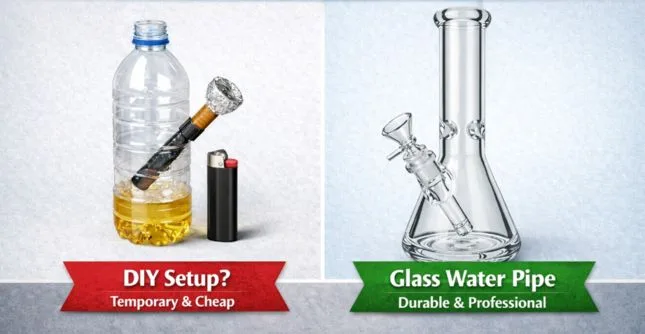
Poor product choices create returns, complaints, and lost repeat orders. Many buyers still see demand around cheap DIY-style alternatives. The real problem is that temporary devices rarely meet retail standards for safety, durability, or shelf value.
Yes. A proper water bottle bong alternative is usually a real glass water pipe made from borosilicate glass, with the right bowl, downstem, and joint fit. For wholesalers and smoke shops, glass water pipes offer better durability, cleaner presentation, more stable performance, and stronger repeat sales than temporary DIY devices.
A few years ago, one buyer asked me why low-cost improvised items kept getting attention online but failed in stores. My answer was simple: clicks are not the same as sell-through. In real wholesale, buyers need products that survive shipping, look professional on shelves, and keep customers coming back for the right reason.
[Table of contents]
1 Why People Look for Water Bottle Bong Alternatives
People search for a water bottle bong alternative because they want a low-cost, fast, simple option, but most serious buyers quickly move to real glass because it performs better, looks better, and creates fewer complaints.
When I look at this search intent from a B2B angle, I do not see a product trend I should follow blindly. I see a demand signal. It tells me buyers and end users want a simple entry point, lower upfront cost, and easy access. That is useful. But it does not mean a temporary DIY-style option is the right product to stock.
In wholesale, attention and conversion are different things. A search phrase may be popular because it is cheap, curious, or easy to understand. Yet when a customer walks into a smoke shop, they usually want something safer, cleaner, and more durable than a makeshift setup. That is where real glass water pipes start to win. They feel like an actual product, not a workaround.
For wholesalers, this matters because demand must be translated into shelf-ready inventory. I usually tell buyers to read this keyword as “entry-level functional water filtration demand.” That means you can serve the same shopper with better materials and better presentation. A simple beaker, a compact straight tube, or a durable mini rig often does the job far better than anything improvised.
Search intent is not the same as product quality
A keyword like water bottle bong alternative gets attention because it sits close to DIY curiosity. But curiosity does not create long-term retail value. Good retail value comes from consistent quality, clear sizing, safer material choices, and easy replacement parts.
That is why I recommend buyers build a product ladder. Start with affordable, simple, reliable glass. Then add mid-tier designs with stronger visual value. After that, add a few higher-margin recyclers or packaged gift-ready pieces. This turns a weak search intent into a strong buying path.
I have seen this play out many times. A buyer starts by asking for the cheapest functional item. After we review breakage risk, customer feedback, and shelf appeal, they usually switch to a basic borosilicate setup with better margins and fewer headaches. The order may cost more upfront, but it sells better and causes less trouble later.
Why entry-level buyers still choose real glass
Even budget-conscious customers notice the difference between “cheap” and “worth buying.” Glass water pipes give them a real product experience. Shops also like them because they photograph well, display well, and fit into category pages cleanly if they also sell online.
Here is the practical buyer logic I hear most often:
- [ ] Better shelf appeal than temporary DIY substitutes
- [ ] Easier to price and position by size and thickness
- [ ] Clear replacement path for bowls and downstems
- [ ] Better packaging options for retail or online sales
- [ ] Lower risk of disappointing first-time buyers
That is why, in my view, the smart response to this keyword is not to copy the DIY idea. It is to guide buyers toward better products that answer the same need with fewer problems.
2 The Problem With Temporary DIY Devices
Temporary DIY devices attract attention because they seem cheap and easy, but they are unstable, inconsistent, hard to clean, and poor for retail, which makes them a weak choice for serious buyers.
The biggest issue with temporary DIY devices is inconsistency. In wholesale, consistency is everything. A smoke shop cannot build repeat demand around a category that feels random, unsafe, or disposable in the wrong way. Customers may experiment once, but they do not usually come back asking for an improvised solution with no standard fit, no tested packaging, and no reliable replacement parts.
From a product quality angle, temporary DIY devices often fail on the basics. Material quality is unclear. Heat handling is poor. Fit between parts is loose. Cleaning is difficult. Even the user experience changes every time. That creates more complaints and less trust. As a supplier, I do not want my buyers dealing with products that create confusion on the counter.
There is also the shelf problem. Retailers need products that look intentional. Packaging matters. Photography matters. A store owner wants items that can sit next to grinders, bowls, quartz nails, and other smoke shop wholesale accessories without lowering the value of the display. DIY-looking products often do the opposite.
The real risks buyers should understand
I prefer harm-reduction language here. I do not make medical claims. But I do think buyers should clearly understand the practical risk points: overheating, poor seals, material instability, cleaning difficulty, and breakage under stress.
| Factor | Temporary DIY Device | Real Glass Water Pipe |
|---|---|---|
| Heat stability | Low | Higher with borosilicate |
| Flavor consistency | Poor | Better |
| Durability | Unpredictable | More reliable |
| Cleaning | Difficult | Easier with proper shape |
| Shelf appeal | Low | High |
| Replacement parts | None or unclear | Standard bowl/downstem options |
| Recommended for retail | No | Yes |
When a product does not manage heat well, the user experience becomes less predictable. When the shape is awkward, cleaning gets delayed. And when cleaning gets delayed, the product stops feeling premium very fast. Retailers lose repeat business that way.
Why DIY does not scale in wholesale
Wholesale works on systems. Sizes must match. Packaging must protect. Photos must sell. Reorders must be simple. DIY products fail because they do not fit these systems. They are not built for standardization.
At CloverGlass, I have worked with buyers who first asked for the cheapest possible functional pieces. After we reviewed their real needs, we shifted them toward compact borosilicate glass with protected packaging and standard parts. That made their online listings cleaner and their store shelves more credible.
A buyer may save a little at the start by chasing the lowest-cost idea. But if the result is more breakage, more confusion, and weaker repeat sales, the saving disappears quickly. In B2B, the better product is the one that keeps working after the first sale.
3 Why Borosilicate Glass Matters
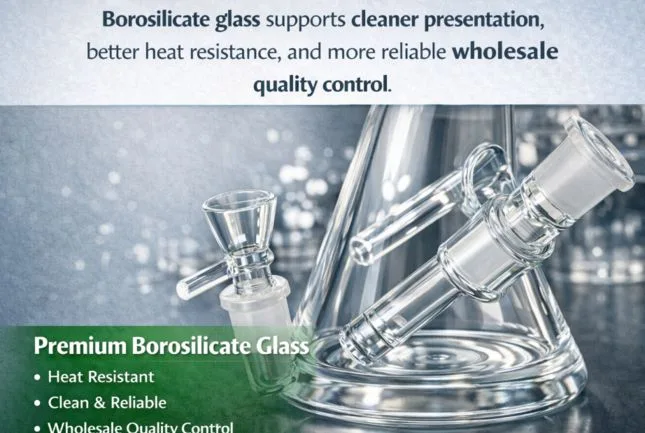
Borosilicate glass matters because it handles temperature change better, gives a cleaner product feel, and supports the durability, clarity, and consistency that wholesalers and smoke shops need.
When buyers ask me what separates a basic novelty item from a real long-term seller, I often start with material. A borosilicate glass bong is not just a nicer label. It is a more reliable foundation for the whole product category. Good material makes design more usable. It also makes packaging, QC, and after-sales easier to manage.
Borosilicate glass is valued because it handles heat and thermal change better than weaker glass types. That does not make it unbreakable. No honest supplier should say that. But it does make it more suitable for repeated use, regular cleaning, and day-to-day retail expectations. For wholesalers, that means fewer avoidable complaints and better product confidence.
It also helps with clarity and finish. A well-made glass water pipe should look clean, balanced, and intentional. Buyers care about thickness, but they also care about weld quality, balance, and fit. A strong material gives our veteran glassblowers a better base to produce consistent results.
Durability is more than wall thickness
Many new buyers focus only on thick glass. Thickness matters, but it is not the full story. Real durability comes from a combination of design, joint strength, stable base shape, proper annealing, and QC.
At my factory, we pay attention to:
- [ ] Tube consistency and wall balance
- [ ] Joint alignment
- [ ] Weld strength around stress points
- [ ] Annealing quality
- [ ] Packaging fit for transit
- [ ] Final inspection before shipment
That is why a durable water pipe is not simply “the thickest one.” A heavy piece with weak joint work can still fail. A balanced beaker with proper annealing and good packaging can outperform it in real shipping and store handling.
Why material affects buyer confidence
I still remember a US buyer who told me his customers were tired of cheap pieces that looked fine in photos but failed after a short time. We rebuilt his order mix around better borosilicate options, added safer packaging, and gave him HD product images before shipment. The result was simple: fewer complaints, better display value, and a more confident reorder.
For small and mid-sized shops, confidence is part of margin. If the staff can explain why a borosilicate piece is better, the store can sell on value instead of only on price. That is a healthier retail position.
A proper wholesale glass bong supplier should be able to explain material quality in plain language, not hide behind buzzwords. Buyers need facts they can use on the shelf and in product descriptions. Borosilicate helps because it supports a cleaner, more durable, more professional product line from the start.
4 Key Features Buyers Should Check
Buyers should check material, joint accuracy, bowl and downstem fit, thickness balance, packaging, and after-sales support because these details affect breakage, returns, and reorder confidence.
I always tell buyers not to purchase by photo alone. A nice image helps, but wholesale decisions should come from product details that affect real use and real transit. When I review a line with a customer, I focus on the features that protect margin after the goods leave my factory.
First, check the core build. Is the glass borosilicate? Is the base stable? Are the joints aligned? Does the bowl fit properly? If the product uses removable parts, can those parts be replaced easily? Many returns start with small fit issues that were ignored during sourcing.
Second, check the support system around the product. I do not just mean price. I mean QC, packaging, shipment route, and claim handling. In my business, if an item arrives broken, the buyer can send a photo and we handle compensation or credit. That process matters just as much as the glass itself.
Buyer checklist for wholesale orders
Use this quick sourcing checklist when reviewing any glass water pipes wholesale offer:
- [ ] Borosilicate material confirmed
- [ ] Standard joint size clearly listed
- [ ] Bowl and downstem compatibility checked
- [ ] Base stability and weld quality reviewed
- [ ] Packaging method shown in photos
- [ ] Breakage claim policy explained
- [ ] HD product photos available
- [ ] Lead time confirmed for stock or OEM
- [ ] Customs support explained for US shipments
- [ ] Replacement accessories available in bulk
Compare before you place a reorder
| Feature | What to Check | Why It Matters |
|---|---|---|
| Glass quality | Borosilicate, clean finish | Better durability and clarity |
| Joint fit | 14mm or 19mm accuracy | Fewer compatibility issues |
| Bowl fit | Secure seat, no wobble | Better customer experience |
| Downstem | Length and cut quality | Proper airflow and fit |
| Packaging | Protective inserts, box strength | Lower transit damage |
| After-sales | Photo-based claim support | Faster resolution |
| Lead time | Stock vs OEM timing | Better inventory planning |
I also suggest buyers look at the supplier’s category depth. Can they support only one or two items, or can they help build a full set of bulk glass smoking accessories around the same customer profile? A store that stocks matching bowls, downstems, grinders, nectar collectors, and packaged add-ons usually builds a stronger basket size.
That is one reason many of my customers work with me long term. They do not only need one SKU. They need a system. With 10,000+ styles, monthly new drops, and both LA stock and factory-direct options, I can help them move from trial ordering to smarter category planning.
5 Glass Bowls, Downstems, and Joint Sizes Explained
Glass bowls, downstems, and joint sizes matter because they control fit, airflow, replacement ease, and reorder simplicity, which directly affects retail satisfaction and wholesale efficiency.
Accessories are where many buyers either protect their margin or lose it. A great main piece can still create complaints if the bowl is too loose, the downstem is the wrong length, or the joint size is not explained clearly. I often see new buyers focus on the body style and forget the parts that make daily use practical.
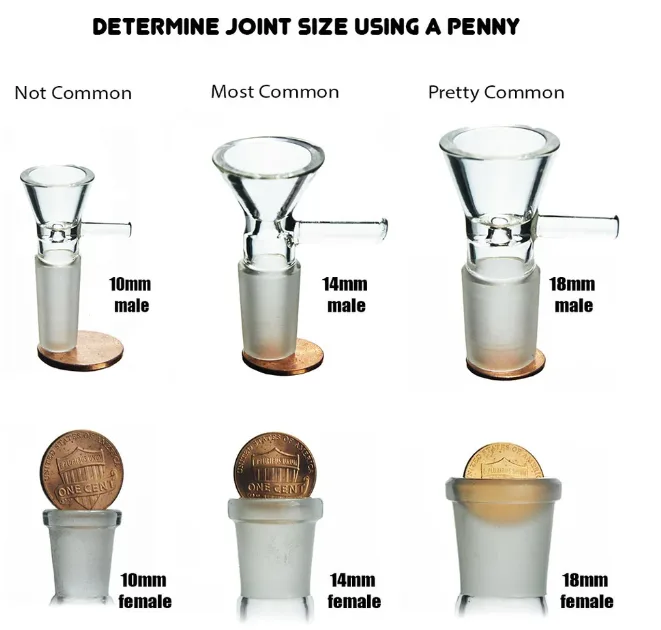
A glass bowl for bong must fit the joint correctly and match the expected user level. A glass downstem wholesale order should include clear sizing, cut style, and compatibility notes. If you do not standardize those details, you create confusion online and on the sales floor.
For most smoke shops, 14mm and 19mm remain the most useful standard references. Standard sizing helps with add-on sales, replacement parts, and easier customer service. It also makes bundle building much easier for wholesale buyers.
How I explain the basics to buyers
Here is the simple framework I use:
- Bowl: holds material; must match the joint size and seat cleanly
- Downstem: guides airflow into water; must match both joint size and body length
- Joint size: common compatibility standard; affects replacement and upsell
When I prepare an order for a buyer, I try to reduce part confusion early. That means labeling product specs clearly, keeping fit standards consistent, and offering matching accessories as part of the same sourcing plan.
Common mistakes and how to avoid them
The biggest mistakes are easy to fix:
- [ ] Ordering attractive pieces without replacement bowls
- [ ] Mixing joint sizes without clear labeling
- [ ] Ignoring downstem length tolerance
- [ ] Forgetting to stock common add-ons
- [ ] Writing weak product descriptions online
A better approach is to build accessory logic into every category order. If you sell compact beakers, keep matching bowls nearby. If you sell removable downstem pieces, keep spare options in the same size family. That makes your store easier to shop and your online listings easier to understand.
For online sellers, clear parts language matters even more. Since we launched our online store on January 1, 2026, I have paid even more attention to how product specs are presented. Small wholesale buyers can now place online order smoking accessories orders more easily, and buyers who reach $1,200 can unlock wholesale pricing. That only works well if the sizing language is clean and consistent.
6 Best Product Options for Smoke Shops
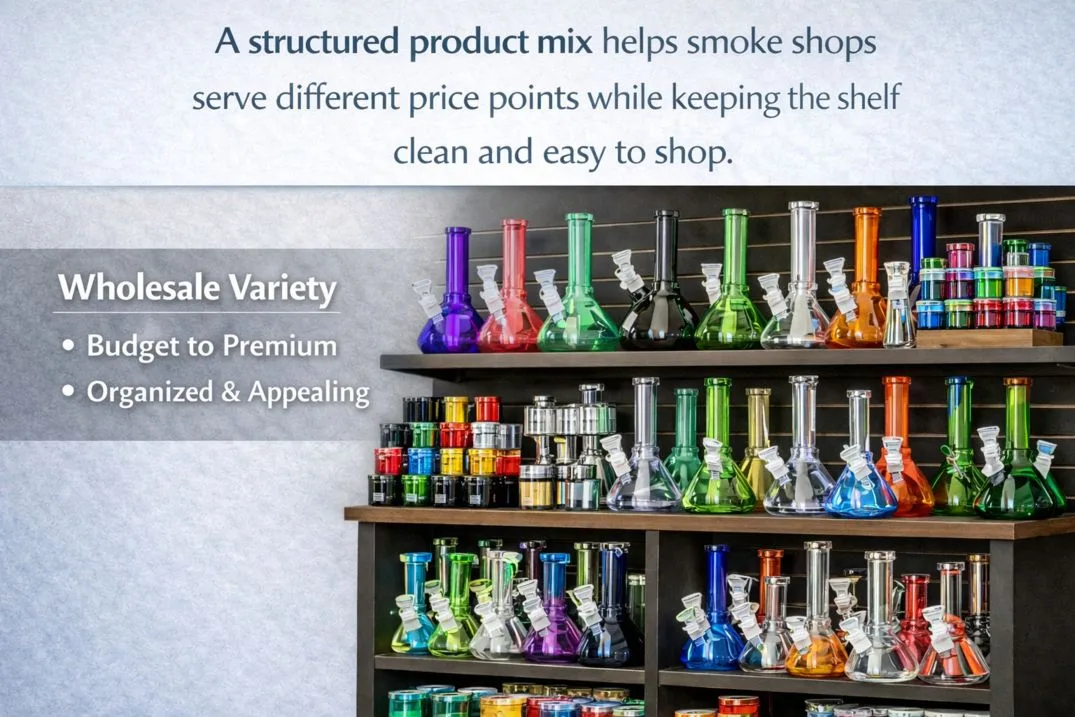
The best product options for smoke shops are simple borosilicate best-sellers, mid-tier design pieces, and replacement accessories that balance price, durability, shelf appeal, and repeat demand.
If I were helping a smoke shop build this category from scratch, I would not start with overly complex shapes. I would start with products that are easy to explain, easy to display, and easy to reorder. In most markets, that means a mix of entry-level beakers, straight tubes, a few compact dab rigs, and a reliable accessory wall.
The goal is not to stock everything. The goal is to stock the right structure. Buyers need good-better-best coverage. That creates more price flexibility and gives staff an easier way to guide shoppers. Entry-level pieces answer budget concerns. Mid-tier pieces improve margin. A few high-visual designs create attention and help the shelf feel current.
A practical starter mix for wholesale buyers
| Tier | Product Type | Why It Sells | Best Use |
|---|---|---|---|
| Entry | Small beaker bong | Stable, familiar, affordable | First-time buyers |
| Entry | Straight tube | Clean shape, easy to display | Budget shelf |
| Mid | Colored borosilicate piece | Better visual value | Gift or upgrade sale |
| Mid | Compact dab rig | Good for concentrate category | Cross-sell |
| Add-on | Bowls and downstems | Easy repeat sale | Accessory wall |
| Premium | Recycler glass | High visual appeal | Showcase item |
This mix helps a store cover multiple price points without overloading inventory. It also pairs well with grinders, packaged accessories, and add-on promo items.
What makes a product line easier to sell
I like products that solve at least three store problems at once: they ship safely, they display well, and they reorder simply. That is why I keep pushing buyers toward standardized, reliable pieces rather than novelty-heavy assortments with unclear replacement paths.
Our LA warehouse helps here. Buyers who need faster restocking and lower MOQs can use local stock, while factory-direct orders help those who want wider selection or online-only pricing. For OEM, my normal lead time is around 20–25 days for production, then shipping based on the chosen route. That gives buyers a realistic path for custom packaging or private label without losing control of timing.
For stores that want stronger identity, I also recommend a small packaged series. It makes the shelf cleaner and supports online listing photos much better than loose, inconsistent items. In my experience, presentation is often the difference between a product that sits and a product that moves.
7 Wholesale Tips for Small and Mid-Sized Buyers
Small and mid-sized buyers should focus on fast-moving SKUs, standard sizes, reliable packaging, and flexible ordering so they can protect cash flow while still offering a strong category.
Not every buyer needs pallet-scale complexity on day one. In fact, many of the smartest wholesale customers start with a narrow range and expand only after they see which styles move fastest. I support that approach because it keeps inventory cleaner and makes reorders easier.
My first tip is simple: buy for turn, not for excitement. One flashy piece may draw attention, but a store survives on repeatable SKUs. Start with proven shapes, standard joints, and accessories that can sell on their own. Then add a few visual pieces once the base line is working.
Second, pay attention to order path. Some buyers need local inventory from Los Angeles for speed. Others want factory-direct savings and broader style choice. Since our online store launched in early 2026, smaller buyers and even end customers can place orders directly, and small wholesale buyers can unlock wholesale pricing at $1,200. That makes testing much easier than before.
A simple buying formula
Fast movers first → Standard parts second → Visual upgrades third