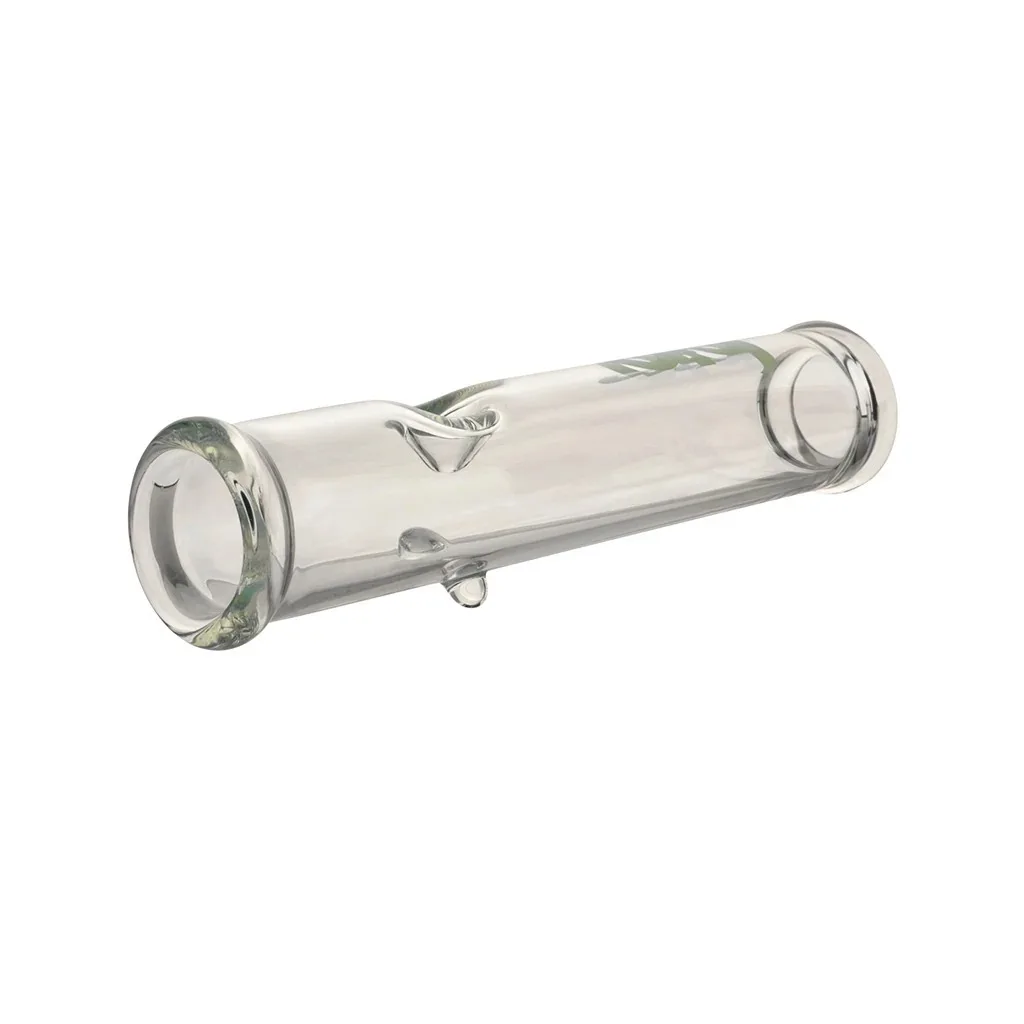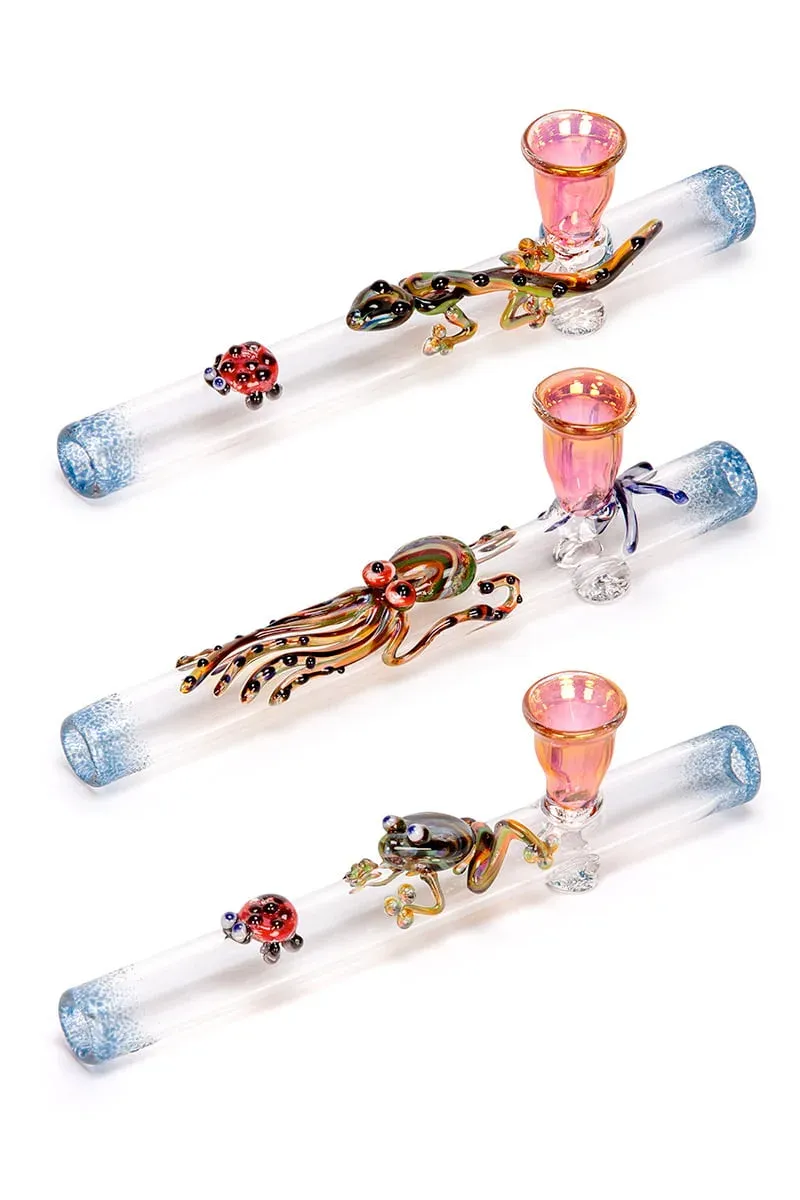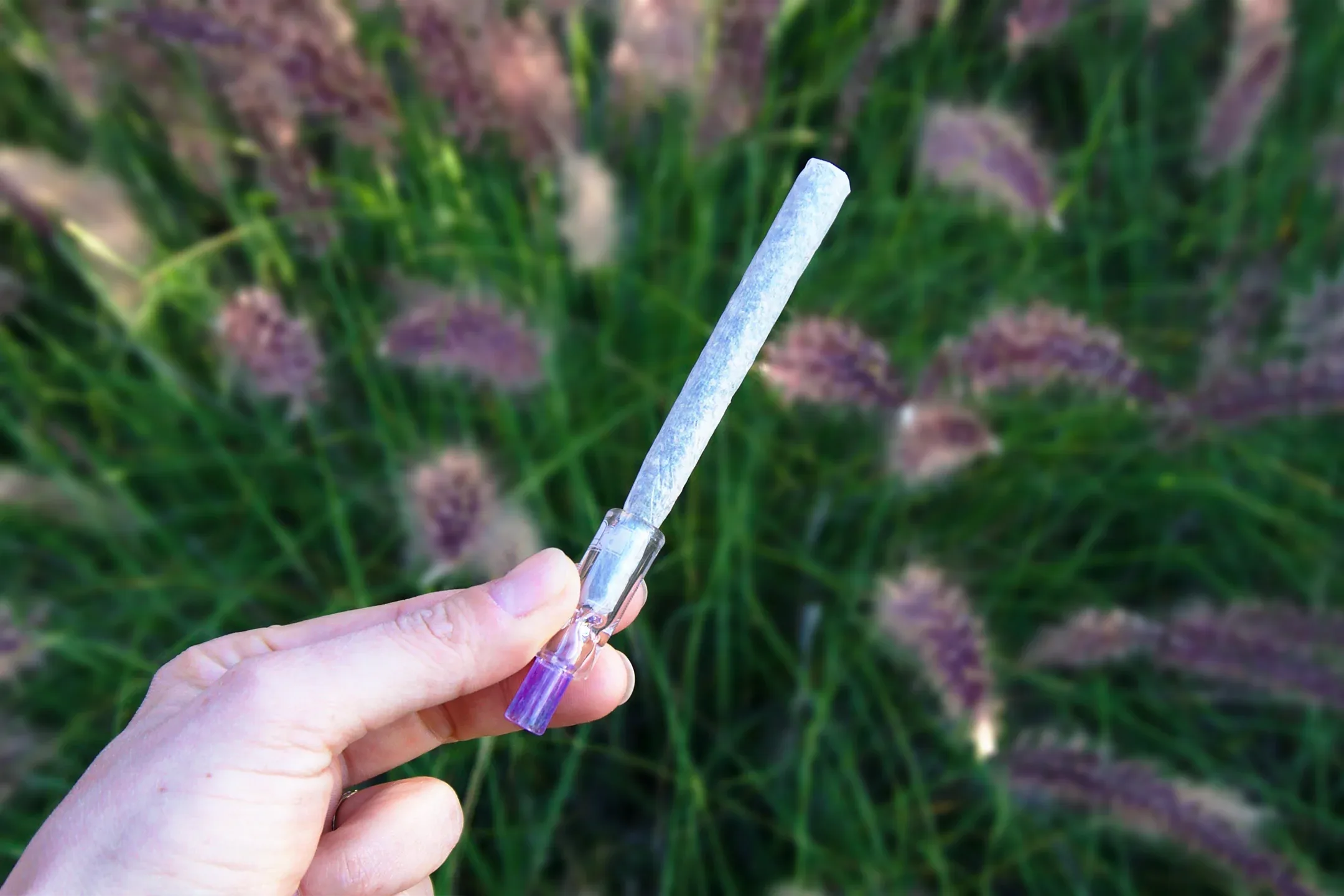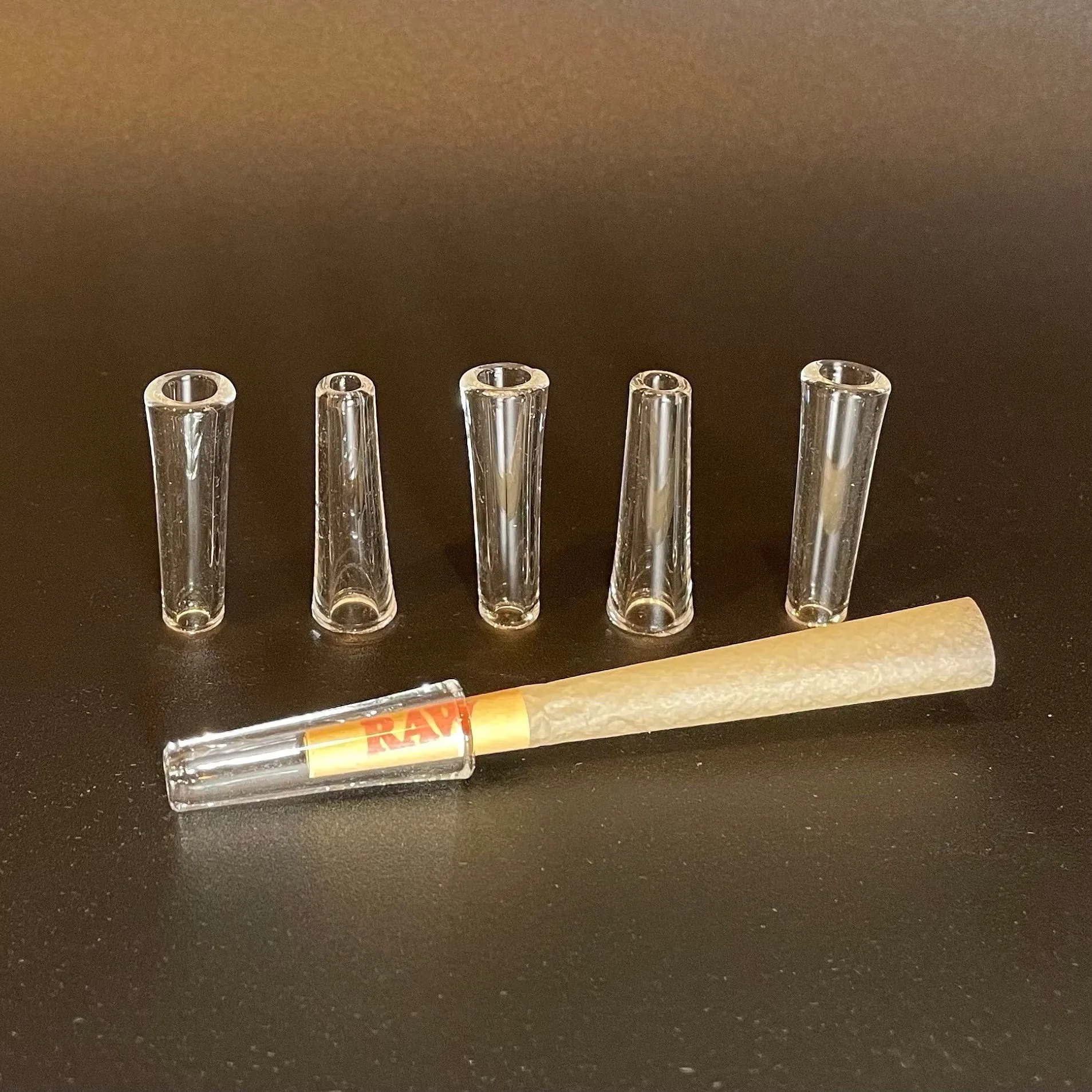
If you've ever found a dry pipe too harsh but a full‑sized bong too bulky, you're not alone. That's exactly why the bubbler exists – it's the perfect middle ground. A bubbler is a small, handheld water pipe that combines the portability of a dry pipe with the smooth, water‑filtered hits of a bong. And once you try one, you might never go back to dry pipes.
A bubbler is a compact, handheld water pipe that uses a small water chamber to cool and filter smoke before it reaches your lungs. It's smaller than a bong but smoother than a dry pipe – the perfect middle ground for smokers who want portability without sacrificing filtration. Most bubblers feature a fixed bowl, a carb hole, and a built‑in downstem, making them easy to use and maintain.
In this ultimate guide, we'll cover everything you need to know about bubblers – what they are, how they compare to bongs and dry pipes, the different types available, how to use and clean them, and how to choose the right one for your smoke shop.
Contents
- 1 What Is a Bubbler? Anatomy, Function, and How to Use It
- 2 Bubbler vs Bong – What's the Difference?
- 3 Bubbler vs Dry Pipe – Which Is Better for You?
- 4 Types of Bubblers – Hammer, Sidecar, Sherlock, and More
- 5 How to Use a Bubbler – Step‑by‑Step Guide
- 6 How Much Water to Put in a Bubbler – The Perfect Level
- 7 How to Clean a Bubbler – Step‑by‑Step Guide
- 8 How Much Does a Bubbler Cost? Price Guide
- 9 Best Bubblers for Beginners – What to Look For
- 10 One Hitters vs Bubblers – Which Should You Choose?
- 11 How to Choose the Right Bubbler for Your Smoke Shop
- 12 CloverGlass Bubbler Collection – Wholesale Options
- 13 Frequently Asked Questions About Bubblers
- 14 Conclusion + CTA
What Is a Bubbler? Anatomy, Function, and How to Use It
If you're new to smoking accessories or just looking for something that hits smoother than a pipe but isn't as bulky as a bong, the bubbler is exactly what you need. But what exactly is it? Let's break down the definition, anatomy, and function of this versatile little piece.
What Defines a Bubbler?
A bubbler (also called a water bubbler, weed bubbler, or bubbler pipe) is a small, handheld water pipe that uses a small water chamber to cool and filter smoke. It's designed to bridge the gap between a dry hand pipe and a full‑sized bong [1†L11-L18].
Key identifying features:
- Compact size – typically 5‑8 inches in length
- Water chamber – a small reservoir that holds water for filtration
- Fixed bowl – the bowl is built‑in and not removable (unlike bongs)
- Carb hole – a small opening on the side that controls airflow
- Built‑in downstem – the downstem is permanently attached to the body
The name "bubbler" comes from the sound the water makes when you inhale – you hear a gentle bubbling as the smoke passes through the water [1†L15-L18].
Why Choose a Bubbler Over Other Options?
The bubbler's appeal lies in its versatility and convenience. Here's why many smokers prefer it [2†L27-L33]:
- Smoother than a dry pipe – the water filtration removes harshness and cools the smoke
- More portable than a bong – fits easily in a bag or even a large pocket
- Less water needed – uses a fraction of the water a bong requires
- Easier to clean – one or two pieces, no complicated percolators
- Affordable – generally cheaper than bongs of similar quality
How a Bubbler Works: The Filtration Process
The bubbler's design is simple but effective:
- Water is added to the chamber through the mouthpiece or carb hole.
- The bowl is packed with your smoking material.
- You cover the carb with your thumb and light the bowl while inhaling.
- The smoke travels down through the bowl, into the water chamber, and bubbles through the water.
- The water filters the smoke, removing harsh particles and cooling the temperature.
- You release the carb to clear the chamber and inhale the filtered smoke.
This process is nearly identical to a bong, but on a smaller scale. The result is a hit that's significantly smoother than a dry pipe but with minimal setup.
The Anatomy of a Bubbler
Every bubbler consists of the following parts [2†L35-L56]:
1. The Bowl
The bowl is the cup‑shaped part where you pack your smoking material. Unlike bongs, the bowl on a bubbler is usually fixed in place – you can't remove it. Bowls come in different depths and styles, affecting airflow and burn rate.
2. The Downstem
The downstem is the tube that extends from the bowl into the water chamber. It's built into the bubbler and cannot be removed. The bottom of the downstem is usually slitted to create smaller bubbles for better filtration [2†L40-L43].
3. The Water Chamber
This is the bulbous section that holds the water. It's larger than the neck but smaller than a bong's base. The chamber is where the smoke bubbles through the water and cools down [2†L43-L46].
4. The Neck
The neck is the vertical section that rises from the water chamber to the mouthpiece. Smoke travels up the neck before you inhale. Some bubblers have an ice catcher inside the neck, though this is less common due to the compact size [2†L46-L48].
5. The Carb (Carburetor)
The carb is a small hole on the side of the bubbler, usually near the bowl. You cover it with your thumb while inhaling, then release it to clear the chamber. The carb is essential for controlling airflow and hit intensity [2†L48-L51].
6. The Mouthpiece
The opening at the top of the neck where you inhale. It's usually flared slightly for a comfortable lip seal.
Common Variations and Misspellings
When shopping online, you may encounter variations like:
- Bubbler pipe
- Water bubbler
- Weed bubbler
- Bubbler bong
- Glass bubbler
- Mini bubbler water pipe
All of these refer to the same basic type of water pipe – the bubbler [1†L15-L18].
Why the Bubbler Is Perfect for Beginners
If you're new to smoking accessories, the bubbler is an excellent starting point [2†L58-L63]:
- Simple to use – no complex assembly or parts to figure out
- Less intimidating – smaller and more approachable than a bong
- Affordable – you can get a quality bubbler for under $30
- Portable – easy to take with you to friends' houses or outdoor sessions
- Smoother hits – you'll notice the difference immediately compared to a dry pipe
What to Look for in a Quality Bubbler
When shopping for a bubbler – whether for yourself or your smoke shop – keep these criteria in mind [2†L65-L72]:
- Borosilicate glass – heat‑resistant and durable, the best material for bubblers
- Thick walls – 4‑5mm glass is standard, thicker means more durable
- Stable base – look for a flat, wide bottom that won't tip over easily
- Smooth joints – if it's a glass‑on‑glass bubbler, check for clean welds
- Comfortable mouthpiece – the lip should feel natural against your mouth
Bubbler vs Bong – What's the Difference?
If you're trying to decide between a bubbler and a bong, you're not alone. These two water pipes are the most popular choices for smokers who want smoother hits than a dry pipe. But they serve different purposes and fit different lifestyles [3†L86-L94].
Size and Portability
Bubbler:
- Typically 5‑8 inches tall
- Fits easily in a bag or backpack
- Lightweight and easy to carry
- Can be used discreetly
Bong:
- Typically 10‑18 inches tall
- Bulky and heavy
- Not travel‑friendly
- Requires a dedicated smoking spot [3†L94-L101]
Verdict: The bubbler wins on portability. If you smoke on the go, the bubbler is the clear choice.
Water Volume and Filtration
Bubbler:
- Small water chamber – holds just a few ounces
- Basic filtration – cools and removes some particles
- Smooth hits – noticeably smoother than a dry pipe
Bong:
- Large water chamber – holds 8‑16 ounces or more
- Superior filtration – more water means more smoke‑water contact
- Much smoother hits – cooler, cleaner, and less harsh [3†L101-L108]
Verdict: The bong wins on filtration. If you want the smoothest possible hit, a bong is better.
Hit Volume and Chamber Size
Bubbler:
- Small chamber – fills and clears in one breath
- Quick, punchy hits – great for solo sessions
- Less smoke volume – more controlled
Bong:
- Large chamber – allows smoke to stack
- Big, milky hits – impressive clouds
- More smoke volume – can be overwhelming for beginners [3†L108-L114]
Verdict: It depends on preference. If you like big hits, choose a bong. If you prefer controlled, moderate hits, choose a bubbler.
Ease of Cleaning
Bubbler:
- Simple design – one or two pieces
- Easy to reach all surfaces with a brush or alcohol
- Quick to clean – 5‑10 minutes
Bong:
- More complex – removable bowl, downstem, and sometimes percolators
- Harder to reach all areas – especially the base of large beakers
- Takes longer to clean – 10‑20 minutes [3†L114-L120]
Verdict: The bubbler is easier to clean. Its compact size and simple design make maintenance quick and hassle‑free.
Price Range
Bubbler:
- Generally affordable – $15‑$60 for quality pieces
- Good value for the experience
- Easy to replace if broken
Bong:
- More expensive – $30‑$200+ for quality pieces
- Higher price tag but more functionality
- More costly to replace [3†L120-L127]
Verdict: The bubbler is more budget‑friendly, especially for beginners.
Side‑by‑Side Comparison Table
| Feature | Bubbler | Bong |
|---|---|---|
| Size | 5‑8 inches | 10‑18+ inches |
| Portability | Excellent | Poor |
| Water volume | Small | Large |
| Filtration | Basic | Superior |
| Hit smoothness | Smoother than pipe | Smoothest |
| Hit volume | Small | Large |
| Cleaning ease | Easy | Moderate |
| Price | $15‑$60 | $30‑$200+ |
| Best for | Travel, solo sessions | Home, group sessions [3†L127-L132] |
Which One Should You Choose?
Choose a Bubbler if:
- You value portability and discretion
- You smoke solo or with one other person
- You want an upgrade from a dry pipe
- You're on a budget
- You have limited storage space [3†L132-L137]
Choose a Bong if:
- You mostly smoke at home
- You want the smoothest hits possible
- You smoke with friends regularly
- You want big, milky hits
- You don't mind the bulk [3†L137-L141]
Frequently Asked Questions
Is a bubbler better than a bong?
Neither is "better" – they serve different purposes. The bubbler is more portable and easier to clean; the bong offers superior filtration and bigger hits [3†L141-L144].
Can I use a bong instead of a bubbler for travel?
You can, but it's not practical. The bong is bulky, heavy, and more likely to break during transport. The bubbler is much better for travel [3†L144-L146].
Do bubblers hit smoother than bongs?
No – bongs hit smoother because they have more water and larger chambers. Bubblers are smoother than dry pipes but not as smooth as bongs [3†L146-L148].
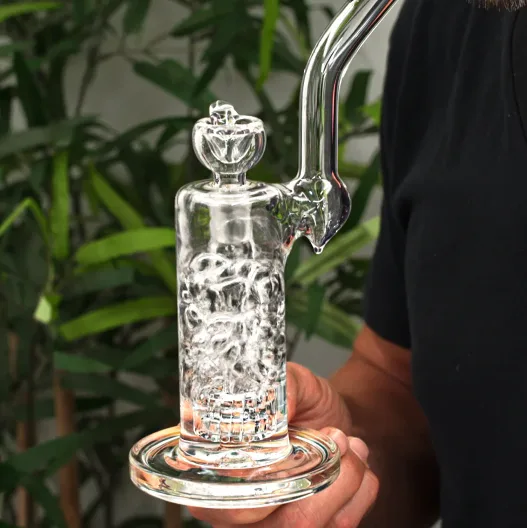
Bubbler vs Dry Pipe – Which Is Better for You?
The upgrade from a dry pipe to a bubbler is one of the most noticeable improvements a smoker can make. But is a bubbler really that much better than a dry pipe? Let's break it down [4†L159-L167].
What Is a Dry Pipe?
A dry pipe (also called a spoon pipe or hand pipe) is a simple glass pipe with a bowl, a mouthpiece, and a carb. There's no water – you just pack, light, and inhale. Dry pipes are the most common and affordable smoking device [4†L167-L172].
The Difference Is in the Water
The only significant difference between a bubbler and a dry pipe is the water. But that one difference changes the entire smoking experience:
Dry Pipe:
- No water – smoke goes directly from the bowl to your mouth
- Harsh hits – smoke is hot and unfiltered
- More coughing – especially for beginners
- Tar buildup – resin accumulates quickly
Bubbler:
- Water filtration – smoke passes through water before reaching you
- Smooth hits – cooled and filtered for a comfortable experience
- Less coughing – noticeably gentler on the throat
- Cleaner smoke – water traps particulates and tar [4†L172-L180]
What Does the Water Actually Do?
The water in a bubbler serves two primary functions [5†L180-L185]:
- Cools the smoke – the water absorbs heat, lowering the temperature of the smoke before it reaches your lungs.
- Filters the smoke – water traps tar, ash, and other particulates, removing them from the smoke stream.
Is the Difference Really That Noticeable?
Yes – the difference is substantial. Most smokers describe a dry pipe hit as "hot and harsh," while a bubbler hit is "cool and smooth." Here's what users say [5†L185-L191]:
- "I switched from a pipe to a bubbler and I can't go back – the hits are so much smoother."
- "I used to cough every time with my pipe. Now I can take big hits without coughing."
- "I never realized how much the water mattered until I tried a bubbler."
Side‑by‑Side Comparison Table
| Feature | Dry Pipe | Bubbler |
|---|---|---|
| Water filtration | None | Yes |
| Hit smoothness | Harsh | Smooth |
| Cooling | None | Yes |
| Particulate removal | None | Yes |
| Portability | Excellent | Good |
| Price | $10‑$30 | $15‑$60 |
| Cleaning | Easy | Moderate |
| Best for | Quick, discreet hits | Smooth, enjoyable hits [5†L191-L196] |
Which One Should You Choose?
- You need the smallest possible piece
- You're on a very tight budget
- You prefer the "raw" taste of unfiltered smoke
- You don't mind the harshness [5†L196-L199]
Choose a Bubbler if:
- You want smoother, more enjoyable hits
- You smoke regularly
- You want to reduce coughing
- You're willing to spend a few extra dollars for a better experience [5†L199-L202]
The Verdict
Almost everyone who switches from a dry pipe to a bubbler never goes back. The water filtration makes such a significant difference that it's hard to justify using a dry pipe for anything other than absolute discretion [5†L202-L205].
Types of Bubblers – Hammer, Sidecar, Sherlock, and More
Bubblers come in a surprising variety of shapes and styles. Each type has its own aesthetic and slightly different handling characteristics. Here's a breakdown of the most common types [6†L218-L225].
Hammer Bubblers
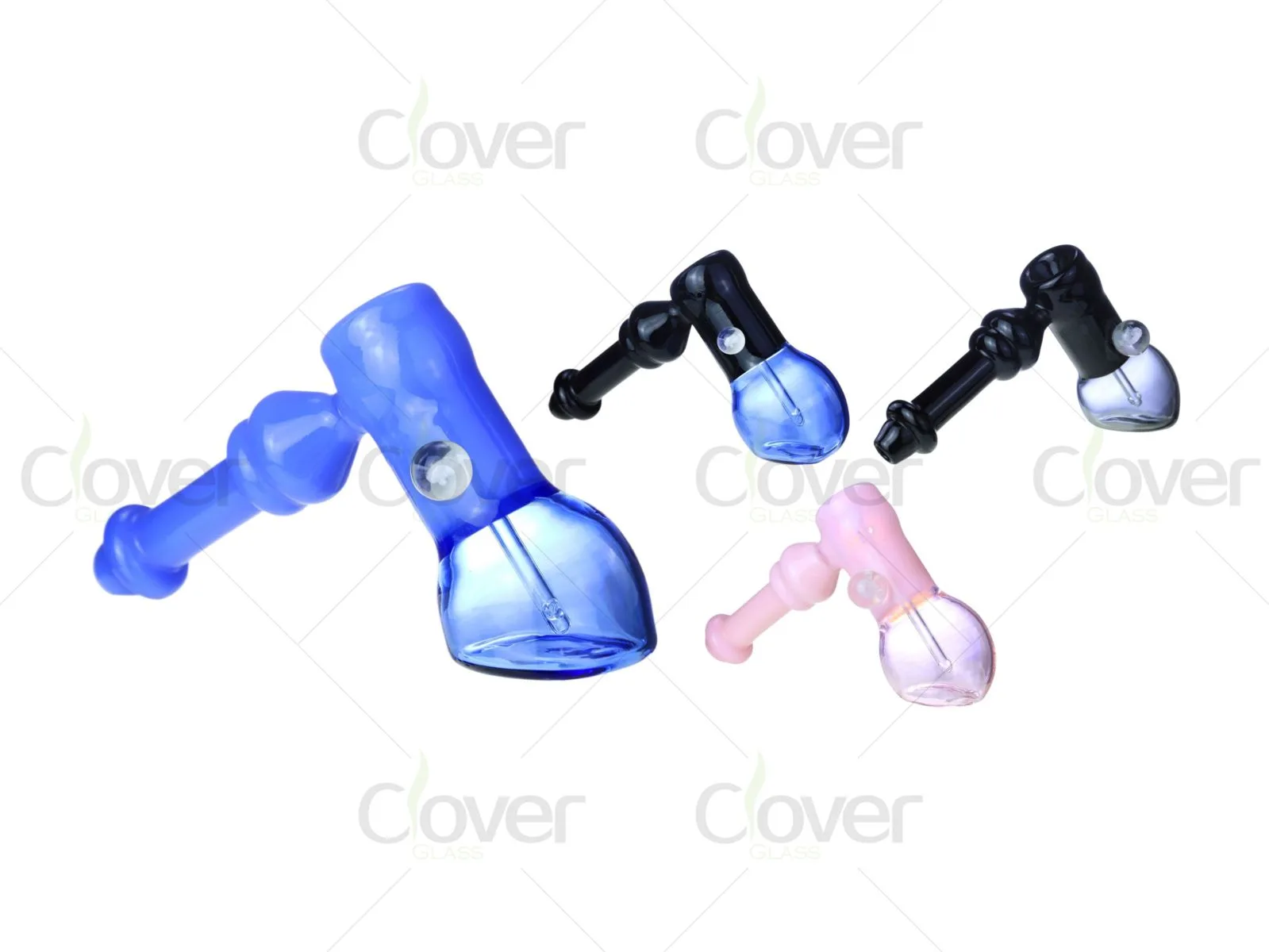
The hammer bubbler gets its name from its shape – a flat, hammer‑like head on a vertical handle. The bowl is positioned at the top of the hammer head, and the mouthpiece extends from the side [6†L225-L229].
Features:
- Stable – the flat hammer head provides a wide base
- Easy to hold – the handle fits comfortably in your hand
- Classic look – one of the oldest bubbler designs
- Smooth hits – the hammer head holds ample water
Pros: Very stable, easy to hold, classic look.
Cons: May be too wide for some hands.
Best for: Everyday use, beginners, anyone who wants a stable piece.
Sidecar Bubblers
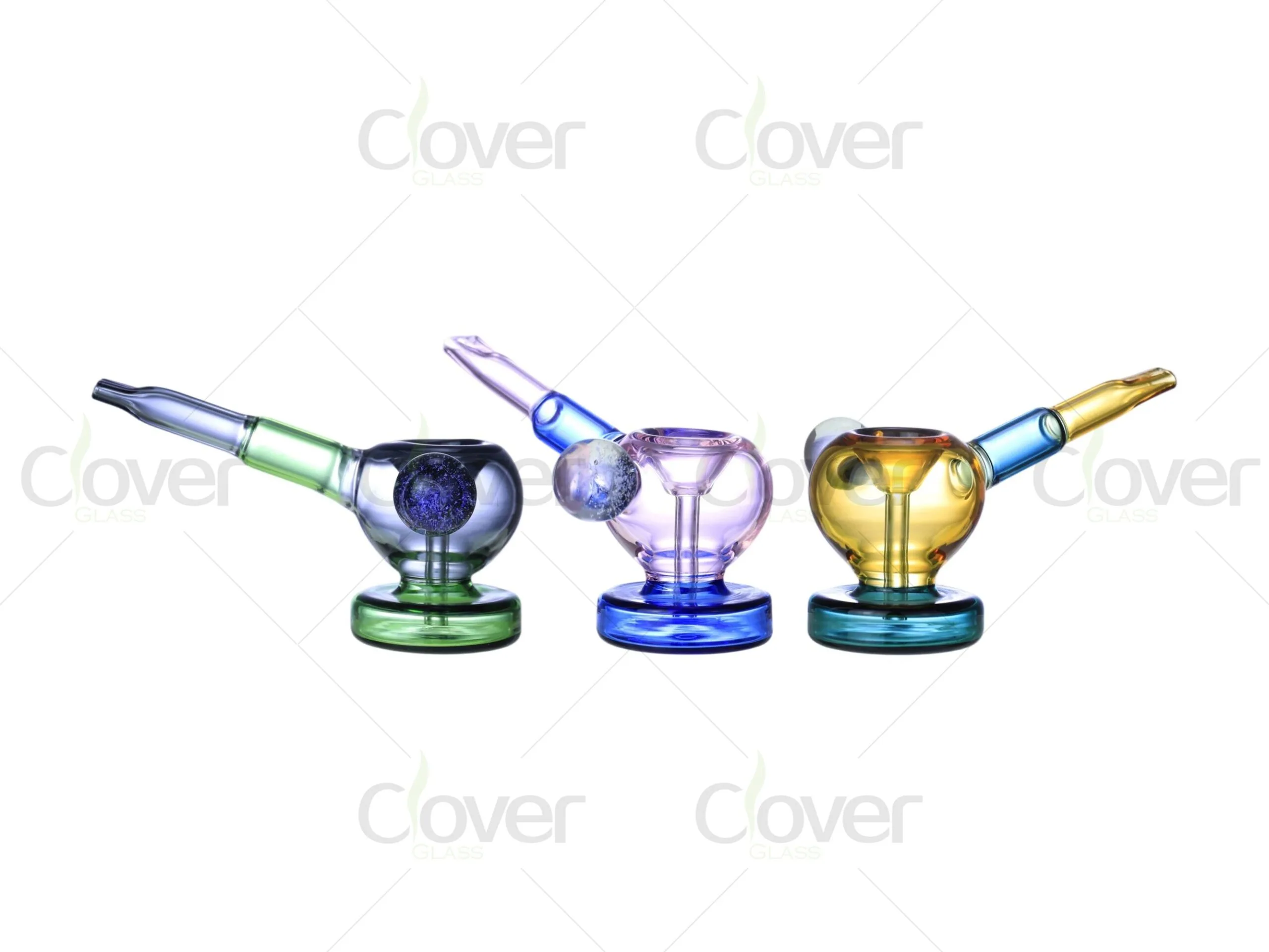
The sidecar bubbler features a bowl that sits on the side of the water chamber (like a motorcycle sidecar), with the mouthpiece extending perpendicularly [6†L229-L234].
Features:
- Unique visual – the sidecar design stands out
- Easy to see the bowl – you can watch the smoke fill the chamber
- Comfortable draw – the angled mouthpiece feels natural
Pros: Unique design, easy to monitor the hit.
Cons: Slightly less stable than hammer bubblers.
Best for: Aesthetics lovers, customers who want something different.
Sherlock Bubblers
Sherlock bubblers take their name from the iconic Sherlock Holmes pipe – a curved, elongated shape that's both elegant and functional [6†L234-L238].
Features:
- Elegant, classic shape – curves like a Sherlock pipe
- Longer chamber – allows more smoke to cool
- Premium feel – often more expensive
Pros: Beautiful design, smooth hits, great for gifts.
Cons: More delicate, less stable, higher price.
Best for: Collectors, gift buyers, anyone who values aesthetics.
Mini Bubblers / Pocket Bubblers
Mini bubblers are the compact version – even smaller than standard bubblers, designed for maximum portability [6†L238-L242].
Features:
- Very small – 3‑5 inches in length
- Lightweight – fits easily in a pocket
- Minimal water – just enough for basic filtration
Pros: Extremely portable, discreet, affordable.
Cons: Smaller hits, less filtration, less stable.
Best for: Travel, discreet use, beginners.
Glass‑on‑Glass Bubblers
These bubblers feature a removable bowl and downstem, similar to a bong. They're less common but offer more versatility [6†L242-L246].
Features:
- Removable bowl – can be replaced or upgraded
- Glass joint – 14mm or 18mm female joint
- More customizable – swap out bowls
Pros: Versatile, easy to clean, upgradeable.
Cons: More expensive, more parts to manage.
Best for: Experienced users, collectors.
Percolator Bubblers
Some bubblers incorporate a small percolator – a built‑in diffusion device that breaks the smoke into smaller bubbles for extra filtration [6†L246-L250].
Features:
- Built‑in perc – tree, matrix, or showerhead styles
- Extra smooth hits – more filtration than standard bubblers
- Visual appeal – perc action looks impressive
Pros: Superior filtration, smooth hits, eye‑catching.
Cons: Harder to clean, more expensive.
Best for: Smokers who want the smoothest bubbler hits possible.
Types of Bubblers Comparison Table
| Type | Size | Stability | Ease of Cleaning | Price | Best For |
|---|---|---|---|---|---|
| Hammer | 5‑7″ | Excellent | Easy | $ | Everyday use |
| Sidecar | 6‑8″ | Good | Moderate | $$ | Unique design |
| Sherlock | 6‑8″ | Moderate | Moderate | $$$ | Aesthetics |
| Mini | 3‑5″ | Moderate | Easy | $ | Travel |
| Glass‑on‑Glass | 5‑8″ | Good | Very easy | $$ | Customization |
| Percolator | 6‑8″ | Good | Harder | $$$ | Smoothest hits [6†L250-L259] |
Which Type Should You Stock?
For smoke shops, stocking a variety is key:
- Hammer and mini bubblers – best sellers
- Sidecar and Sherlock – premium options
- Percolator bubblers – upsell opportunities
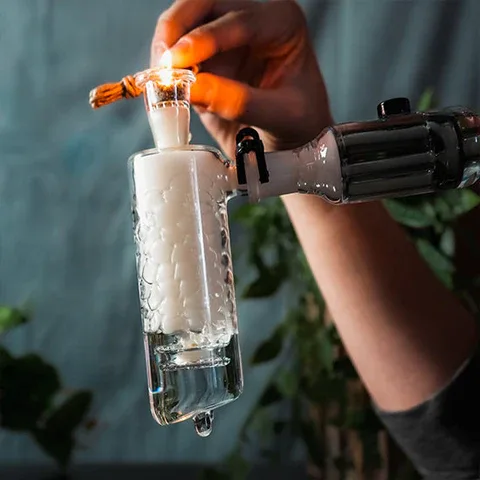
How to Use a Bubbler – Step‑by‑Step Guide
Using a bubbler is simple, but following the right steps ensures the best experience and avoids common mistakes [7†L271-L277].
What You'll Need
- Your bubbler
- Fresh water
- Your smoking material
- A lighter or hemp wick
- A grinder (optional but recommended)
Step 1 – Add Water
Pour a small amount of water into the chamber through the mouthpiece or carb hole. The water level should be just enough to cover the downstem opening – usually about 1/4 to 1/2 inch above the slits [7†L277-L281].
Test it: Take a dry pull (without lighting) with your thumb over the carb. You should hear a gentle bubbling sound. If you get water in your mouth, pour some out. If you don't hear bubbling, add a bit more water.
Pro tip: The perfect water level is the minimum needed to cover the downstem. Too much water leads to splashback; too little means no filtration [7†L281-L285].
Step 2 – Pack the Bowl
Grind your herb and pack it into the bowl. Don't pack too tight – you want good airflow. A loose, even pack burns more consistently and allows the smoke to flow freely [7†L285-L288].
How full? Fill the bowl to the rim but don't press down hard. Think of it like packing a loose pile of sand.
Step 3 – Cover the Carb
Place your thumb or finger over the carb hole (the small opening on the side of the bowl). This forces air through the herb and into the water [7†L288-L292].
Why? When the carb is covered, all the air you inhale is drawn through the burning herb, creating smoke that then passes through the water. This is how you fill the chamber with smoke.
Step 4 – Light and Inhale
Hold the flame to the edge of the bowl while inhaling gently through the mouthpiece. You'll see the smoke bubble through the water and fill the chamber [7†L292-L296].
Inhale steadily – not too fast (to avoid pulling unburnt material) and not too slow (to prevent stale smoke). The bubbles should be steady, not violent.
Step 5 – Clear the Chamber
When the chamber is filled with smoke, release the carb and inhale the remaining smoke. The fresh air from the carb pushes the smoke out of the chamber and into your lungs [7†L296-L300].
Timing: Start covered for 2‑3 seconds, then release and continue inhaling. The smoke should clear almost instantly.
Step 6 – Exhale and Enjoy
That's it – simple, smooth, and satisfying. Exhale and appreciate the difference that water filtration makes [7†L300-L302].
Common Mistakes to Avoid
Mistake 1 – Not enough water
If you don't hear bubbling, the water isn't covering the downstem. Add more water until you get bubbles [7†L302-L304].
Mistake 2 – Too much water
If you get water in your mouth, you've overfilled. Pour some out and try again [7†L304-L306].
Mistake 3 – Packing too tight
A tight pack restricts airflow and causes uneven burning. Pack loosely – you'll get better hits and waste less material [7†L306-L308].
Mistake 4 – Forgetting the carb
If you inhale without covering the carb, you'll just get fresh air – no smoke. Always cover the carb until the chamber is full [7†L308-L310].
Mistake 5 – Inhaling too hard
Slow, steady draws produce the best results. Inhaling too hard can pull ash through and make the hit harsh [7†L310-L312].
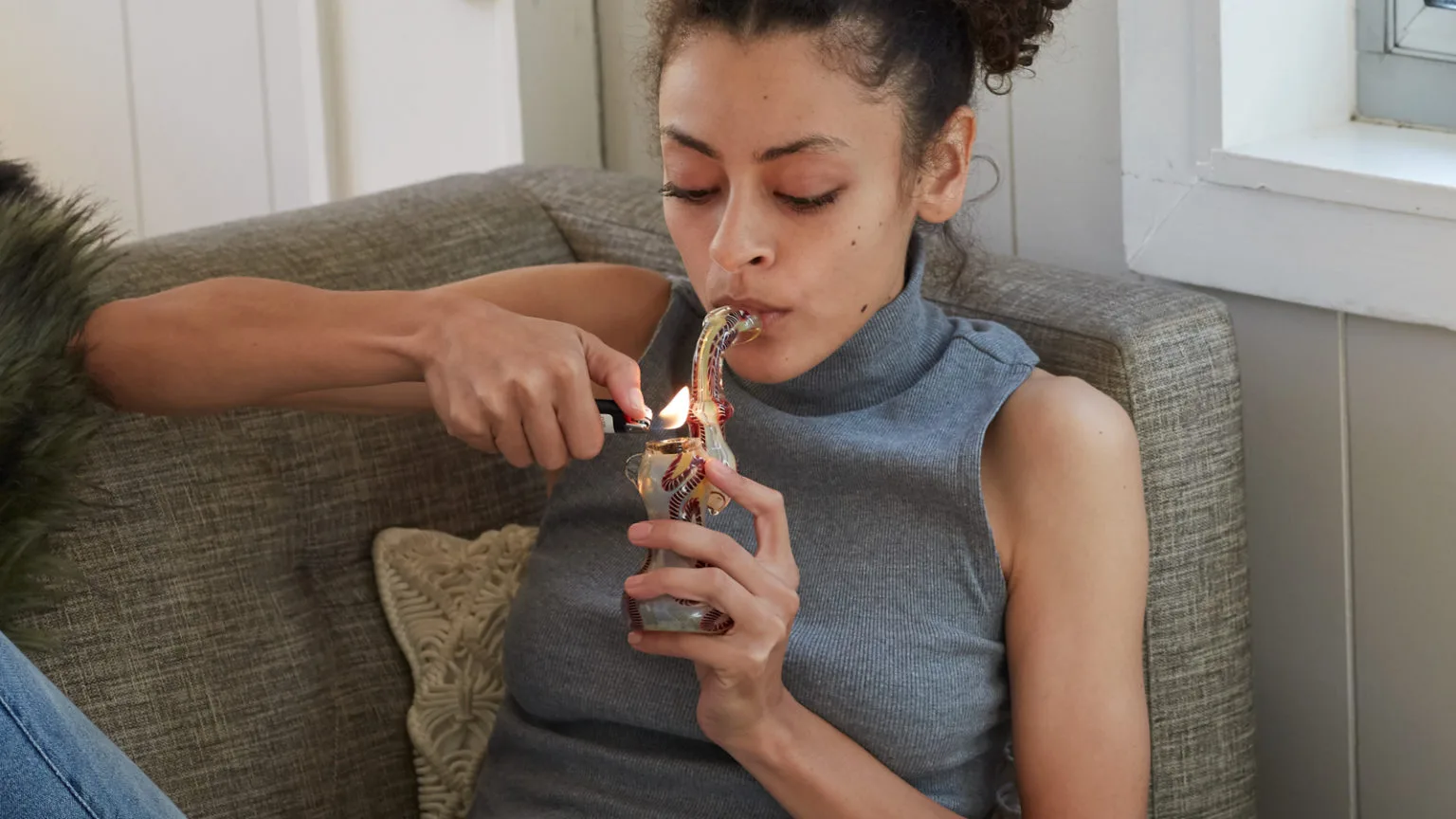
How Much Water to Put in a Bubbler – The Perfect Level
One of the most common questions new bubbler users ask is: "How much water should I put in?" The answer is simple but critical to a good smoking experience [8†L325-L331].
The Simple Rule
Fill the chamber with just enough water to cover the downstem opening by about 1/4 to 1/2 inch.
That's it. Anything less and you won't get filtration. Anything more and you risk splashback [8†L331-L334].
How to Test the Water Level
Step 1 – Add a small amount of water.
Step 2 – Cover the carb and take a dry pull (without lighting).
Step 3 – Listen for a gentle bubbling sound.
- Bubbles? You're good to go.
- No bubbles? Add a little more water.
- Water in your mouth? Pour some out [8†L334-L339].
What Happens with the Wrong Water Level?
| Water Level | Result |
|---|---|
| Too low | No filtration – hits are harsh and hot |
| Just right | Perfect bubbles – smooth, cool hits |
| Too high | Splashback – water in your mouth and on your herb [8†L339-L343] |
Why the Right Water Level Matters
The water in a bubbler does two important things:
- Cools the smoke – water absorbs heat from the smoke, making it less harsh on your throat and lungs.
- Filters the smoke – water traps tar, ash, and other particulates, removing them from the smoke stream.
If there's not enough water, the smoke barely touches the water – minimal cooling and filtration. If there's too much water, the smoke is forced through extra water, causing splashback.
How Often Should You Change the Water?
After every session – or at least daily. Stale water can grow bacteria, affect flavor, and make your bubbler harder to clean [8†L346-L349].
Pro Tips
- Use cold water – colder water cools the smoke better.
- Use filtered water – tap water is fine, but filtered water reduces mineral buildup.
- Don't overthink it – once you find the right level, you'll get a feel for it quickly.
How to Clean a Bubbler – Step‑by‑Step Guide
Cleaning a bubbler is essential for maintaining flavor and performance. A clean bubbler hits smoother, tastes better, and lasts longer. Here's the safe, effective way to clean any glass bubbler [9†L361-L367].
What You'll Need
- Isopropyl alcohol (91% or higher) – the best solvent for resin
- Coarse salt (kosher or rock salt) – an abrasive that won't scratch glass
- Plastic wrap and rubber bands – to seal openings
- Pipe cleaners or a small brush – for tight spots
- Warm (not hot) water – for rinsing
Step‑by‑Step Cleaning
Step 1 – Empty the bubbler
Pour out any old water and remove any loose debris [9†L367-L369].
Step 2 – Add alcohol and salt
Pour about 1/4 cup of isopropyl alcohol into the chamber, followed by 1‑2 tablespoons of coarse salt [9†L369-L371].
Step 3 – Seal and shake
Cover the mouthpiece and carb hole with plastic wrap, securing with rubber bands. Shake vigorously for 1‑2 minutes [9†L371-L374].
Step 4 – Let it soak (if needed)
If there's heavy buildup, let it soak for 15‑30 minutes, then shake again [9†L374-L376].
Step 5 – Rinse thoroughly
Rinse the bubbler with warm water until all alcohol and salt are gone. Make sure there's no alcohol smell left [9†L376-L378].
Step 6 – Air dry
Let the bubbler dry completely before using it again. A hairdryer on cool can speed up the process.
Pro Tips
- Clean after every few uses – don't let resin build up.
- Use coarse salt – fine salt dissolves too quickly.
- Don't use boiling water – it can crack the glass due to thermal shock [9†L380-L384].
How Often Should You Clean a Bubbler?
| Usage Level | Recommended Cleaning |
|---|---|
| Daily | Light rinse after each use; deep clean weekly |
| Weekly | Deep clean every 2‑3 weeks |
| Occasional | Clean before first use, then as needed |
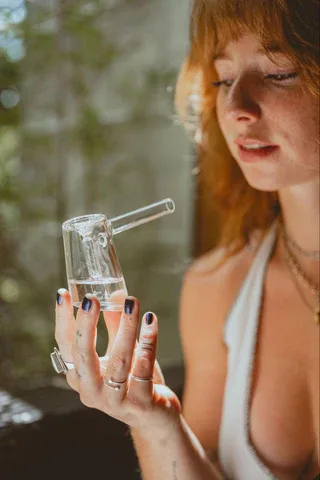
How Much Does a Bubbler Cost? Price Guide
Bubblers range from under $15 to over $100, depending on material, craftsmanship, and design. Here's what to expect at different price points [10†L397-L403].
Price Ranges
| Price Range | What You Get | Examples |
|---|---|---|
| Under $15 | Basic glass, thin walls, simple designs | Mini bubblers, entry‑level hammer bubblers |
| $15‑$30 | Thicker glass, better craftsmanship, more designs | Standard hammer and sidecar bubblers |
| $30‑$60 | High‑quality glass (5mm), artistic designs, percolator bubblers | Premium hammer, Sherlock, and percolator bubblers |
| $60+ | Borosilicate glass, hand‑crafted, complex percolators, custom designs | Artisan bubblers, high‑end sidecar bubblers [10†L403-L410] |
What Affects the Price?
1. Material
Borosilicate glass (Pyrex) is more expensive than soda‑lime glass but is much more durable and heat‑resistant.
2. Thickness
4‑5mm is standard. Thicker glass costs more but lasts longer.
3. Design Complexity
Simple hammer bubblers are cheaper than sidecar or Sherlock designs, which require more glasswork and skill.
4. Percolators
Bubblers with built‑in percolators cost more because of the additional glasswork and improved function.
5. Brand
Well‑known brands (like GRAV, Diamond Glass, or CloverGlass) command higher prices due to consistent quality.
Wholesale vs Retail Prices
For smoke shops, wholesale prices are significantly lower:
| Retail Price | Wholesale Price (approx.) | Markup |
|---|---|---|
| $20 | $8‑$10 | 2‑2.5x |
| $30 | $12‑$15 | 2‑2.5x |
| $50 | $20‑$25 | 2‑2.5x |
| $80 | $30‑$35 | 2‑2.5x |
Is a More Expensive Bubbler Worth It?
For personal use: A $20‑$30 bubbler from a reputable brand is usually the sweet spot – it's durable enough for daily use without being too expensive to replace if broken.
For smoke shops: Stock a mix – entry‑level bubblers for budget customers and premium bubblers for collectors and gift buyers.
Best Bubblers for Beginners – What to Look For
If you're new to bubblers or recommending one to a customer, here's what to look for [11†L424-L430].
What Makes a Bubbler "Beginner‑Friendly"?
1. Simple Design
Hammer and mini bubblers are the simplest – fewer parts, easier to use and clean. Avoid complex percolators or glass‑on‑glass joints until you're comfortable [11†L430-L433].
2. Thick Glass
5mm glass is ideal – it's durable enough to withstand minor accidents but not so heavy that it's cumbersome [11†L433-L436].
3. Stable Base
Look for a bubbler that sits flat and won't tip over easily. Hammer bubblers are especially stable [11†L436-L438].
4. Comfortable Mouthpiece
The lip should feel natural against your mouth. Test it if possible.
5. Affordable Price
Beginners should start with a $15‑$30 bubbler – if you break it, you're not losing a significant investment.
Recommended Bubblers for Beginners
| Type | Why It's Good for Beginners | Price Range |
|---|---|---|
| Mini Bubbler | Very simple, portable, affordable | $10‑$20 |
| Hammer Bubbler | Stable, easy to use, classic design | $15‑$30 |
| Sidecar Bubbler | Easy to see the bowl and smoke | $20‑$35 |
What to Avoid as a Beginner
- Percolator bubblers – harder to clean and more expensive
- Glass‑on‑glass bubblers – more parts to manage
- Thin glass – below 4mm, it's too fragile
- Very cheap ($10‑under) – likely poor quality glass
One Hitters vs Bubblers – Which Should You Choose?
If you're deciding between a one hitter and a bubbler, you're choosing between two very different experiences [12†L454-L460].
What Is a One Hitter?
A one hitter is a small, straight pipe designed for a single, quick hit. It's the most portable and discreet smoking device available. The chamber is tiny – just enough for one dose of material.
Side‑by‑Side Comparison
| Feature | One Hitter | Bubbler |
|---|---|---|
| Size | 2‑4 inches | 5‑8 inches |
| Portability | Excellent | Good |
| Hit size | One small hit | Multiple hits |
| Smoothness | Harsh | Smooth |
| Water filtration | None | Yes |
| Price | $5‑$15 | $15‑$60 |
| Discretion | Very high | Moderate |
| Best for | Quick, stealthy hits | Enjoyable sessions [12†L460-L469] |
Which One Should You Choose?
Choose a One Hitter if:
- You need maximum discretion
- You want quick, minimal hits
- You're on a very tight budget
- You don't smoke regularly
Choose a Bubbler if:
- You want smoother, more enjoyable hits
- You smoke regularly
- You don't mind a slightly larger piece
- You want water filtration
How to Choose the Right Bubbler for Your Smoke Shop
If you're stocking bubblers for your smoke shop, here's how to build a winning selection [13†L482-L488].
What to Stock
Core Inventory (60‑70%):
- Hammer bubblers – the most popular style
- Mini bubblers – great for travel and impulse buys
- Sidecar bubblers – unique design, good margins
Premium Options (20‑30%):
- Sherlock bubblers – higher price, gift appeal
- Percolator bubblers – upsell opportunity
- Glass‑on‑glass bubblers – customization appeal
Budget Options (10‑15%):
- Mini bubblers under $15
- Clearance or overstock items
Price Tiers
| Tier | Price | Examples |
|---|---|---|
| Budget | Under $15 | Mini bubblers, basic hammer bubblers |
| Mid‑range | $15‑$30 | Standard hammer, sidecar, and mini bubblers |
| Premium | $30‑$60 | Sherlock, percolator, and glass‑on‑glass bubblers [13†L495-L501] |
Features to Look For in a Wholesale Supplier
- Consistent quality – every piece should meet the same standard
- Borosilicate glass – not cheap soda‑lime glass
- Reasonable MOQ – 12‑24 pieces per style
- Fast shipping – LA warehouse is ideal
- Warranty – photo‑to‑credit guarantee for breakage
CloverGlass Bubbler Collection – Wholesale Options
At CloverGlass, we manufacture high‑quality bubblers for smoke shops and wholesale buyers. Every piece is made from premium borosilicate glass with clean welds, stable bases, and consistent thickness.
Entry‑Level (Wholesale Under $10)
Hammer Bubbler
- Glass: 4mm‑5mm borosilicate
- Features: Stable base, 14mm joint, fixed bowl
- Sizes: 5″‑6″
- Wholesale Price: Under $10 (MOQ 12)
- Best For: Budget buyers, fast‑moving entry pieces
Mid‑Range (Wholesale $10‑$20)
Hammer Bubbler
- Glass: 5mm borosilicate
- Features: Stable base, 14mm joint, fixed bowl
- Sizes: 6″‑7″
- Wholesale Price: $10‑$15 (MOQ 12)
- Best For: Everyday users, core inventory
Sidecar Bubbler
- Glass: 5mm borosilicate
- Features: Sidecar design, 14mm joint, fixed bowl
- Sizes: 6″‑7″
- Wholesale Price: $12‑$18 (MOQ 12)
- Best For: Customers wanting something unique
Mini Bubbler
- Glass: 4mm‑5mm borosilicate
- Features: Compact design, portable, 14mm joint
- Sizes: 4″‑5″
- Wholesale Price: $8‑$12 (MOQ 12)
- Best For: Travel, impulse buys
Premium (Wholesale $20‑$35)
Sherlock Bubbler
- Glass: 5mm borosilicate
- Features: Curved design, 14mm joint, fixed bowl
- Sizes: 6″‑8″
- Wholesale Price: $20‑$30 (MOQ 12)
- Best For: Premium customers, gift appeal
Percolator Bubbler
- Glass: 5mm borosilicate with built‑in perc
- Features: Percolator, 14mm joint, fixed bowl
- Sizes: 6″‑8″
- Wholesale Price: $25‑$35 (MOQ 12)
- Best For: Smoother hits, upsell opportunity
Wholesale Benefits
- Factory‑direct pricing – no middlemen
- Low MOQ – start with 12 pieces per style
- LA warehouse – fast 2‑5 day shipping
- Photo‑to‑credit warranty – breakage protection
Frequently Asked Questions About Bubblers
Q1: What is a bubbler?
A: A bubbler is a compact, handheld water pipe that uses a small water chamber to cool and filter smoke. It's smaller than a bong but smoother than a dry pipe.
Q2: What's the difference between a bubbler and a bong?
A: Bubblers are smaller, more portable, and hold less water. Bongs are larger, offer superior filtration, and deliver bigger hits.
Q3: Is a bubbler better than a dry pipe?
A: Yes – the water filtration makes hits significantly smoother and more enjoyable than a dry pipe.
Q4: How much water do you put in a bubbler?
A: Just enough to cover the downstem opening by about 1/4 to 1/2 inch. Test with a dry pull – you should hear bubbling but not get water in your mouth.
Q5: Can you use a bubbler for concentrates?
A: Some bubblers can be used for concentrates with a quartz banger, but most are designed for dry herb. Look for a glass‑on‑glass bubbler if you want to use concentrates.
Q6: How do you clean a bubbler?
A: Use isopropyl alcohol (91%+) and coarse salt. Pour into the chamber, seal openings, shake vigorously, soak if needed, then rinse thoroughly.
Q7: How much does a bubbler cost?
A: Entry‑level bubblers cost $10‑$20, mid‑range bubblers $20‑$40, and premium bubblers $40‑$80+.
Q8: Are bubblers good for beginners?
A: Absolutely – bubblers are simple to use, more forgiving than bongs, and provide a noticeably better experience than dry pipes.
Q9: Do bubblers get you higher than pipes?
A: Not inherently – but because the hits are smoother, you can take larger hits without coughing, which may lead to consuming more.
Q10: How do you use a carb on a bubbler?
A: Cover the carb with your thumb while inhaling to fill the chamber with smoke. Release the carb to clear the chamber and inhale the smoke.
Q11: Can I add ice to a bubbler?
A: Most bubblers are too small for ice. The water alone is sufficient for cooling.
Q12: What's the best type of bubbler for beginners?
A: Hammer and mini bubblers are the most beginner‑friendly – they're simple, stable, and easy to clean.
Q13: Are bubblers hard to clean?
A: No – they're easier to clean than bongs. The simple design allows quick access to all interior surfaces.
Q14: What's the MOQ for wholesale bubblers?
A: Most suppliers, including CloverGlass, offer MOQ of 12 pieces per style.
Q15: Where can I buy wholesale bubblers?
A: CloverGlass offers factory‑direct pricing on hammer, sidecar, Sherlock, mini, and percolator bubblers. Low MOQ, fast LA warehouse shipping.
Conclusion + CTA
The bubbler is the perfect middle ground – smoother than a dry pipe, more portable than a bong. It delivers water‑filtered hits in a compact, easy‑to‑use package that's ideal for solo sessions, travel, and everyday use.
For individual smokers: If you're looking for a step up from a hand pipe but don't have the space for a full‑sized bong, a bubbler is the perfect choice. It will noticeably improve your smoking experience.
For smoke shop owners: Bubblers are a reliable, high‑turnover category with steady demand. Stock a variety of styles – hammer, sidecar, Sherlock, mini, and percolator – to appeal to different customers and price points.
👉 Ready to stock wholesale bubblers? CloverGlass offers factory‑direct pricing on hammer, sidecar, Sherlock, mini, and percolator bubblers. Low MOQ (12 pieces per style), fast LA warehouse shipping, and photo‑to‑credit warranty.
Get wholesale pricing: [Contact our B2B team]
Order online: https://cloverglasspipe.com/wholesale-glass-smoking-accessories/glass-hand-pipes/wholesale-glass-bubblers/
Email Frank: Fr***@********pe.com