Contents
- 1 How to Clean a Glass Oil Burner Without Alcohol (3 Natural Alternatives)
- 1.1 Why Clean Without Alcohol?
- 1.2 What You’ll Need (Common Household Items)
- 1.3 Method 1: White Vinegar – The Degreaser
- 1.4 Method 2: Baking Soda – The Abrasive Soak
- 1.5 Method 3: Denture Tablets – The Fizzing Cleaner
- 1.6 Comparison Table: Which Method Works Best?
- 1.7 When to Use Alcohol Anyway (And Why We Still Recommend It)
- 1.8 Pro Tips for Keeping Your Glass Oil Burner Clean Longer
- 1.9 Conclusion + CTA
- 1.10 FAQ
How to Clean a Glass Oil Burner Without Alcohol (3 Natural Alternatives)
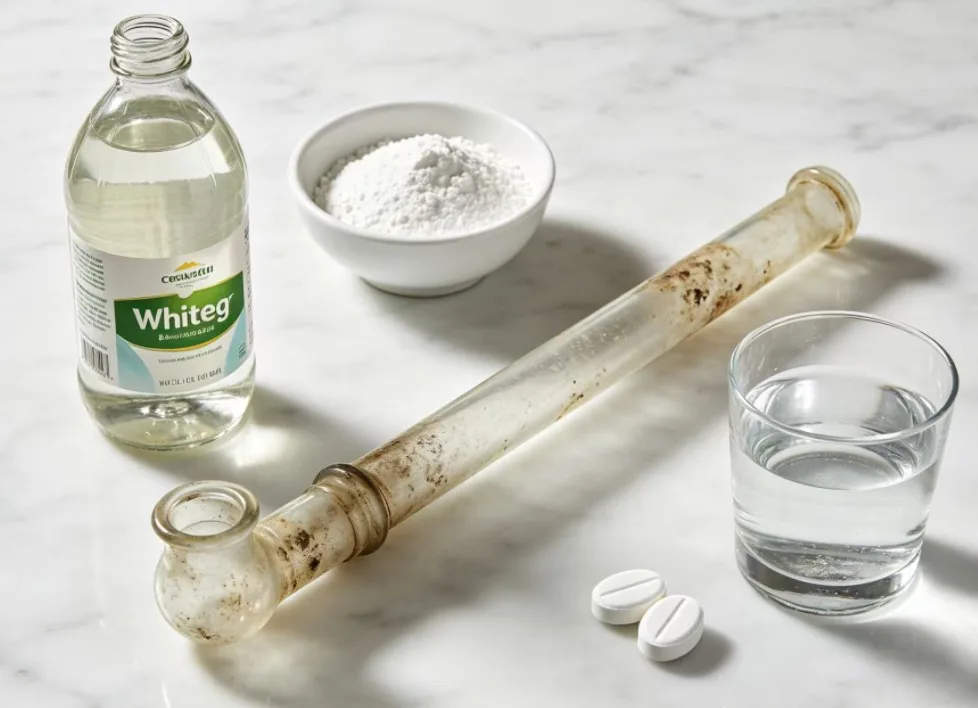
You’re out of isopropyl alcohol, or you just don’t want harsh chemicals near your smoking gear. Can you still get your glass oil burner clean? Yes – with everyday household items that are safe, effective, and cheap.
You can clean a glass oil burner pipe using white vinegar, baking soda, or denture tablets. Each method works differently, but all three are alcohol‑free and non‑toxic. This guide walks you through the steps, compares results, and tells you when to stick with alcohol for the deepest clean.
I’m Frank from CloverGlass. I’ve been selling and testing glass oil burners for over a decade. I know the struggle: you want a clean piece, but the alcohol bottle is empty. Here’s what actually works.
Why Clean Without Alcohol?
Isopropyl alcohol (91%+) is the gold standard for cleaning resin. It dissolves sticky buildup fast. But sometimes:
- You run out and don’t want to wait for delivery.
- You prefer to avoid chemical solvents.
- You’re traveling and only have kitchen basics.
That’s where natural alternatives come in. They won’t work as fast or as aggressively as alcohol, but with a little patience, they can get your glass oil burner surprisingly clean – without harsh fumes.
What You’ll Need (Common Household Items)
| Item | Where to Find | Purpose |
|---|---|---|
| White vinegar | Kitchen pantry | Mild acid to dissolve residue |
| Baking soda | Kitchen pantry | Gentle abrasive + deodorizer |
| Denture tablets (e.g., Polident) | Drugstore, supermarket | Effervescent action to lift debris |
| Warm water | Tap | Base for all methods |
| Pipe cleaners or soft brush | Smoke shop, craft store | Reach narrow tubes |
| Ziploc bag or small container | Kitchen | To soak small parts |
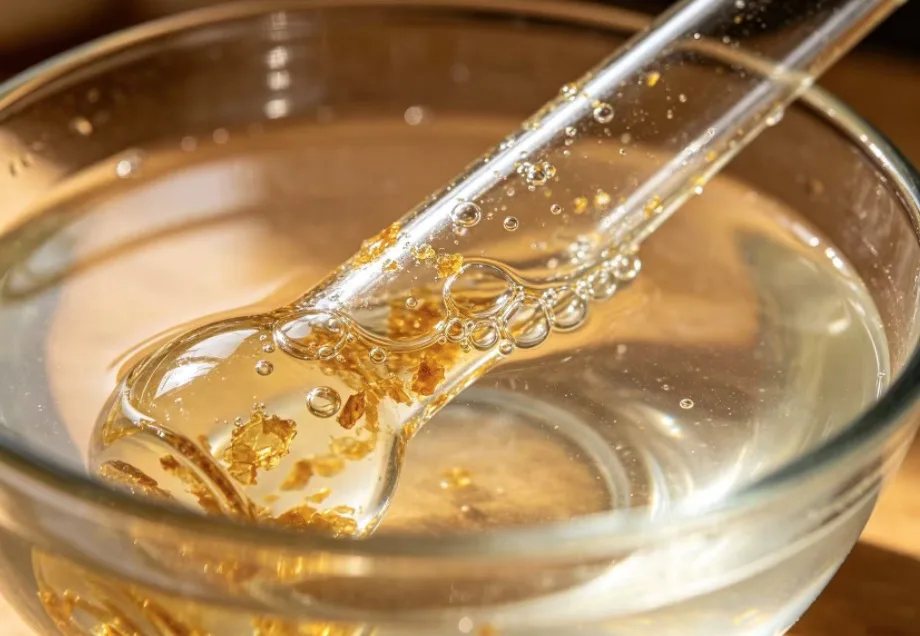
Method 1: White Vinegar – The Degreaser
White vinegar is a mild acid that breaks down resin and deodorizes glass. It won’t damage your oil burner, but it needs time – usually a few hours to overnight.
Step‑by‑step
- Disassemble your glass oil burner (remove bowl, downstem if separate).
- Place the glass pieces in a bowl or Ziploc bag. Cover completely with undiluted white vinegar.
- Let it soak for at least 2 hours. For heavy buildup, soak overnight.
- Scrub gently with a pipe cleaner or soft brush. Resin that has softened will come off easily.
- Rinse thoroughly with warm water. Repeat if needed.
Pros & Cons
| Pros | Cons |
|---|---|
| Non‑toxic, no smell (after rinsing) | Slow – needs hours of soaking |
| Cheap and available everywhere | Not as strong on thick, baked‑on resin |
| Removes hard water stains too | May require scrubbing |
My take: Vinegar is great for light to medium buildup and for regular maintenance. If your oil burner looks like a black tar pit, skip to Method 3 or use alcohol.
Method 2: Baking Soda – The Abrasive Soak
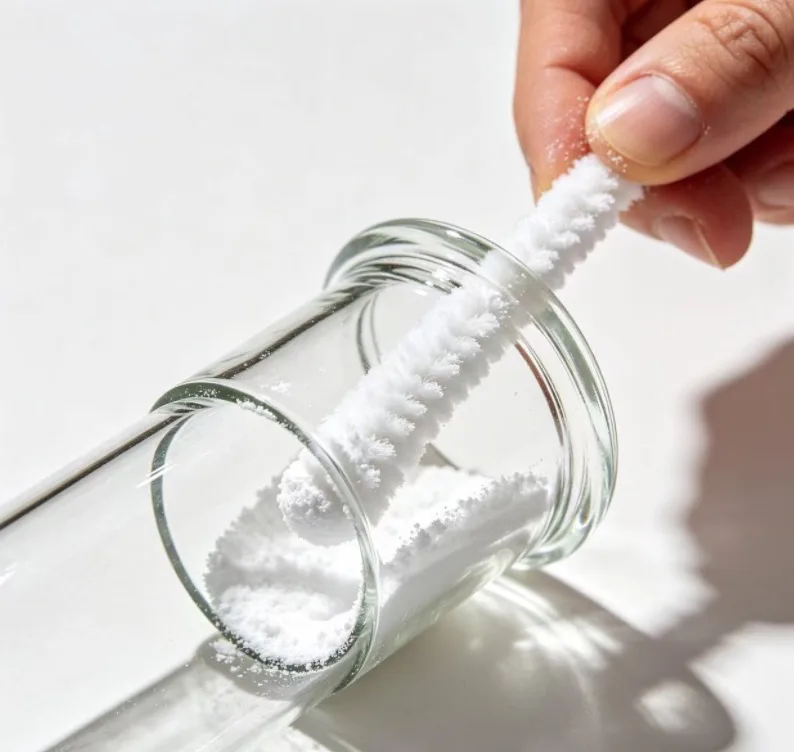
Baking soda is a mild alkali that cuts grease and acts as a gentle scrub. When mixed with warm water, it creates a paste that can lift resin without scratching glass.
Step‑by‑step
- Make a paste by mixing 3 parts baking soda with 1 part warm water. It should be thick but spreadable.
- Apply the paste inside the oil burner’s bulb and tube. Use a pipe cleaner or cotton swab to push it into narrow areas.
- Let it sit for 30–60 minutes. The baking soda will slowly absorb oils and loosen debris.
- Add warm water and shake gently. The paste will fizz slightly (normal).
- Rinse thoroughly with warm water. Use a brush to remove any remaining residue.
For extra stubborn residue:
- Fill the oil burner with a baking soda + water solution (1 tablespoon per cup) and let it soak overnight.
- Next morning, add a little more baking soda to make a slurry, then shake.
Pros & Cons
| Pros | Cons |
|---|---|
| Very cheap, food‑safe | Requires manual scrubbing |
| Deodorizes as it cleans | Not effective for thick, hardened resin |
| No chemical smell | Can be messy |
My tip: Baking soda works best as a follow‑up to vinegar. Soak in vinegar first, then scrub with baking soda paste. The combination tackles both grease and odor.
Method 3: Denture Tablets – The Fizzing Cleaner
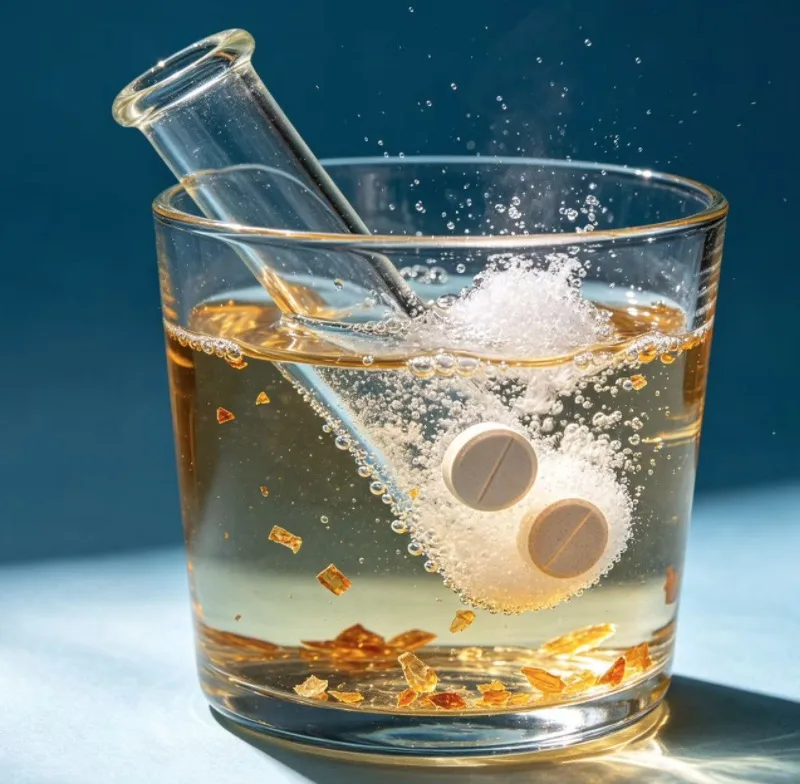
Denture tablets (like Polident or Efferdent) use effervescence to lift debris from tiny crevices. Drop one in warm water, and the fizzing action reaches places a brush can’t.
This method is surprisingly effective for glass oil burners with narrow tubes or intricate percolators.
Step‑by‑step
- Fill a container with enough warm (not hot) water to fully submerge your glass oil burner.
- Drop in 1–2 denture tablets (depending on size of container and level of buildup).
- Let it fizz for 10–15 minutes. You’ll see bubbles carrying away loose resin.
- Let it soak for an additional 30–60 minutes after the fizzing stops.
- Rinse with warm water. Use a pipe cleaner to remove any remaining residue.
Pros & Cons
| Pros | Cons |
|---|---|
| Effervescence reaches everywhere | You need to buy tablets (but cheap) |
| Very little scrubbing required | Not as powerful as alcohol |
| Leaves a clean, fresh scent | Some tablets may have mint or flavor – rinse well |
My experience: I was skeptical about denture tablets until I tested them on a badly clogged oil burner. After 45 minutes, the resin was floating in the water. It won’t get it 100% like new, but it’s a solid 80–90% clean with almost no work.
Comparison Table: Which Method Works Best?
| Method | Speed | Effort | Best For | Effectiveness (1–10) |
|---|---|---|---|---|
| White vinegar | Slow (hours) | Low | Light buildup, regular maintenance | 6 |
| Baking soda | Medium (30–60 min) | Medium | Greasy residue, odor removal | 5 |
| Denture tablets | Medium (30–60 min) | Very low | Narrow tubes, percs, moderate buildup | 7 |
| Isopropyl alcohol (reference) | Fast (10–15 min) | Low | Heavy buildup, deep clean | 10 |
When to Use Alcohol Anyway (And Why We Still Recommend It)
Let me be honest: none of these natural methods beat 91%+ isopropyl alcohol + coarse salt for speed and deep cleaning. Alcohol dissolves resin chemically; natural methods rely on time, abrasion, or mild acids.
Use alcohol when:
- Your oil burner is heavily clogged.
- You want a quick clean before a session.
- You don’t mind the smell (it evaporates).
Use natural methods when:
- You’re out of alcohol.
- You prefer to avoid solvents.
- You’re doing light, frequent maintenance.
At CloverGlass, we still ship every wholesale order with a cleaning recommendation card that says: alcohol + salt for deep clean, vinegar or denture tablets for maintenance. No single method is perfect – choose what fits your situation.
Pro Tips for Keeping Your Glass Oil Burner Clean Longer
- Rinse after every use – Warm water alone removes fresh residue before it hardens.
- Don’t let resin bake on – If you use a torch, clean more often. Heat turns resin into carbon that’s much harder to remove.
- Use a screen – A small glass or metal screen catches debris before it reaches the narrow tube.
- Store upright – Keeps oils from pooling in the bulb.
Conclusion + CTA
You don’t always need alcohol to clean a glass oil burner. Vinegar, baking soda, and denture tablets are safe, effective alternatives – especially for light to moderate buildup. For heavy resin, nothing beats isopropyl alcohol + salt.
If you’re a smoke shop owner looking for high‑quality glass oil burners that are easy to clean and built to last, CloverGlass has you covered. We stock 14mm and 18mm oil burners, thick borosilicate glass, and wholesale pricing with low MOQs. Contact us for a quote.
👉 Get Wholesale Quote – [Contact us here]
👉 Order Online – [https://cloverglasspipe.com/order-glass-smoking-products-online/]
👉 Email Frank directly – Fr***@********pe.com
FAQ
Q1: Can I use lemon juice instead of vinegar?
A: Yes, lemon juice is also a mild acid. It works similarly but may leave a citrus scent. Rinse thoroughly.
Q2: Will baking soda scratch my glass?
A: No – baking soda is much softer than glass. It’s safe for routine cleaning.
Q3: How long should I soak with denture tablets?
A: 30–60 minutes is usually enough. For heavy buildup, you can do a second soak with fresh tablets.
Q4: Can I mix vinegar and baking soda?
A: They react to create carbon dioxide (fizz) and water – but the fizz is short‑lived and doesn’t improve cleaning much. Use them separately for best results.
Q5: Are these methods safe for painted or decal oil burners?
A: Vinegar and baking soda are generally safe on baked‑on paints, but avoid soaking painted surfaces for hours. Denture tablets are also safe. Test on a small area first.
Q6: Why does my oil burner still smell after cleaning?
A: Residue may be trapped in a crevice. Try a second soak with vinegar (which neutralizes odors) or use a pipe cleaner to scrub inside the tube.
Q7: How often should I clean my glass oil burner?
A: Light rinse after every session. Deep clean once a week if used daily, or whenever you see visible buildup.
Q8: Can I boil my glass oil burner to clean it?
A: No – boiling water can cause thermal shock and crack the glass. Never boil your oil burner.
Q9: Where can I buy denture tablets?
A: Any drugstore (CVS, Walgreens), supermarket, or online (Amazon). Generic brands work fine.
Q10: Do you offer wholesale pricing on glass oil burners?
A: Yes – we are a factory‑direct supplier with LA warehouse stock. MOQ 12 pieces, mix and match. Email Fr***@********pe.com for a quote.