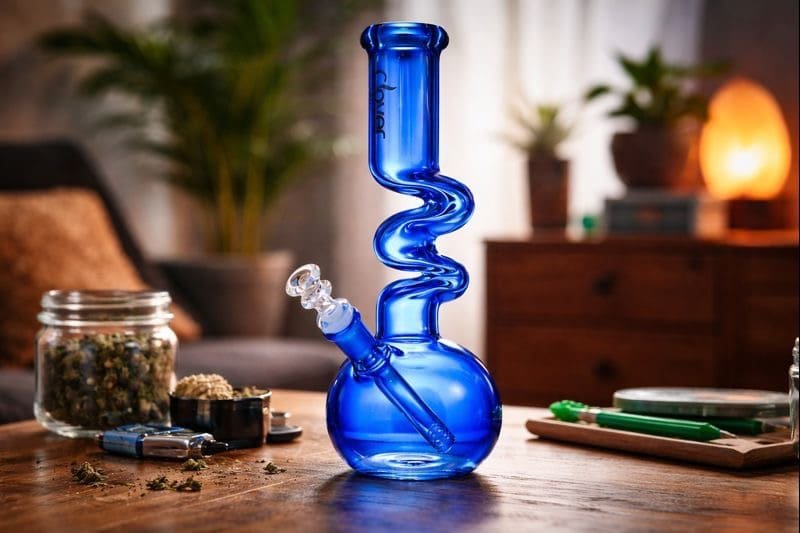
Dirty taste, weak airflow, and a bong that tips easily? That’s usually not the glass—it’s the buildup. Clean the right way, and a Zong hits smooth, looks sharp, and lasts years longer.
To clean a Zong glass bong properly, drain it, rinse with warm water, soak with isopropyl alcohol and coarse salt, gently rotate to reach bends, then rinse and air-dry. Avoid boiling water and sudden temperature changes.
I’ve tested this routine on hundreds of bent-neck pieces in our factory QC room and at our LA warehouse returns desk. It works. Let me show you how—and what not to do.
Contents
- 1 How do you clean a Zong glass bong properly?
- 2 What makes a Zong glass bong harder to clean than a straight bong?
- 3 What supplies do you need to clean a Zong bong?
- 4 Step-by-step: How to clean a Zong glass bong safely
- 5 Can you use boiling water to clean a Zong glass bong?
- 6 How often should you clean a Zong glass bong?
- 7 How do you clean hard-to-reach bends in a Zong bong?
- 8 What cleaning mistakes can damage a Zong glass bong?
- 9 Does regular cleaning extend the life of a Zong glass bong?
- 10 Conclusion
- 11 FAQ
How do you clean a Zong glass bong properly?
The safest way to clean a Zong glass bong is a warm-rinse plus an alcohol-and-salt soak, followed by gentle rotation instead of shaking. This removes resin while protecting stress points in the bends.
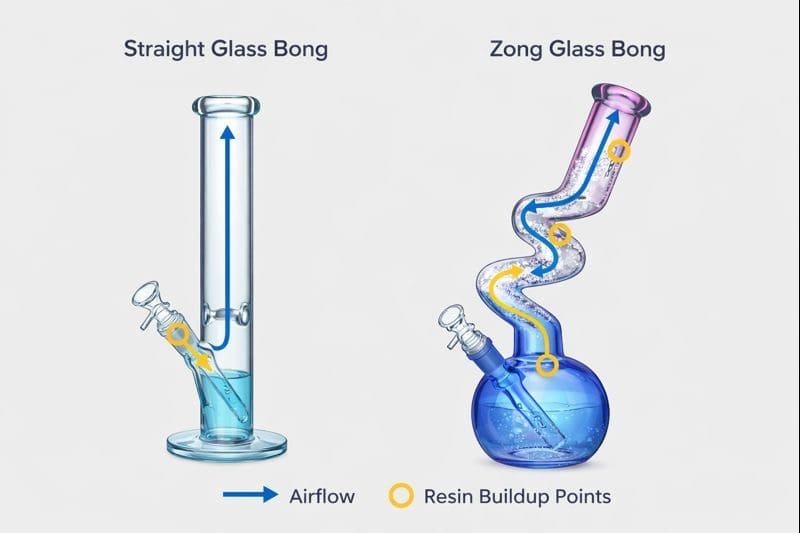
Zong bongs look great, but their zig-zag tubes change how resin builds up. Straight bongs collect gunk mostly at the base and joint. Zongs trap it in the bends. That’s why shaking hard is the fastest way to crack one.
I always start by emptying the bong completely. Old water holds smell and loose debris. Then I rinse with warm—not hot—water to soften residue.
Next comes the soak. I use 91–99% isopropyl alcohol and coarse salt. The alcohol dissolves resin. The salt adds gentle abrasion. For Zongs, I rotate the bong slowly so gravity carries the solution through each bend. No violent shaking.
After soaking 20–30 minutes, I rinse thoroughly with warm water until there’s no alcohol smell. Then I air-dry upside down.
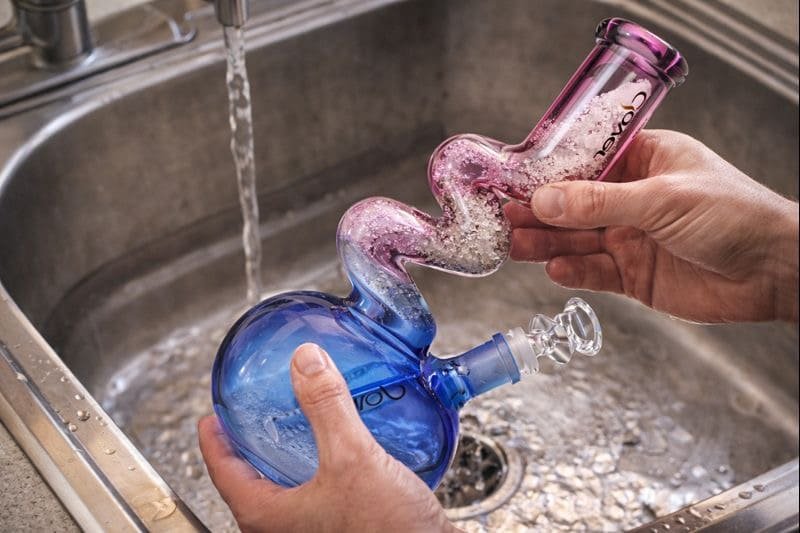
Why rotation beats shaking
Shaking creates pressure spikes at angled joints. Rotation keeps force even.
Factory anecdote
Years ago, customers cracked Zongs using boiling water. Same glass. Wrong method. Once we shared this routine, breakage dropped fast.
What makes a Zong glass bong harder to clean than a straight bong?
Zong bongs are harder to clean because resin settles in multiple bends, airflow slows in corners, and stress concentrates at angles.
The zig-zag design changes airflow. Smoke cools more. That’s good for hits. But cooler smoke leaves more residue behind.
Each bend becomes a resin shelf. Over time, those shelves harden.
Every bend is also a stress point. Sudden temperature changes or strong force focus there first. That’s why shortcuts damage Zongs more than straight tubes.
Bent neck airflow
More turbulence equals more buildup.
Stability note
Always clean Zongs on a padded, flat surface. Their shape tips easily when wet.
What supplies do you need to clean a Zong bong?
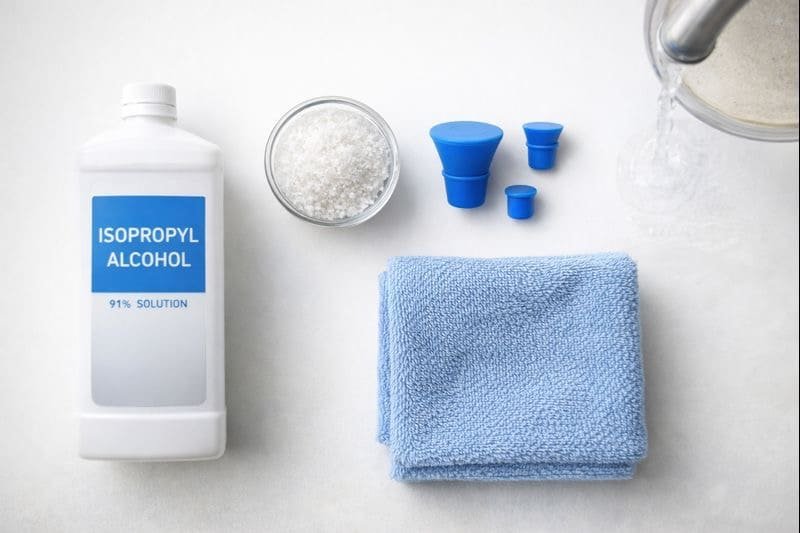
You only need alcohol, coarse salt, warm water, and soft plugs. Avoid metal tools and boiling water.
Basic checklist
- [ ] 91–99% isopropyl alcohol
- [ ] Coarse salt (kosher or rock)
- [ ] Warm water
- [ ] Silicone plugs or plastic wrap
- [ ] Towels or microfiber cloth
Optional:
- Rubber gloves
- Bucket or sink basin
Do not use:
- Metal brushes
- Boiling water
- Dishwashers
Why high-proof alcohol
Works faster. Less movement. Less risk.
Step-by-step: How to clean a Zong glass bong safely
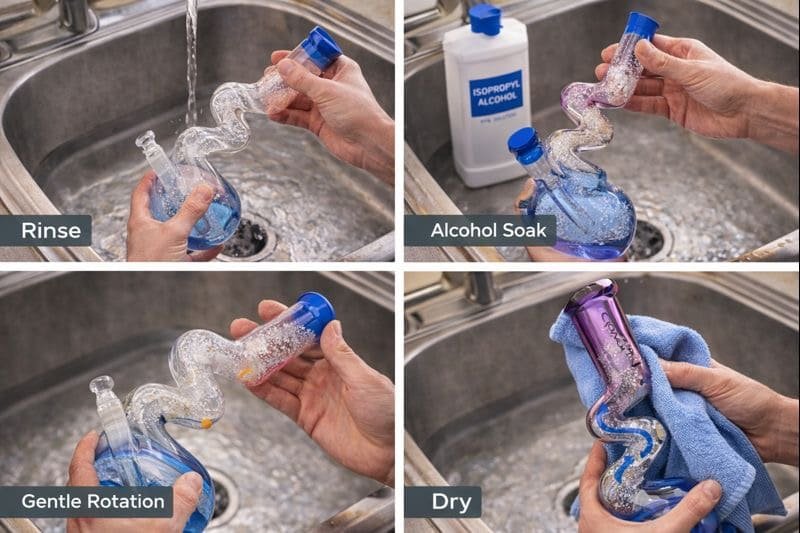
Clean a Zong bong by draining, warm-rinsing, soaking with alcohol and salt, rotating gently, rinsing fully, and air-drying.
Step 1 — Drain & rinse
Empty water. Rinse with warm water 30–60 seconds.
Step 2 — Add cleaner
Fill bends with alcohol. Add 1–2 tbsp coarse salt.
Step 3 — Seal openings
Use silicone caps or plastic wrap.
Step 4 — Rotate slowly
Tilt and rotate so solution reaches each bend.
Step 5 — Soak
20–30 minutes. Heavy buildup: up to 45.
Step 6 — Rinse
Warm water until clean and odor-free.
Step 7 — Dry
Air-dry upside down.
Warm rinse → Alcohol + salt → Rotate → Soak → Rinse → Dry
Timing tip
Cleaning soon after use is easier.
Can you use boiling water to clean a Zong glass bong?
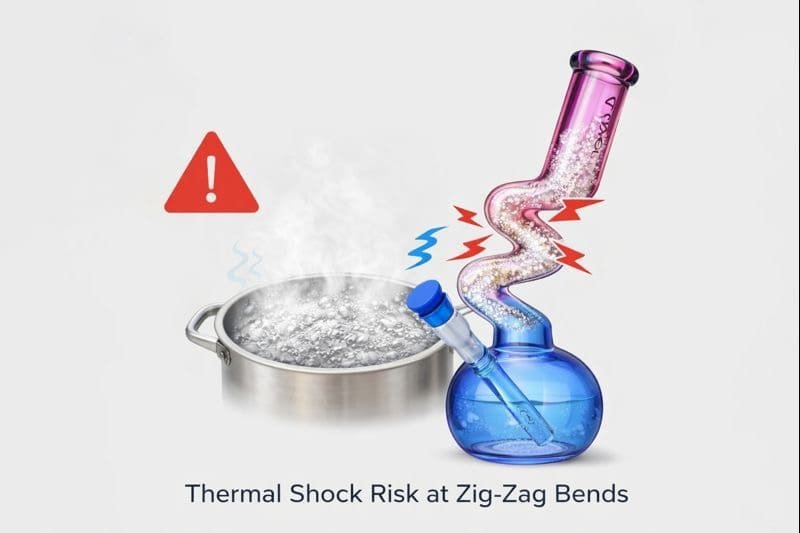
No. Boiling water causes thermal shock, especially at bends, and can crack a Zong bong.
Even borosilicate glass has limits. Bends heat unevenly. Boiling water stresses joints and corners.
I’ve seen Zongs survive once—and fail later.
Warm water is enough. Alcohol does the work.
Temperature rule
If you can’t hold it, it’s too hot.
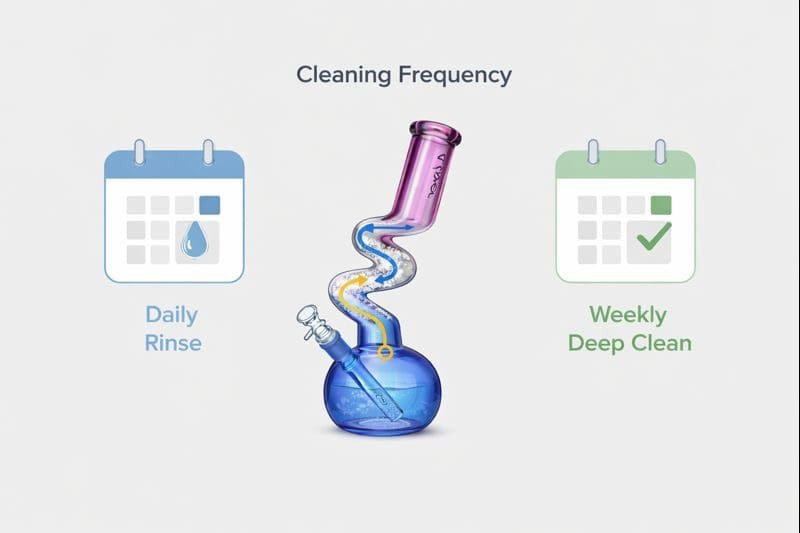
How often should you clean a Zong glass bong?
Daily users should rinse daily and deep-clean weekly; casual users every 2–3 weeks.
Daily use
- Rinse after sessions
- Deep clean every 5–7 days
Occasional use
- Rinse after use
- Deep clean every 2–3 weeks
Clean glass tastes better and lasts longer.
How do you clean hard-to-reach bends in a Zong bong?
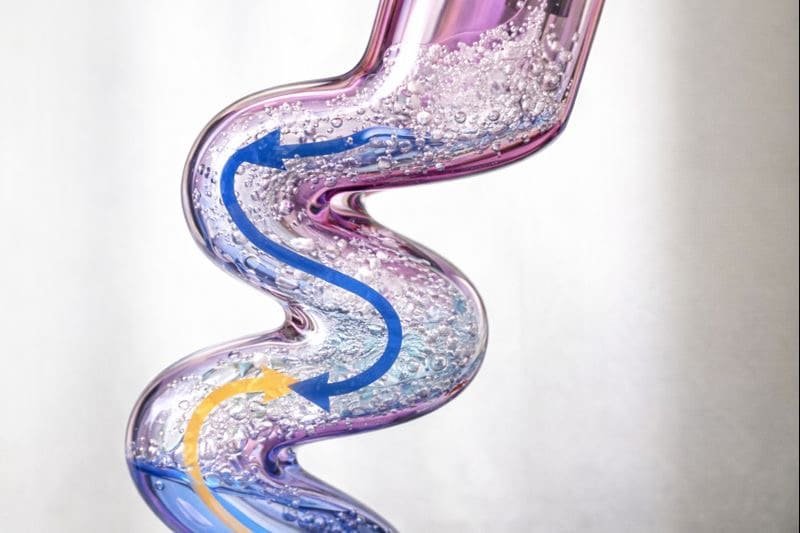
Use longer soak times and gravity rotation—never force tools into bends.
Let chemistry work. Extend soak time. Rotate slowly. Pause at each bend.
Repeat with fresh alcohol if needed.

Avoid tools
Pipe cleaners and brushes scratch and stress bends.
What cleaning mistakes can damage a Zong glass bong?
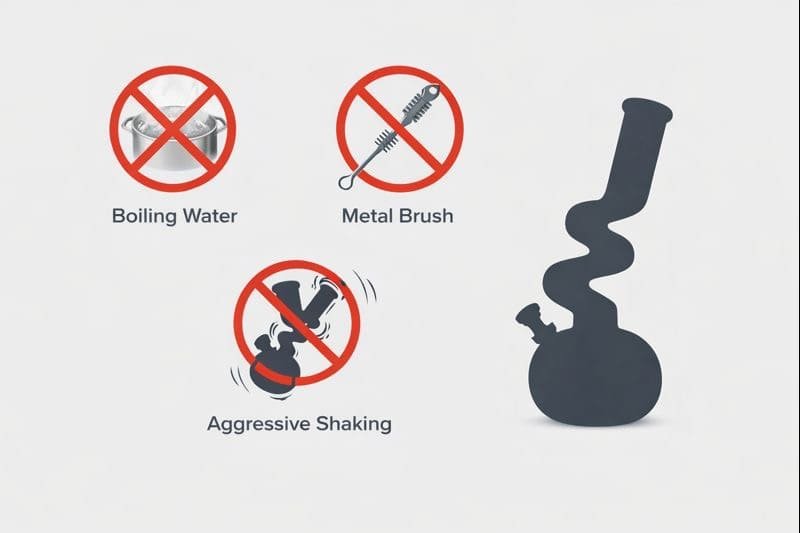
Boiling water, aggressive shaking, metal tools, and sudden temperature changes cause most damage.
Common mistakes:
- Boiling water
- Ice-cold rinses after heat
- Hard shaking
- Metal brushes
- Slippery handling
Does regular cleaning extend the life of a Zong glass bong?
Yes. Regular cleaning reduces stress, prevents resin corrosion, and protects joints.
Clean glass heats evenly. Dirty glass creates hot spots.
From factory and after-sales data, weekly cleaners report far fewer cracks.
Conclusion
Cleaning a Zong glass bong isn’t hard—but it must be done right. Respect the bends. Control heat. Use time, not force. You’ll get better taste, smoother hits, and a longer-lasting piece.
For retailers, proper care guides reduce returns and improve satisfaction.
CTAs
- Order Online: https://cloverglasspipe.com/order-glass-smoking-products-online/
- Get wholesale quote / Request OEM samples: Fr***@********pe.com
- Visit our LA warehouse for fast shipping and in-stock Zong styles
FAQ
Q1: Can I clean a Zong bong with vinegar?
A: Vinegar removes odor but not heavy resin. Alcohol works better.
Q2: Is salt necessary?
A: Yes. It scrubs without scratching.
Q3: Can I soak overnight?
A: Possible, but 30–45 minutes is usually enough.
Q4: Should I clean after every use?
A: Rinse after use. Deep-clean weekly.
Q5: Why does it still smell?
A: Residue in bends. Repeat soak and rotation.
Q6: Are commercial cleaners safe?
A: Most are, if they don’t require boiling water.
Q7: Does cleaning improve airflow?
A: Yes. Clean bends restore smooth draw.
Q8: Is borosilicate easy to clean?
A: Yes, with proper temperature control.
Q9: What water temperature is safest?
A: Warm and touchable.
Q10: Do you include care tips with wholesale orders?
A: Yes. We provide cleaning guidance to reduce breakage.