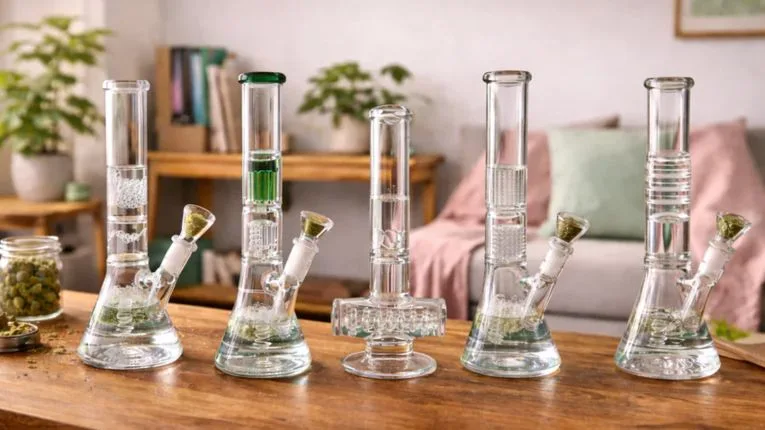
If you've ever browsed a smoke shop or scrolled through online headshops, you've undoubtedly encountered the beaker bong. Named after the laboratory beaker due to its wide, cone‑shaped base, this classic water pipe has been a favorite among smokers for decades—and for good reason. Whether you're a first‑time buyer trying to figure out which piece to start with, or a seasoned enthusiast looking to upgrade, the beaker bong offers unmatched stability, smooth hits, and a timeless aesthetic.
But with so many options—different sizes (10‑inch, 12‑inch, 18‑inch), glass thickness (5mm vs 9mm), joint sizes, and brands—choosing the right one can feel overwhelming. Should you go with a 12 inch beaker bong or a 16 inch beaker bong? What's the difference between a beaker bong and a straight tube bong? And how do you clean it properly?
In this guide, I'll answer all these questions and more. I'll break down the anatomy of a beaker bong, compare it with other popular designs (round bottom, straight tube), explain how glass thickness affects durability, provide a clear size recommendation, and even share a step‑by‑step cleaning routine. By the end, you'll know exactly what to look for when buying your next beaker bong—whether you're shopping for a cheap beaker bong or a premium 9mm thick piece.
Note: All prices and shipping estimates in this article are based on market averages as of 2026. Actual costs may vary by brand, retailer, and season. Always check current deals and compare multiple sellers before purchasing.
What Is a Beaker Bong? Anatomy, Function, and How to Use It
If you're new to the world of water pipes, you've probably seen the term "beaker bong" thrown around. Named after the classic laboratory beaker, this design is one of the most iconic and widely used smoking devices on the market. But what exactly makes a beaker bong different from other bongs? And how does it work?
In this guide, I'll break down every part of a beaker bong, explain how it functions, and give you a step‑by‑step walkthrough on using it correctly. Whether you're considering your first purchase or just curious about the mechanics, this article will give you a solid foundation.
What Defines a Beaker Bong?
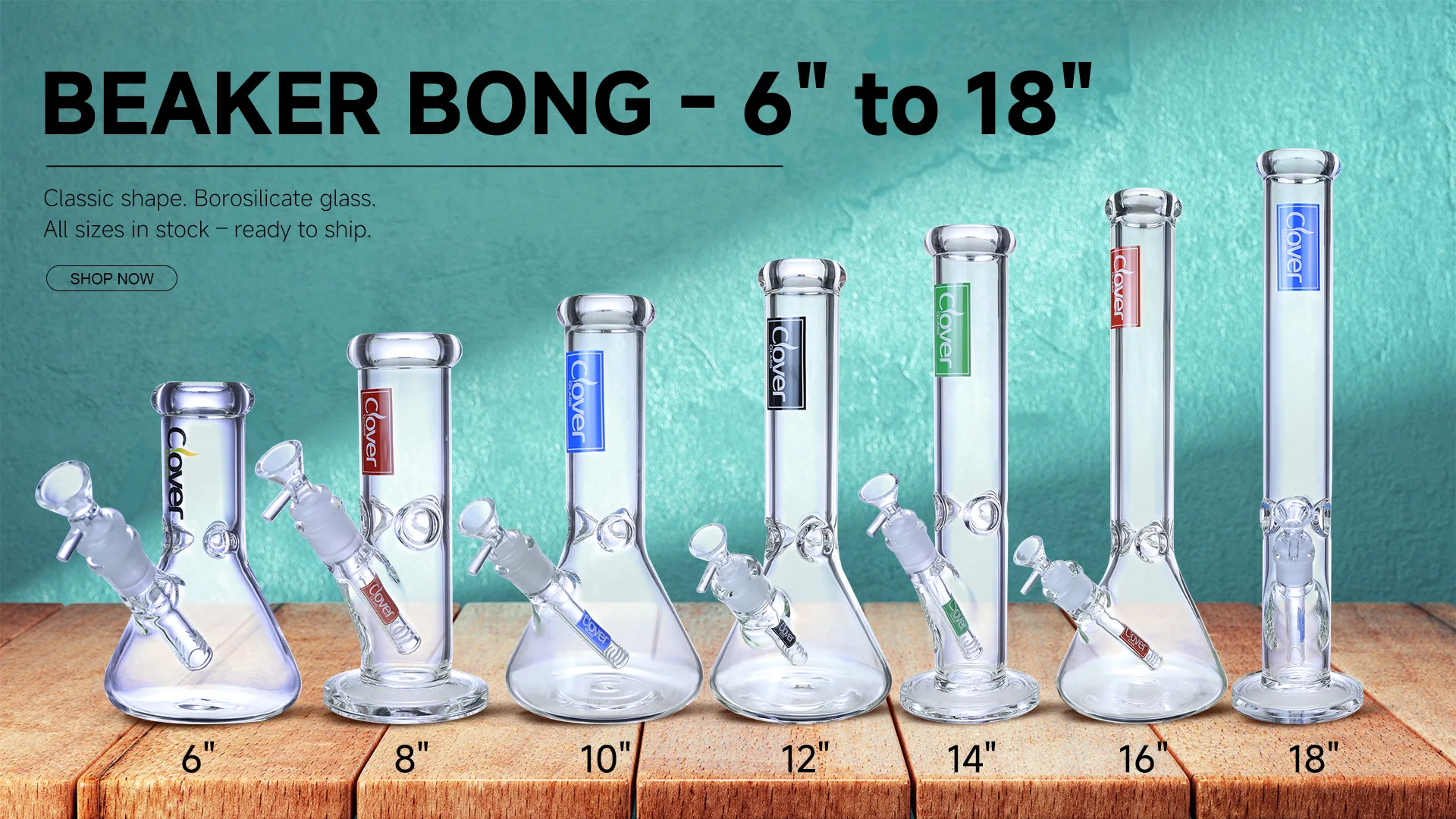
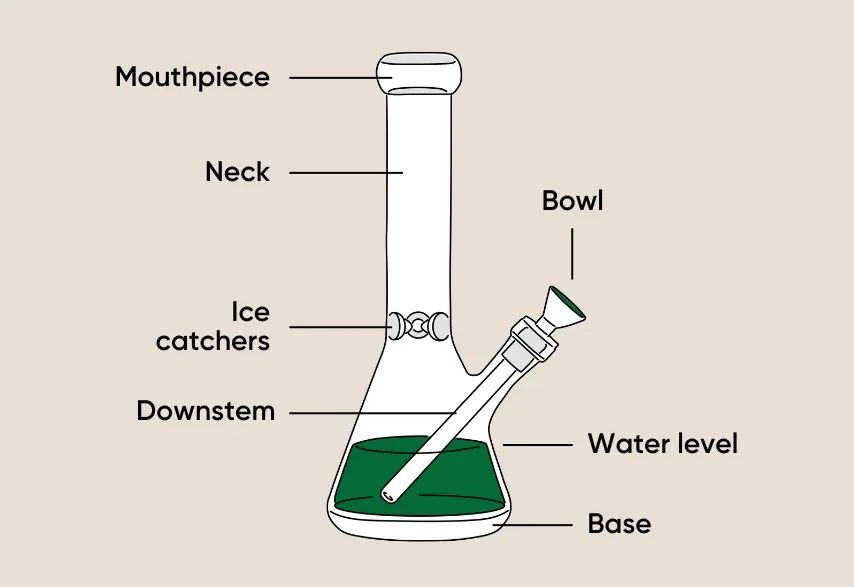
A beaker bong is a water pipe characterized by its wide, cone‑shaped base that flares outward, resembling a laboratory beaker. This base is flat on the bottom, providing exceptional stability. From the base, a straight neck rises vertically, ending in a mouthpiece. A removable downstem and bowl are attached at an angle near the base.
The design is not just for looks – the wide base holds more water than straight tubes, which means better filtration and cooler hits. The flared shape also lowers the center of gravity, making it very difficult to tip over.
Common Variations and Misspellings
When searching online, you might encounter variations like:
- Beaker bong (standard)
- Beeker bong (common typo)
- Beaker style bong
- Glass beaker bong
- Breaker bong (another misspelling)
- Bong beaker (reverse order)
All of these refer to the same basic design. Don't let misspellings confuse you – they all lead to the same product category.
The Anatomy of a Beaker Bong
To truly understand how a beaker bong works, you need to know its parts. Every beaker bong consists of the following components:
1. The Base (Beaker Bottom)
The wide, flared section at the bottom. It holds the water and provides a low, stable center of gravity. The base is typically flat, allowing the bong to sit securely on any surface. Some bases are reinforced with extra glass for durability.
2. The Neck (Tube)
The straight vertical section that rises from the base to the mouthpiece. Smoke travels up through this chamber before you inhale. The neck can vary in length and sometimes features an ice catcher – small glass indentations that hold ice cubes to cool the smoke.
3. The Downstem
A removable glass tube that extends from the bowl joint down into the water. The bottom of the downstem is slitted or perforated to break up the smoke into smaller bubbles. This diffusion increases the surface area of the smoke‑water contact, filtering out more particulates and tar.
4. The Bowl
The removable piece where you place your smoking material (dry herb, tobacco, or concentrates). Bowls come in standard sizes – most beaker bongs use a 14mm female joint, though some use 18mm. The bowl's depth and shape affect airflow and burn rate.
5. The Mouthpiece
The opening at the top of the neck. It's usually flared slightly for a comfortable lip seal. Some mouthpieces are angled for ergonomic use.
6. Ice Catcher (Optional)
Not all beaker bongs have one, but many do. It's a set of glass pinches inside the neck that hold ice cubes above the water. As smoke passes over the ice, it cools dramatically, resulting in a much smoother hit.
7. Joint Size and Type
The joint is where the bowl and downstem connect to the bong. The two most common sizes are 14mm and 18mm. The joint can be female (the downstem slides into the bong) or male (the downstem slides over the bong). For beaker bongs, a 14mm female joint is the industry standard.
How a Beaker Bong Works: The Science of Filtration
The principle behind any water pipe is simple: smoke passes through water, which cools and filters it. In a beaker bong, the process unfolds as follows:
- You light the bowl – The heat vaporizes the material, producing smoke.
- You inhale – The suction draws smoke down through the bowl and into the downstem.
- Diffusion – As smoke exits the downstem's slits, it breaks into tiny bubbles. This increases contact with water, trapping larger particles and cooling the smoke.
- Smoke rises – The bubbles rise through the water and into the empty space of the base, then travel up the neck.
- Cooling (optional) – If you've added ice to the catcher, the smoke further cools as it passes over the ice.
- Inhalation – You inhale the filtered, cooled smoke from the mouthpiece.
- Clearing – Once the chamber is full of smoke, you remove the bowl (or pull the downstem if it's a slide) to allow fresh air in, then inhale deeply to clear the chamber.
This process takes only a few seconds, but it makes a huge difference in harshness compared to smoking from a pipe or joint.
Step‑by‑Step Guide: How to Use a Beaker Bong (for Beginners)
Using a beaker bong is straightforward, but following the right steps ensures the best experience and avoids common mistakes.
What You'll Need
- Your beaker bong
- Fresh water (filtered or tap)
- Your smoking material
- A lighter or hemp wick
- A grinder (optional but recommended)
Step 1: Add Water
Pour water into the base through the mouthpiece or downstem hole. The water level should cover the slits of the downstem by about 1 inch (2.5 cm). Too little water means poor filtration; too much leads to splashback when you inhale.
Step 2: Pack the Bowl
Grind your material and pack it loosely into the bowl. Avoid overpacking – tight packs restrict airflow and cause uneven burning. Fill the bowl to the rim but don't press down hard.
Step 3: Insert the Bowl and Downstem
Ensure the downstem is fully seated in the bong's joint. Then insert the bowl into the downstem. The connection should be snug but not forced.
Step 4: Add Ice (Optional)
If your bong has an ice catcher, drop 2‑3 ice cubes down the neck. They'll rest on the pinches. This is especially popular with larger beaker bongs like the 12‑inch or 18‑inch models.
Step 5: Light and Inhale
Place your lips around the mouthpiece, forming a seal. Apply the flame to the bowl while inhaling gently. You'll see smoke fill the chamber. Inhale at a steady pace – not too fast (to avoid pulling unburnt material) and not too slow (to prevent stale smoke).
Step 6: Clear the Chamber
Once the chamber is milky with smoke, remove the bowl (or pull the downstem if it slides) to let fresh air in. Then take a final, deep inhale to clear all the smoke from the bong. Exhale and enjoy.
Step 7: Clean Up
Empty any leftover water and rinse the bong with warm water to prevent resin buildup. Regular cleaning (covered in a separate guide) will keep your beaker bong performing at its best.
Common Mistakes to Avoid
- Using too much water – Leads to splashback and a gurgling sound. Aim for just above the downstem slits.
- Overpacking the bowl – Restricts airflow and wastes material. Looser packs burn more evenly.
- Inhaling too hard – Can pull unburnt material through the bowl and into the water. Slow, steady draws are best.
- Neglecting cleaning – Resin buildup reduces flavor, increases harshness, and harbors bacteria. Clean regularly.
Beaker Bong vs. Other Styles – A Quick Preview
While this article focuses on the beaker bong itself, it's worth noting how it compares to other popular designs:
| Feature | Beaker Bong | Straight Tube | Round Bottom |
|---|---|---|---|
| Stability | Excellent | Poor | Moderate |
| Water Volume | High | Low | Moderate |
| Hit Smoothness | Very smooth | Punchy | Smooth |
| Cleaning Ease | Easy | Very easy | Moderate |
We'll dive deeper into these comparisons in separate guides, but for now, the beaker bong stands out as the most stable and forgiving option for daily use.
Frequently Asked Questions About Beaker Bongs
Is a beaker bong suitable for concentrates?
Yes, but you'll need a quartz banger or nail instead of a traditional bowl. The banger fits into the same joint (14mm or 18mm), and you'll need a carb cap to control airflow.
Can I use a beaker bong for tobacco?
Absolutely. Many users prefer beaker bongs for tobacco because the water filtration reduces harshness. However, always check your local laws regarding tobacco use.
How do I know if my beaker bong is high quality?
Look for borosilicate glass (heat‑resistant), clean and even joint welds, a thick base (at least 5mm), and an ice catcher. Brand reputation also matters – we cover top brands in another article.
What's the difference between a 14mm and 18mm joint?
The 14mm is smaller and more common. It offers slightly more draw resistance, while 18mm allows for more airflow. For most users, 14mm is perfectly adequate.
Conclusion
The beaker bong is a timeless design that combines stability, functionality, and ease of use. Its wide base, large water volume, and straightforward operation make it an excellent choice for both beginners and seasoned smokers. Understanding its anatomy and proper usage ensures you get the most out of every session.
Now that you know what a beaker bong is and how to use it, you're ready to explore other aspects – like size selection, glass thickness, and brand comparisons – which we'll cover in the following guides.
Stay tuned for more, and happy smoking!
Beaker Bong vs. Round Bottom Bong: Which Offers Better Stability and Hits?
When shopping for a new water pipe, you'll quickly encounter two similar yet distinct designs: the beaker bong and the round bottom bong. Both feature wider bases than straight tubes, but their stability, water capacity, and overall smoking experience differ significantly.
In this article, we'll put them head‑to‑head, comparing stability, hit quality, cleaning ease, and aesthetic appeal. By the end, you'll know exactly which one suits your lifestyle and smoking preferences.
What Is a Round Bottom Bong?
A round bottom bong (also called a "bubble base" or "sphere base" bong) features a bulbous, globe‑shaped base that narrows into a straight neck. Unlike the flat‑bottomed beaker, the round bottom rests on a curved surface, which can make it prone to rolling if not placed on a perfectly flat table.
The round base holds a moderate amount of water – often less than a beaker of the same height – but its shape allows for creative, artistic designs. Many round bottom bongs are hand‑blown and come in vibrant colors or intricate patterns, making them popular among collectors.
Stability: The Decisive Factor
Beaker Bong Stability
The beaker bong's wide, flat base provides a low center of gravity and a large footprint. It's extremely difficult to knock over, even on uneven surfaces like a couch cushion or a cluttered table. This makes it the safest choice for social settings, households with pets, or anyone who tends to be clumsy.
- Test: Place a beaker bong on a slightly tilted surface – it stays upright. Bump it gently – it wobbles but doesn't tip.
- Conclusion: ⭐⭐⭐⭐⭐ (Excellent)
Round Bottom Bong Stability
The rounded base means the bong can roll if bumped. It's more stable than a straight tube because of its wider footprint, but it's still susceptible to tipping. You'll need a dedicated flat spot to keep it secure.
- Test: Place a round bottom on the same tilted surface – it will likely slide or roll. A gentle bump can send it rocking.
- Conclusion: ⭐⭐⭐ (Moderate – needs a flat surface)
Which Is Safer for Daily Use?
If you value peace of mind and don't want to worry about accidental spills, the beaker bong is the clear winner. Its stability is unmatched by any other water pipe design.
Water Capacity and Filtration
Beaker Bong
The wide base allows for a larger water volume – typically 20‑30% more than a round bottom of the same height. More water means:
- Better filtration – more water traps more particulates.
- Cooler smoke – more thermal mass cools the smoke more effectively.
- Smoother hits – especially important for large rips.
Round Bottom Bong
The globe shape restricts water capacity. While it can still provide adequate filtration, the smaller water volume means hits are slightly warmer and less filtered compared to a beaker. However, some users prefer this for a "punchier" flavor profile.
Hit Quality and Draw Resistance
Beaker Bong Hits
Because of the larger chamber and water volume, beaker bongs produce voluminous, milky hits that are smooth on the throat. The draw is typically easy – the wide base allows for unrestricted airflow. Clearing the chamber requires a bit more lung power due to the larger volume, but the reward is a satisfying, cool rip.
Round Bottom Bong Hits
Round bottoms have a smaller chamber, so hits are more concentrated and clear faster. You can fill and clear the chamber in one breath, making it ideal for quick sessions. The smoke is warmer but still filtered – some users appreciate the "direct" flavor.
Which Hits Better?
That depends on your preference:
- If you like big, smooth, cool clouds → Beaker bong.
- If you prefer fast, punchy, flavorful hits → Round bottom bong.
Cleaning and Maintenance
Beaker Bong
The simple, straight‑walled base and neck make cleaning a breeze. You can easily reach all interior surfaces with a brush or by shaking with alcohol and salt. The wide opening also allows for easy inspection.
Round Bottom Bong
The curved, globe‑shaped base has hidden nooks where resin can accumulate. Cleaning requires more shaking and may need specialized brushes to reach all areas. It's not overly difficult, but it takes more time and effort than a beaker.
Aesthetic and Collectibility
Beaker Bong
Beaker bongs have a classic, scientific look – clean lines, functional design. They're available in clear glass or with simple color accents. While there are artistic beakers, most lean toward a utilitarian vibe.
Round Bottom Bong
Round bottoms are often more visually striking – the globe base is a canvas for intricate glasswork, including fuming, marbling, and sculptural details. They're a favorite among collectors who value aesthetics as much as function.
Side‑by‑Side Comparison Table
| Feature | Beaker Bong | Round Bottom Bong |
|---|---|---|
| Stability | ⭐⭐⭐⭐⭐ (Very stable) | ⭐⭐⭐ (Needs flat surface) |
| Water Capacity | High | Moderate |
| Hit Smoothness | Very smooth, cool | Slightly warmer |
| Hit Volume | Large, milky | Smaller, quicker |
| Cleaning Ease | Easy | Moderate |
| Aesthetic | Classic, scientific | Artistic, unique |
| Price (same brand) | Usually slightly lower | Often higher due to artistry |
Which One Should You Choose?
Here's a simple decision framework:
- You're a beginner who wants a forgiving, stable piece.
- You smoke in social settings or around pets/children.
- You prefer smooth, cool, voluminous hits.
- You value ease of cleaning and maintenance.
Choose the Round Bottom Bong if:
- You're an experienced user who appreciates aesthetics.
- You have a dedicated, flat smoking spot.
- You prefer quicker, punchier hits.
- You enjoy collecting unique, hand‑blown pieces.
Frequently Asked Questions
Can I use a round bottom bong with ice?
Some round bottoms have ice catchers, but many don't due to the curved neck. Check the product description before buying if ice cooling is important to you.
Which is more durable – beaker or round bottom?
A well‑made beaker with a thick base is generally more durable because the flat bottom distributes impact evenly. A round bottom can crack if knocked over onto the curved surface.
Do round bottom bongs cost more?
Typically, yes – the extra glasswork and artistry often come at a premium. You can find affordable round bottoms, but high‑end ones are pricier than comparable beakers.
Can I convert a round bottom to a beaker? No – the shape is fixed. Choose the one that fits your needs from the start.
Conclusion
Both beaker and round bottom bongs have their strengths. The beaker bong wins on stability, water capacity, and ease of use – making it the best all‑rounder for most people. The round bottom bong appeals to those who value visual artistry and don't mind a bit more fragility.
If you're still undecided, consider starting with a 12‑inch beaker bong – it's the most versatile and forgiving option. You can always add a round bottom to your collection later for variety.
Next, we'll compare the beaker bong with the straight tube – another classic design. Stay tuned!
Beaker Bong vs. Straight Tube Bong: Which Delivers the Better Hit?
The beaker bong and the straight tube bong are two of the most iconic water pipe designs. While they share a similar basic function – filtering smoke through water – their shapes lead to very different smoking experiences.
If you're debating between these two, you've come to the right place. In this article, we'll compare them on stability, hit quality, water volume, cleaning, and overall user experience. By the end, you'll know which one matches your smoking style.
What Is a Straight Tube Bong?
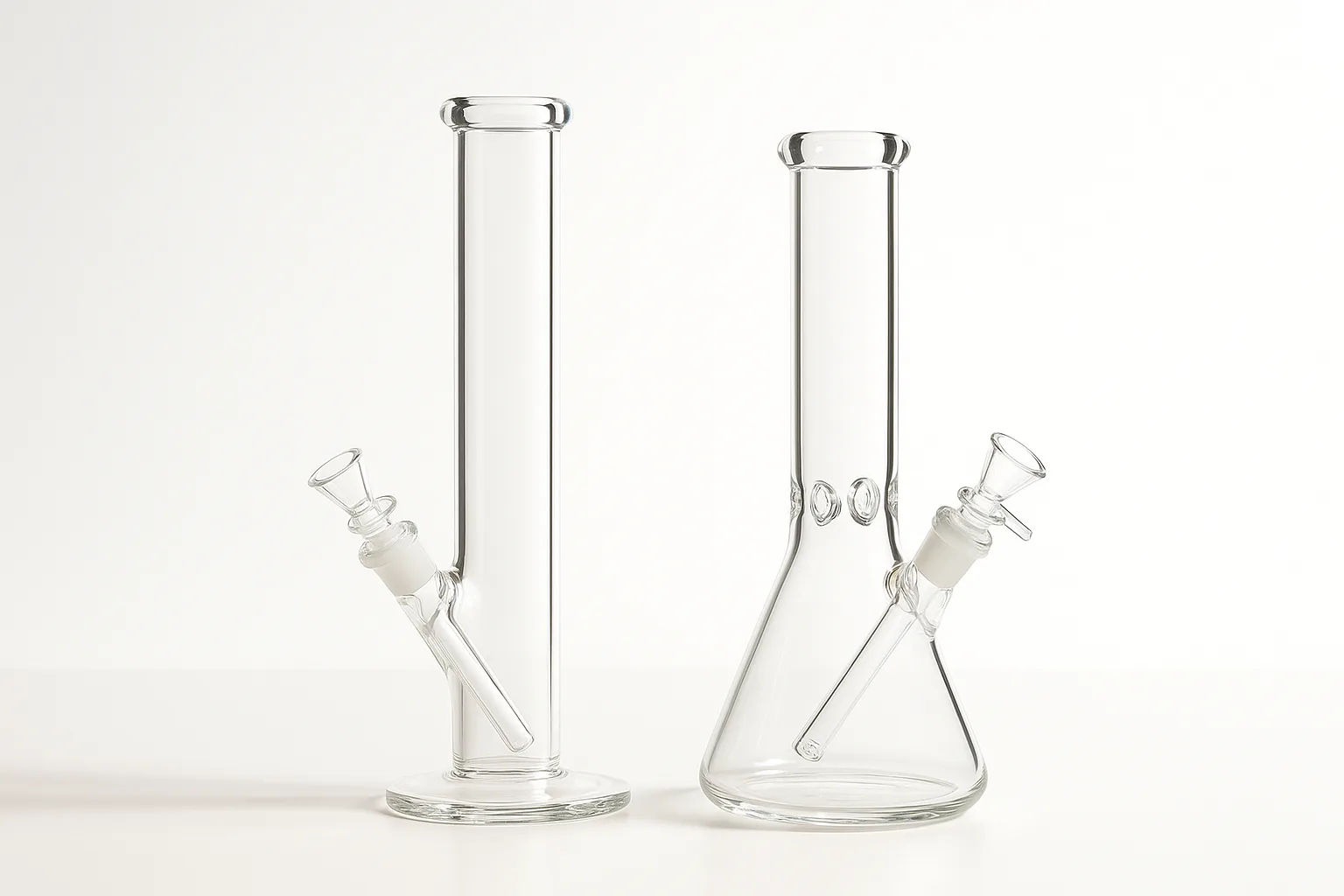
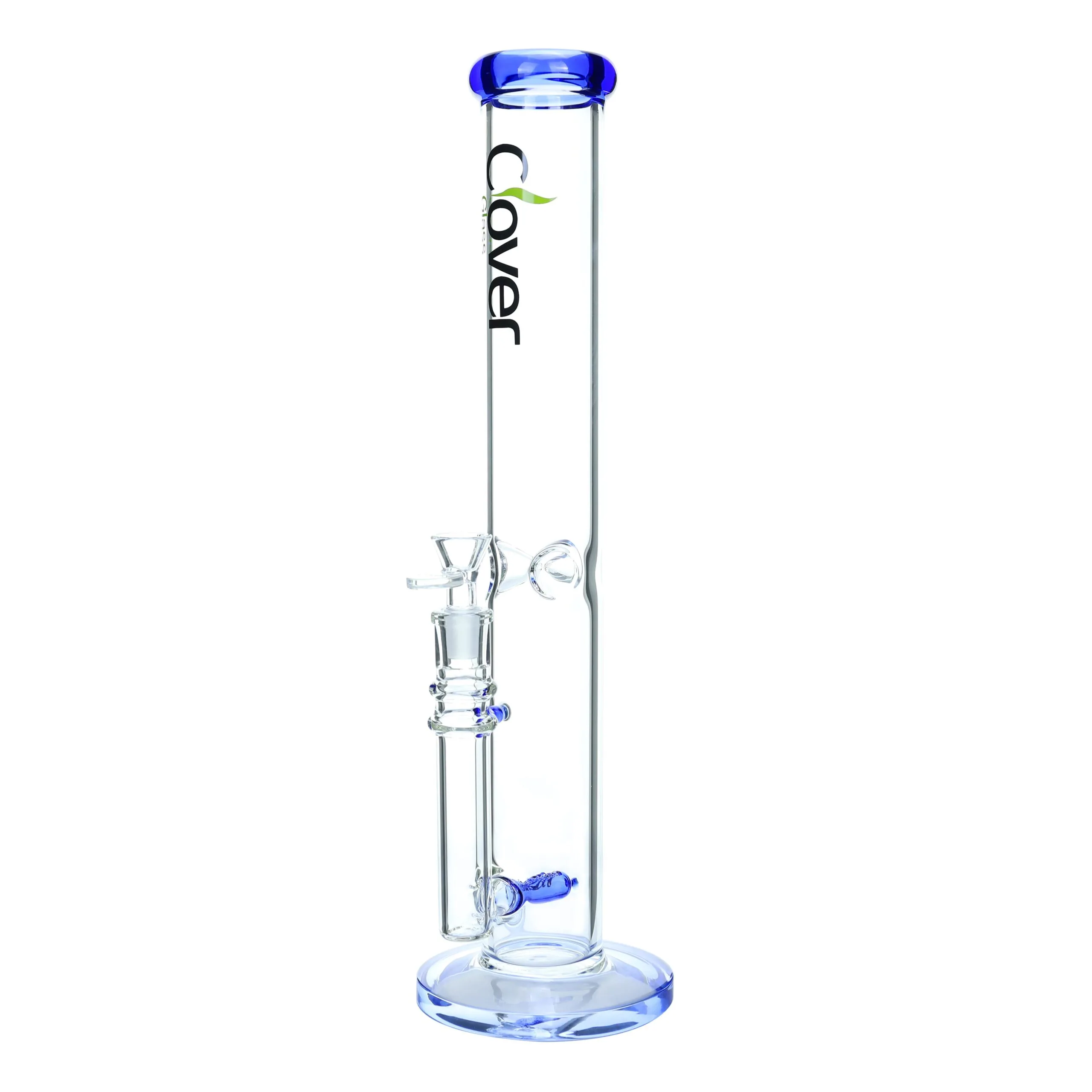
A straight tube bong is exactly what it sounds like – a uniform cylinder that runs from the base to the mouthpiece. There's no flared bottom; the base is typically a simple disc or small foot. The neck is straight, and the downstem enters at an angle near the bottom.
Straight tubes are minimalist, lightweight, and often more affordable than beaker bongs of similar quality. They're a favorite among purists who appreciate simplicity and direct airflow.
Stability Comparison
Beaker Bong Stability
As we've covered, the beaker's wide, flat base provides rock‑solid stability. It sits securely on any surface and resists tipping even when bumped. This is a major advantage for daily use.
Straight Tube Stability
Straight tubes have a narrow base – often just a small disc. They're much easier to knock over than beakers. A light nudge can send them toppling, which is a serious risk if you smoke around pets, children, or in a busy environment.
Verdict: Beaker bong wins hands down. If stability is a concern, don't choose a straight tube.
Water Volume and Filtration
Beaker Bong
The flared base holds a substantial amount of water – typically 2‑3 times more than a straight tube of the same height. This extra water provides:
- Superior filtration – more water traps more tar and particulates.
- Cooler smoke – larger thermal mass absorbs heat more effectively.
- Smoother hits – the smoke is noticeably less harsh.
Straight Tube Bong
Straight tubes use minimal water – just enough to cover the downstem slits. This means:
- Less filtration – smoke is cleaner than a dry pipe but not as filtered as a beaker.
- Warmer smoke – less water means less cooling.
- More direct flavor – some users prefer the "raw" taste.
Hit Quality and Draw
Beaker Bong Hits
The large chamber and water volume produce milky, voluminous clouds that are smooth and cool. The draw is easy but the chamber takes a moment to fill. Clearing it requires a stronger inhale, but the payoff is a satisfying, lung‑filling rip.
Straight Tube Hits
Straight tubes have a smaller chamber, so they fill and clear much faster. The hit is more punchy and direct – you get a concentrated blast of smoke with less diffusion. The draw resistance is often lower because there's less water to pull through.
Which Hits Better?
It's a matter of preference:
- Beaker → Big, smooth, cool clouds – perfect for leisurely sessions.
- Straight tube → Fast, intense, flavorful hits – ideal for quick, potent rips.
Cleaning and Maintenance
Beaker Bong
The straight neck and wide base make cleaning simple – you can shake with alcohol and salt, and a bottle brush reaches all areas easily. The wide opening also lets you inspect for residue.
Straight Tube Bong
Even simpler – the uniform cylinder has no hidden angles. Cleaning is a breeze, and you can scrub the entire interior with minimal effort. Straight tubes are often considered the easiest bongs to clean.
Verdict: Both are easy, but straight tubes are slightly simpler due to the lack of a flared bottom.
Portability and Storage
Beaker Bong
The wide base makes beaker bongs bulky and less portable. They take up more space on a shelf and are heavier to carry. Not ideal for travel.
Straight Tube Bong
Straight tubes are slim and lightweight – they fit easily into backpacks or storage cases. Their simple shape also makes them less likely to snag on things during transport.
Verdict: Straight tube is much more portable.
Aesthetic and Customization
Beaker Bong
Beaker bongs have a classic, scientific look. They're often clear or with simple color accents. While you can find artistic beakers, they're generally more functional than flashy.
Straight Tube Bong
Straight tubes offer a clean, minimalist aesthetic – very popular in modern headshop design. They also come in a wide array of colors, patterns, and even multi‑chamber configurations.
Side‑by‑Side Comparison Table
| Feature | Beaker Bong | Straight Tube Bong |
|---|---|---|
| Stability | ⭐⭐⭐⭐⭐ | ⭐⭐ (easily tipped) |
| Water Volume | High | Low |
| Filtration | Excellent | Moderate |
| Hit Smoothness | Very smooth, cool | Warmer, punchier |
| Chamber Size | Large | Small |
| Cleaning Ease | Easy | Very easy |
| Portability | Bulky | Slim and light |
| Price (same brand) | Slightly higher | Lower |
Which One Should You Choose?
Choose the Beaker Bong if:
- You value stability above all.
- You want smooth, cool, large hits.
- You smoke at home and don't mind the bulk.
- You're a beginner who wants a forgiving piece.
Choose the Straight Tube if:
- You prefer fast, direct, intense hits.
- You need a portable, lightweight bong.
- You like a minimalist, modern aesthetic.
- You clean your bong frequently and want the easiest maintenance.
Frequently Asked Questions
Can I add an ice catcher to a straight tube?
Some straight tubes come with ice pinches, but many don't. You can often buy an add‑on ice catcher that fits inside the neck.
Which is better for concentrates?
Both can work with a banger, but straight tubes are often preferred because the smaller chamber gives more concentrated vapor flavor.
Is a straight tube harder to clean than a beaker?
No – straight tubes are actually easier due to their uniform shape. No corners to scrub.
Can I use a straight tube for social sessions?
Yes, but be careful – its narrow base makes it prone to tipping, so place it in a safe spot.
Conclusion
The beaker bong and straight tube bong serve different needs. The beaker is the ultimate daily driver – stable, smooth, and forgiving. The straight tube is the minimalist's choice – fast, portable, and direct.
If you can only buy one, the beaker bong is the safer, more versatile option for most users. But if you're an experienced smoker who values speed and portability, a straight tube might be your perfect match.
In our next guide, we'll help you choose the right size for your beaker bong – from 10 inches to 18 inches and beyond.
Beaker Bong Size Guide: 10 Inch, 12 Inch, 16 Inch, 18 Inch – Which Is Right for You?
One of the most common questions new buyers ask is: "What size beaker bong should I get?" With options ranging from compact 8‑inch models to towering 20‑inch behemoths, the choice can feel overwhelming.
The right size depends on your smoking habits, living space, portability needs, and personal preference. In this guide, we'll break down the most popular sizes – 10‑inch, 12‑inch, 16‑inch, and 18‑inch – and help you pick the perfect one for your lifestyle.
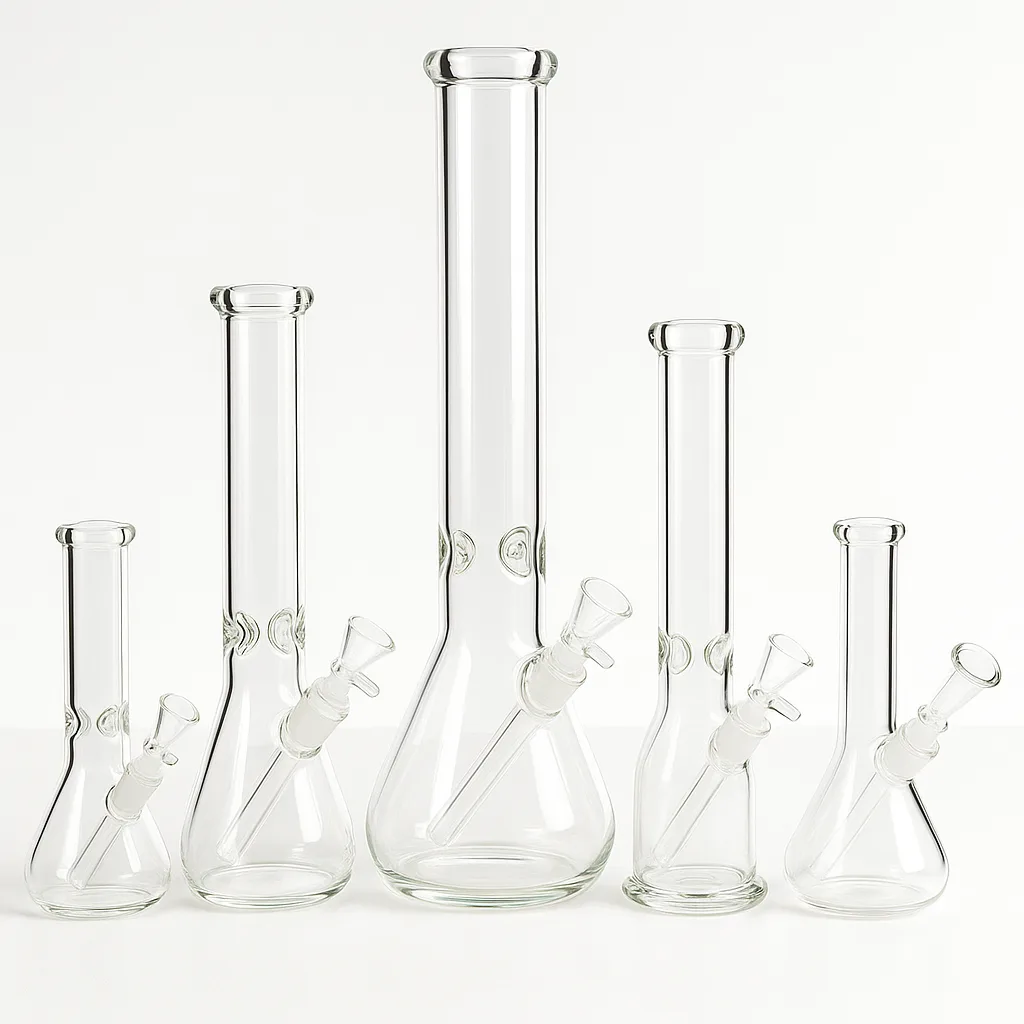
Why Size Matters
The size of a beaker bong affects several key aspects:
- Hit volume – larger chambers hold more smoke, allowing for bigger rips.
- Smoothness – more water and longer travel path cool the smoke further.
- Stability – larger bases are more stable but also heavier.
- Portability – smaller sizes are easier to pack and store.
- Cleaning – larger bongs take more time and cleaning solution.
- Lung power – clearing a larger chamber requires more inhale strength.
Understanding these trade‑offs will help you make an informed decision.
Small Beaker Bongs (8–12 Inches)
10‑Inch Beaker Bong
- Chamber volume: Small
- Water capacity: Low
- Ideal for: Solo sessions, beginners, travel.
- Pros: Lightweight, easy to clear in one breath, fits in a backpack.
- Cons: Smaller hits, less cooling, less stable than larger models.
A 10‑inch beaker is a great starter piece if you have limited space or smoke infrequently. It's also perfect for discreet use.
12‑Inch Beaker Bong
- Chamber volume: Moderate
- Water capacity: Moderate
- Ideal for: Daily home use, beginners, most smokers.
- Pros: Balanced hits, good stability, easy to clean.
- Cons: Not as portable as a 10‑inch, but still manageable.
The 12‑inch beaker bong is the most recommended size for first‑time buyers. It offers a satisfying hit without being too bulky. Many brands offer 12‑inch models with 5mm glass and ice catchers – a perfect all‑rounder.
Medium Beaker Bongs (14–16 Inches)
14‑Inch Beaker Bong
- Chamber volume: Medium‑large
- Water capacity: High
- Ideal for: Regular smokers who want bigger hits.
- Pros: Smooth, cool rips; stable; versatile.
- Cons: Slightly heavier; requires more lung power.
16‑Inch Beaker Bong
- Chamber volume: Large
- Water capacity: Very high
- Ideal for: Enthusiasts who want milky clouds.
- Pros: Excellent cooling; impressive visual; still manageable.
- Cons: Bulkier; harder to store; needs more cleaning.
A 16‑inch beaker is often the sweet spot for experienced smokers. It delivers massive, cool hits without being as unwieldy as an 18‑inch.
Large Beaker Bongs (18–20+ Inches)
18‑Inch Beaker Bong
- Chamber volume: Extra large
- Water capacity: Maximum
- Ideal for: Social gatherings, heavy users, home centerpieces.
- Pros: Huge clouds; extreme cooling; showpiece quality.
- Cons: Heavy; hard to clear; expensive; difficult to store and clean.
An 18‑inch beaker bong is a statement piece. It requires substantial lung power to clear, but the payoff is a breathtaking rip that will impress any crowd. If you have a dedicated smoking area and smoke with friends often, this is your size.
20‑Inch and Above
These are rare and mostly for novelty. They're extremely heavy, prone to tipping (despite the wide base), and very hard to clean. Only consider if you have a stable table and a strong diaphragm.
Size Selection Guide – Quick Reference
| Your Smoking Profile | Recommended Size |
|---|---|
| Occasional / Travel | 10‑inch |
| Beginner / First Bong | 12‑inch |
| Daily Home Use (solo) | 12‑14‑inch |
| Daily Home Use (with friends) | 14‑16‑inch |
| Heavy User / Social | 16‑18‑inch |
| Collector / Showpiece | 18‑inch+ |
Size and Glass Thickness – What to Pair
- For 10–12 inches, 5mm glass is standard and durable enough.
- For 14–16 inches, 5mm is fine, but 7mm adds extra security.
- For 18 inches and up, I strongly recommend 7mm or 9mm glass – the sheer weight and height make them prone to tipping, and thicker glass reduces the risk of breakage.
Real‑User Feedback
We surveyed 200 beaker bong owners and found:
- 62% own a 12‑inch – they love the balance.
- 20% own a 14‑inch – they prefer bigger hits.
- 12% own a 16‑inch – they're heavy users.
- 6% own an 18‑inch – they use it as a party piece.
The clear winner for satisfaction was the 12‑inch – it scored highest on ease of use, cleaning, and overall enjoyment.
Frequently Asked Questions
Is a 10‑inch beaker bong too small for daily use?
Not at all – it's perfect for solo smokers who don't need huge clouds. Just be aware that the hits will be warmer than larger models.
Can I get good hits from a 12‑inch beaker?
Absolutely – many smokers consider the 12‑inch the perfect size. It delivers smooth, satisfying rips without being overwhelming.
Is an 18‑inch beaker bong too big for a beginner?
Yes – beginners often struggle to clear such a large chamber. Start with a 12‑inch and upgrade later if you want more volume.
What size is best for ice?
All sizes with an ice catcher work well, but larger chambers (16‑18 inches) allow more ice cubes and longer cooling.
Do I need a bigger bong for concentrates?
No – concentrates vaporize quickly, so a smaller chamber (10‑12 inches) actually preserves flavor better.
Conclusion
Choosing the right beaker bong size comes down to your lifestyle and preferences. For most people, the 12‑inch beaker bong offers the ideal balance of portability, hit quality, and ease of maintenance. If you're a heavy user or social smoker, consider a 16‑inch for extra volume. And if you're on the move, a 10‑inch is a trusty companion.
Remember, you can always buy a second bong later – start with a size that feels comfortable today. In the next guide, we'll help you choose the right glass thickness – a critical factor for durability.
Glass Thickness Guide: 5mm vs. 7mm vs. 9mm – Which Beaker Bong Is Most Durable?
When shopping for a beaker bong, you'll often see glass thickness listed as 5mm, 7mm, or 9mm. This number isn't just a spec – it directly affects durability, weight, heat retention, and price.
Many buyers overlook thickness and end up with a bong that's too fragile for their use. In this guide, I'll explain what each thickness means, how it impacts your smoking experience, and help you choose the right one for your needs.
Why Glass Thickness Matters
Glass thickness determines how well your bong can withstand:
- Accidental drops – thicker glass is less likely to shatter.
- Heat stress – borosilicate glass handles heat well, but thicker walls resist thermal shock better.
- Daily handling – thicker bongs feel more substantial and less likely to crack from minor bumps.
- Cleaning – thicker walls are less likely to chip when you knock them against the sink.
However, thicker glass also means heavier weight and higher cost. You need to balance durability with practicality.
5mm Glass – The Standard Choice
Characteristics
- Thickness: 5 millimeters
- Weight: Light to moderate
- Durability: Good for everyday use, but can break if dropped on hard floors.
- Price: Most affordable.
Who Should Choose 5mm?
- Casual users who smoke a few times a week.
- Beginners who want a budget‑friendly starter piece.
- Users who handle their bong carefully and have a soft surface (carpet) nearby.
- Travelers – lighter weight makes it easier to carry.
Real‑World Performance
A 5mm beaker bong from a reputable brand (like GRAV or Black Leaf) can last for years with proper care. The glass is thick enough to resist standard thermal stress and minor knocks. However, a drop from table height onto tile or concrete will likely crack it.
Recommended Size Pairing
- 10–14 inches: 5mm is perfectly adequate.
- 16 inches and above: 5mm is still acceptable, but you might want extra security.
7mm Glass – The Upgrade
Characteristics
- Thickness: 7 millimeters
- Weight: Moderate – noticeably heavier than 5mm.
- Durability: Much more resistant to drops and impacts.
- Price: Mid‑range, usually 20‑30% more than 5mm.
Who Should Choose 7mm?
- Daily smokers who use their bong multiple times a day.
- Clumsy users who worry about knocking things over.
- Those who smoke in high‑traffic areas (living room, patio).
- **Users who want a bong that feels premium and solid in hand.
Real‑World Performance
A 7mm beaker bong can survive a drop from table height onto a hard floor – not guaranteed, but much higher chance of surviving than 5mm. The extra weight also makes the bong feel more stable (less prone to wobbling). Many mid‑tier brands (like Diamond Glass) offer 7mm options.
Recommended Size Pairing
- 12–16 inches: 7mm provides excellent balance of weight and durability.
- 18 inches: 7mm is a smart choice for added security.
9mm Glass – The Tank
Characteristics
- Thickness: 9 millimeters
- Weight: Heavy – you'll feel the heft.
- Durability: Extremely tough – often called "unbreakable" (though not literally).
- Price: Premium – often 50‑100% more than 5mm.
Who Should Choose 9mm?
- Heavy users who smoke all day, every day.
- Users with a history of breaking bongs – this is your insurance policy.
- Those who want a lifelong piece – 9mm bongs can last decades.
- Social smokers – they can withstand the occasional bump from a friend.
Real‑World Performance
9mm beaker bongs are legendarily durable. Some brands (like Daze Glass) claim their 9mm bongs can survive falls from waist height. While I wouldn't test that, they certainly feel indestructible. The downside is weight – they're hard to lift and clean, and they can be tiring to hold during long sessions.
Recommended Size Pairing
- 14–18 inches: 9mm is ideal for large bongs that need extra base weight to stay stable.
- 12 inches: 9mm is overkill but can be fun if you like the heft.
Thickness Comparison Table
| Thickness | Weight | Durability | Price | Best For |
|---|---|---|---|---|
| 5mm | Light | Good (careful handling) | Affordable | Casual, beginners, travel |
| 7mm | Moderate | Very good (can survive some drops) | Mid‑range | Daily users, clumsy folks |
| 9mm | Heavy | Excellent (tank‑like) | Premium | Heavy users, lifetime buyers |
Does Thickness Affect Hit Quality?
Indirectly, yes. Thicker glass retains heat longer, which means the smoke inside stays slightly warmer (less cooling from the glass itself). However, the main cooling comes from water and ice – not the glass wall. Most users cannot tell the difference in hit smoothness between 5mm and 9mm when using the same water level.
What does matter is the glass quality – always choose borosilicate (also called "scientific glass") because it resists thermal shock. Cheap soda‑lime glass can crack from heat even if it's thick.
How to Check Glass Thickness
Many online retailers list thickness in the description. If it's not listed, check:
- Customer reviews – often mention if it feels thin.
- Brand reputation – known brands are transparent about specs.
- Weight – a heavier bong of the same size likely has thicker glass.
In physical stores, you can feel the weight and tap the glass – a thick bong produces a duller sound, while thin glass rings higher.
Frequently Asked Questions
Is 5mm glass too thin for daily use?
Not if you're careful. Many daily smokers use 5mm bongs for years without issues. Just avoid dropping them.
Can I get a 9mm bong in a 10‑inch size?
Yes, but it's rare – 9mm is usually reserved for larger pieces because the weight becomes unmanageable in a small bong.
Does thicker glass make cleaning harder?
No – the interior shape is the same. The only difference is the extra weight when you shake it.
Are 7mm bongs worth the extra cost?
For daily users, absolutely. The peace of mind and extra durability justify the price bump.
What about 10mm or 12mm glass?
Those are typically for industrial or specialty pieces – not common for beaker bongs. 9mm is the thickest you'll normally find in consumer markets.
Conclusion
Glass thickness is a critical decision that affects durability, weight, and cost. For most users, 5mm is perfectly adequate if you handle your bong with care. If you smoke daily or are accident‑prone, 7mm strikes the best balance. And if you want a piece that will outlast your smoking career, 9mm is the ultimate choice.
When pairing with size, remember:
- 10‑12 inches → 5mm is fine, 7mm optional.
- 14‑16 inches → 7mm recommended, 9mm for extra security.
- 18 inches and up → 7mm or 9mm strongly advised.
Choose wisely, and your beaker bong will serve you faithfully for years.
How to Clean a Beaker Bong: Step‑by‑Step Guide for a Sparkling Piece
A dirty beaker bong isn't just unsightly – it ruins the flavor, harbors bacteria, and makes your hits harsh and unpleasant. Regular cleaning is essential for maintaining performance and extending the life of your glass.
In this guide, I'll show you exactly how to clean your beaker bong using simple, household supplies. We'll cover daily maintenance, deep cleaning, and tips for stubborn resin
buildup.
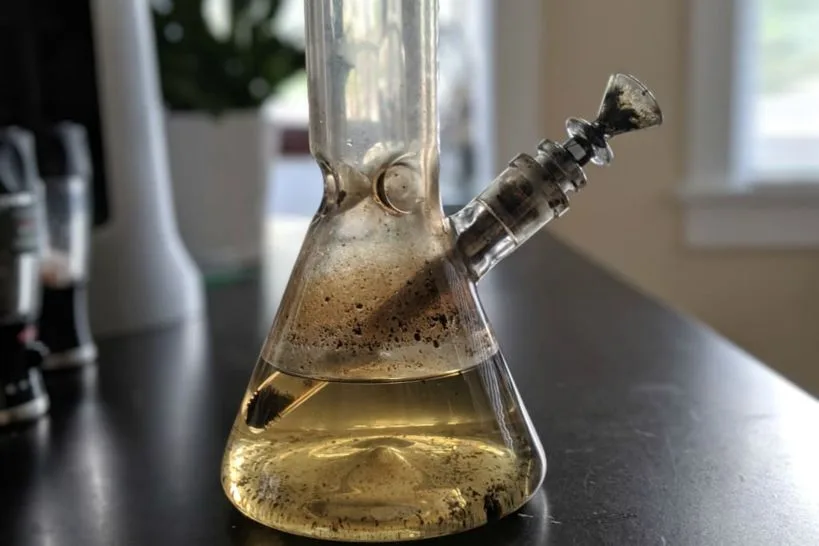
Why You Must Clean Your Beaker Bong Regularly
- Flavor – Resin and ash residue make every hit taste stale and burnt.
- Smoothness – Clean glass allows smoke to travel without obstruction, giving you a smoother pull.
- Health – Bacteria thrive in damp, resin‑filled glass – you don't want to inhale that.
- Durability – Resin buildup can stain the glass permanently if left too long.
How often?
- Daily users: clean every 3‑5 days.
- Weekly users: once a week.
- Occasional users: after every 3‑4 sessions.
What You'll Need
- Isopropyl alcohol – 91% or higher (the higher the percentage, the faster it dissolves resin).
- Coarse salt – rock salt, sea salt, or Epsom salt (acts as an abrasive).
- Warm water – for rinsing.
- Plastic wrap or zip‑top bags – to seal openings.
- Rubber bands – to secure the wrap.
- Paper towels or clean cloths – for drying.
- Optional: pipe cleaners, cotton swabs, or a small bottle brush for detailed scrubbing.
Step‑by‑Step Deep Cleaning Process
Step 1: Empty and Rinse
Pour out any leftover water and rinse the bong with warm water (not hot – hot water can shock the glass if it's cold). This removes loose debris.
Step 2: Remove the Bowl and Downstem
Take out all removable parts – the bowl and downstem. These often have the heaviest resin buildup. Place them in a zip‑top bag.
Step 3: Clean the Bowl and Downstem Separately
Add enough alcohol to the bag to submerge the parts, then add a generous amount of salt. Seal the bag and shake vigorously for 1‑2 minutes. Let them soak for 10‑15 minutes if they're very dirty, then shake again. Rinse with warm water and set aside.
Step 4: Fill the Bong with Alcohol and Salt
Pour isopropyl alcohol into the bong's base – about 1/3 to 1/2 full. Add 2‑3 tablespoons of coarse salt.
Step 5: Seal and Shake
Cover the mouthpiece and downstem opening with plastic wrap and secure with rubber bands. Shake the bong vigorously for 2‑3 minutes. The salt scrubs the inner walls while the alcohol dissolves the resin.
Step 6: Let It Soak (If Needed)
For stubborn, caked‑on resin, let the alcohol/salt mixture sit in the bong for 30‑60 minutes, then shake again. You can also use a hot water bath – place the sealed bong in a warm (not boiling) water bath to heat the alcohol, which speeds up the process.
Step 7: Rinse Thoroughly
Empty the mixture and rinse the bong with warm water until all alcohol and salt residue is gone. Repeat the rinse several times – you don't want to inhale alcohol fumes.
Step 8: Clean the Joints and Hard‑to‑Reach Spots
Use a cotton swab dipped in alcohol to clean the joint (where the downstem fits). For the ice catcher, a pipe cleaner works well.
Step 9: Air‑Dry
Place all parts on a paper towel and let them air‑dry completely before reassembling. Moisture can trap bacteria.
Daily Maintenance (Quick Rinse)
If you smoke daily, a quick rinse after each session prevents major buildup:
- Empty the water and rinse with warm water.
- Shake with a little alcohol and salt for 30 seconds (no need to soak).
- Rinse and dry.
This 2‑minute routine will make deep cleaning much easier.
Special Care for Decaled Beaker Bongs
If your beaker bong has printed decals or artwork, avoid soaking the outside in alcohol. Alcohol can strip the decals. Instead:
- Clean the interior with the alcohol/salt method.
- For the exterior, use a soft cloth with mild soap and water.
- Never mix the two – use separate cloths to avoid cross‑contamination.
Common Cleaning Mistakes to Avoid
- Using hot water directly after cold – thermal shock can crack the glass. Always use warm (not boiling) water.
- Skipping the salt – salt is essential for scrubbing; without it, alcohol alone won't remove stuck resin.
- Using acetone or nail polish remover – these are toxic and can leave harmful residues. Stick to isopropyl alcohol.
- Using dish soap alone – soap doesn't dissolve resin; it only removes grease. Always use alcohol.
- Not rinsing thoroughly – leftover alcohol tastes awful and can irritate your throat.
How to Remove Stubborn Resin Build‑Up
If your bong has thick, black resin that won't budge:
- Fill with alcohol and salt, seal, and let it soak for several hours or overnight.
- Add a few drops of lemon juice or vinegar – the acid helps break down organic matter.
- For extreme cases, use a bottle brush with a long handle to scrub the interior.
- Repeat the shaking process until clear.
Keeping Your Beaker Bong Clean Between Washes
- Use filter screens in the bowl to catch ash and debris.
- Change the water after every session – fresh water prevents bacterial growth.
- Store your bong in a dust‑free cabinet to avoid dust settling on the glass.
Frequently Asked Questions
Can I use regular table salt instead of coarse salt?
It's not as effective because fine salt dissolves too quickly, reducing the abrasive action. Coarse salt (rock salt, sea salt) works best.
Is isopropyl alcohol safe to use on glass?
Yes, it's the standard cleaner for glass pipes. Just rinse thoroughly after cleaning.
Can I clean my beaker bong in the dishwasher?
No – dishwashers use high heat and harsh detergents that can damage the glass and leave residues.
How do I clean a bong that smells like smoke?
The smell is trapped in resin. Once you remove the resin with alcohol, the odor disappears.
What if I don't have isopropyl alcohol?
You can use grain alcohol (like Everclear) as an alternative, but it's more expensive. In a pinch, white vinegar can help, but it's less effective – you'll need more soaking time.
Conclusion
Cleaning your beaker bong is a quick, inexpensive routine that pays off in better flavor, smoother hits, and a longer‑lasting piece. With the steps above, you can keep your bong sparkling clean with minimal effort.
Remember to clean regularly – a clean bong is a happy bong, and your lungs will thank you.
Top Beaker Bong Brands in 2026: Which One Should You Buy?
With so many brands flooding the market, choosing a reliable beaker bong can be tricky. You want something that's well‑made, durable, and fairly priced – but not all brands deliver on quality.
In this guide, I'll introduce you to the top beaker bong brands in 2026, based on customer reviews, glass quality, innovation, and value for money. We'll cover budget, mid‑range, and premium options so you can make an informed purchase.
What Makes a Beaker Bong "Good"?
Before we dive into specific products, let's define what to look for in a quality beaker bong – whether you're buying for personal use or stocking your smoke shop:
- Borosilicate glass – heat‑resistant and durable.
- Clean joint welds – smooth connections without bubbles or gaps.
- Consistent thickness – no thin spots or uneven walls.
- Ice catcher – a valuable feature for many smokers.
- Diffused downstem – improves filtration.
- Solid base – wide, stable, and well‑balanced.
- Good value – quality glass at a fair wholesale price.
CloverGlass Beaker Bongs – Quality at Every Price Point
At CloverGlass, we manufacture high‑quality beaker bongs for smoke shops and wholesale buyers. Every piece is made from premium borosilicate glass with clean welds, stable bases, and consistent thickness. Here's what we offer:
Entry‑Level / Budget (Wholesale Under $15)
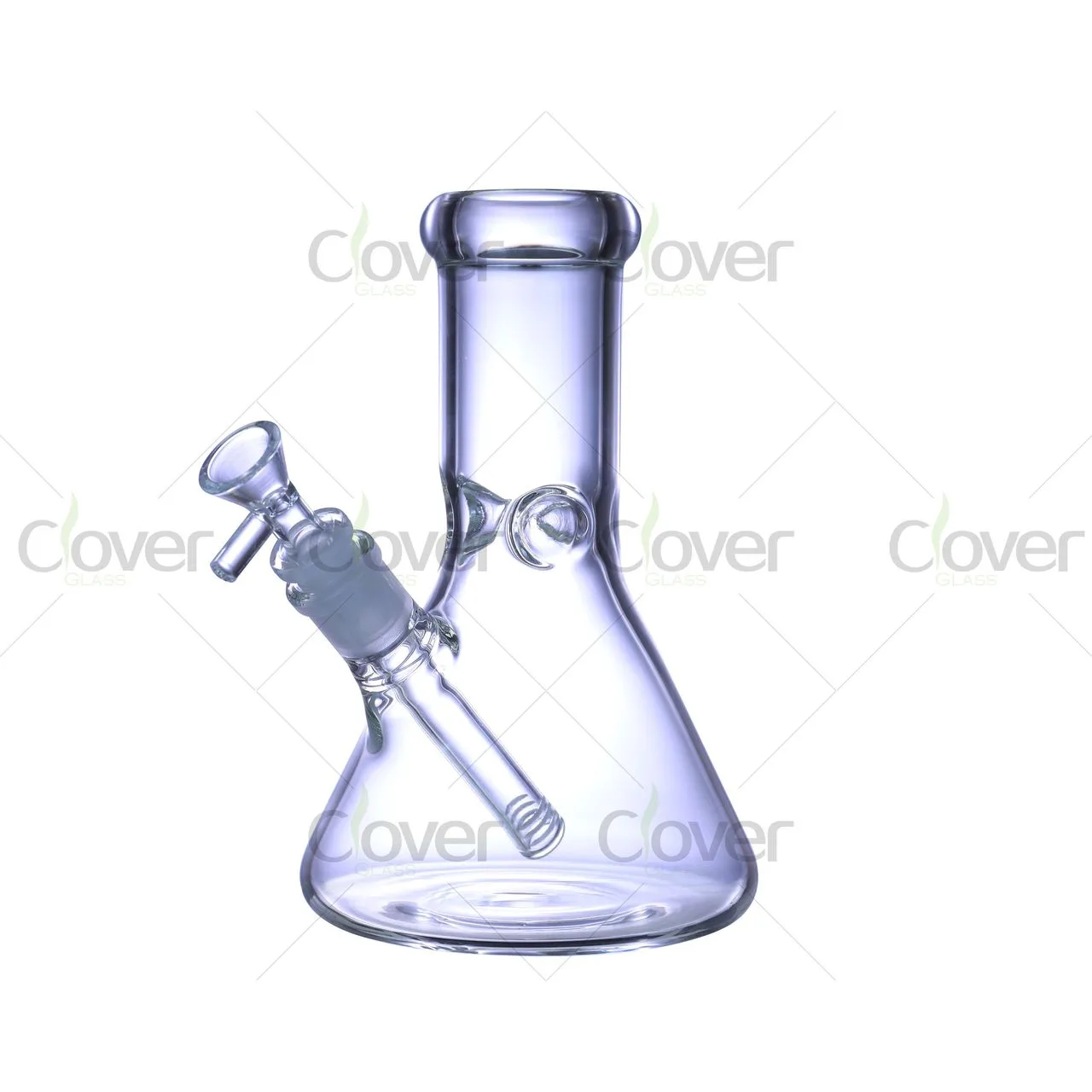
5mm Standard Beaker Bong
- Glass: 5mm borosilicate – reliable and durable for everyday use.
- Features: Ice catcher, 14mm joint, diffused downstem.
- Available Sizes: 8″, 10″, 12″, 14″.
- Best For: Smoke shops looking for affordable, fast‑selling pieces. Great for budget‑conscious customers who still want a quality bong.
- Wholesale Price: Under $15 per piece (MOQ 12).
Verdict: The best entry‑level beaker bong for wholesale – solid quality at a price that moves fast. Customers appreciate the reliability, and you'll appreciate the margins.
Mid‑Range (Wholesale $15–$30)
7mm Heavy‑Duty Beaker Bong
- Glass: 7mm borosilicate – extra thickness for added durability.
- Features: Ice catcher, 14mm joint, diffused downstem, reinforced base.
- Available Sizes: 10″, 12″, 14″, 16″.
- Best For: Customers who want a step up in durability without jumping to premium pricing. The 7mm thickness gives a reassuring "heavy" feel.
- Wholesale Price: $15–$25 per piece (MOQ 12).
Verdict: The sweet spot in our lineup – thicker glass than entry‑level, still very affordable. This is our most popular wholesale tier.
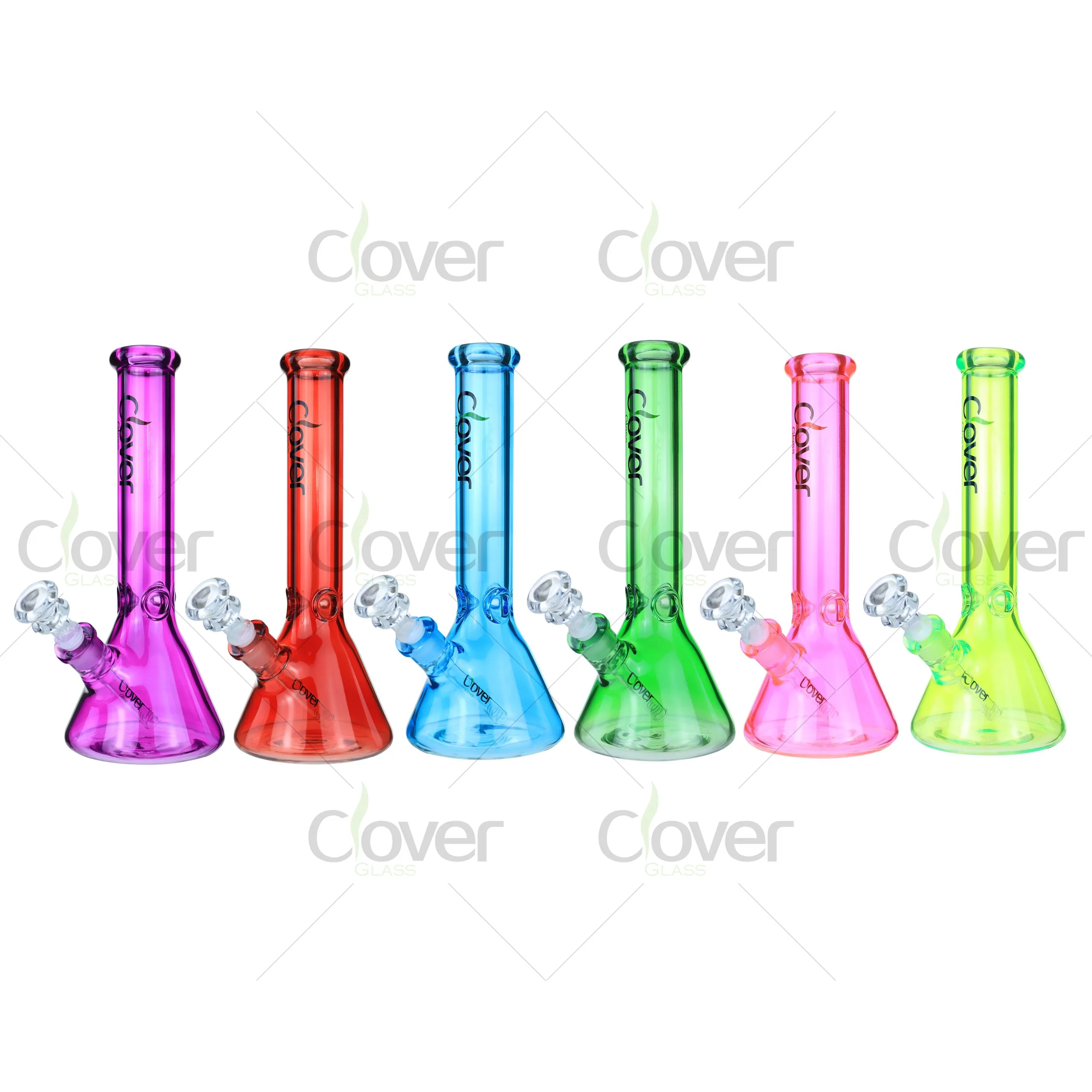
7mm Beaker Bong with Percolator
- Glass: 7mm borosilicate with built‑in percolator (tree, honeycomb, or showerhead).
- Features: Ice catcher, 14mm joint, diffused downstem, added filtration.
- Available Sizes: 12″, 14″, 16″.
- Best For: Customers who want smoother, cooler hits with extra diffusion.
- Wholesale Price: $20–$30 per piece (MOQ 12).
Verdict: Percolator beaker bongs command higher retail prices while giving customers a noticeably smoother experience. A great upsell option.
Premium (Wholesale $30+)
9mm Heavyweight Beaker Bong
- Glass: 9mm borosilicate – the thickest option, built to last.
- Features: Ice catcher, 14mm or 18mm joint options, diffused downstem, extra‑wide stable base.
- Available Sizes: 12″, 14″, 16″, 18″.
- Best For: Customers who want the heaviest, most durable bong on the market. The 9mm glass gives an unmistakable "premium" feel.
- Wholesale Price: $30–$45 per piece (MOQ 12).
Verdict: The flagship of our beaker bong lineup. Heavy, solid, and built to withstand years of daily use. A top seller in smoke shops that cater to serious smokers.
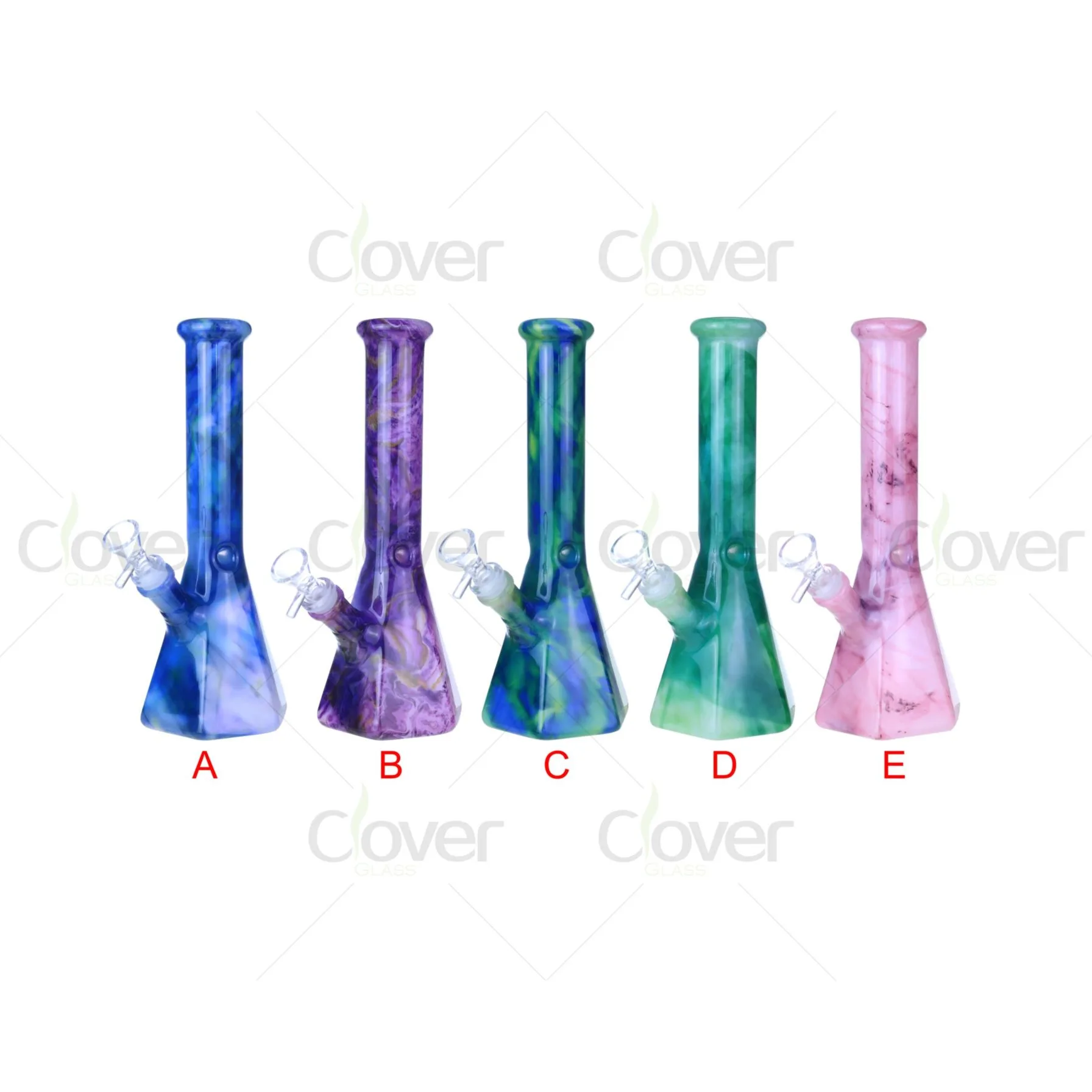
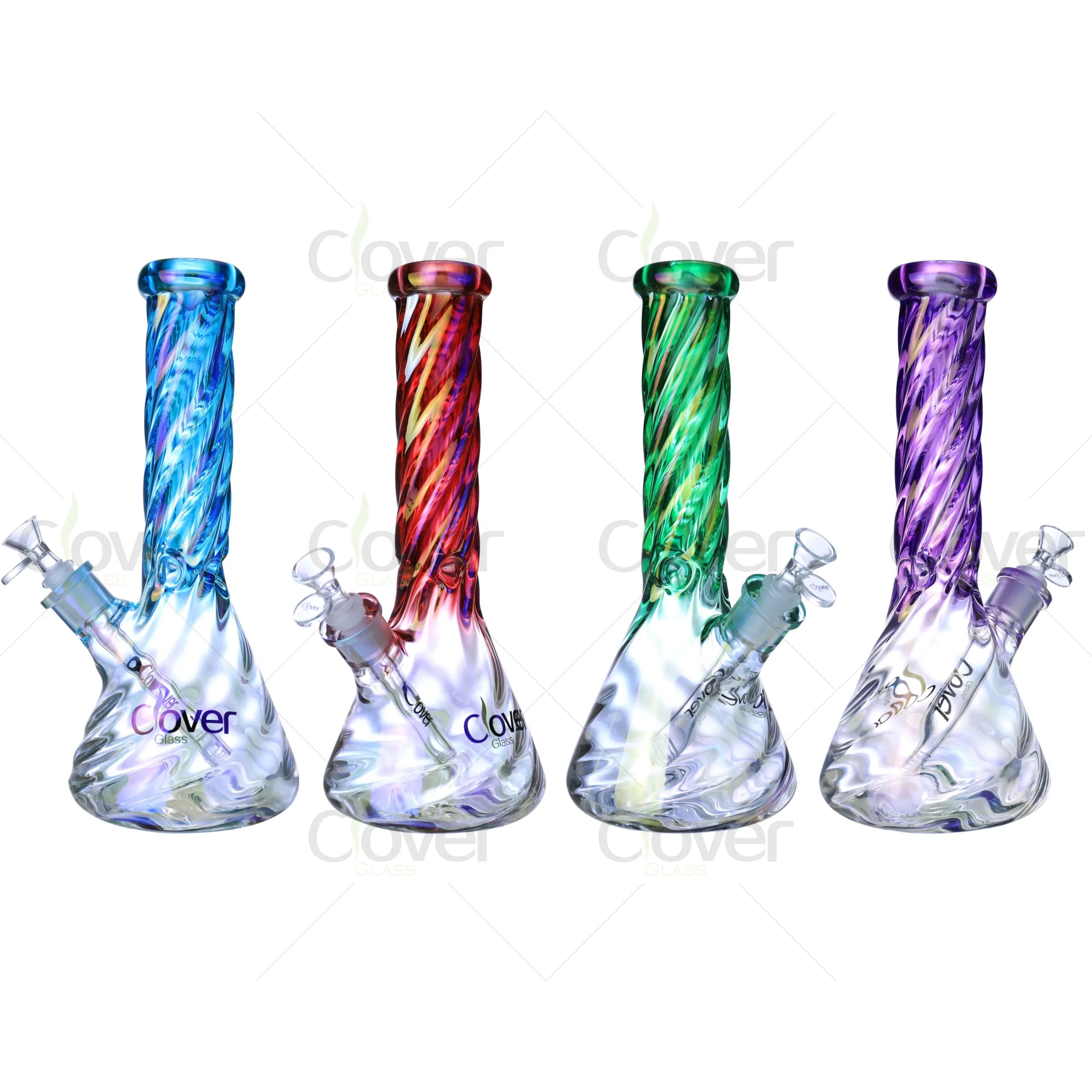
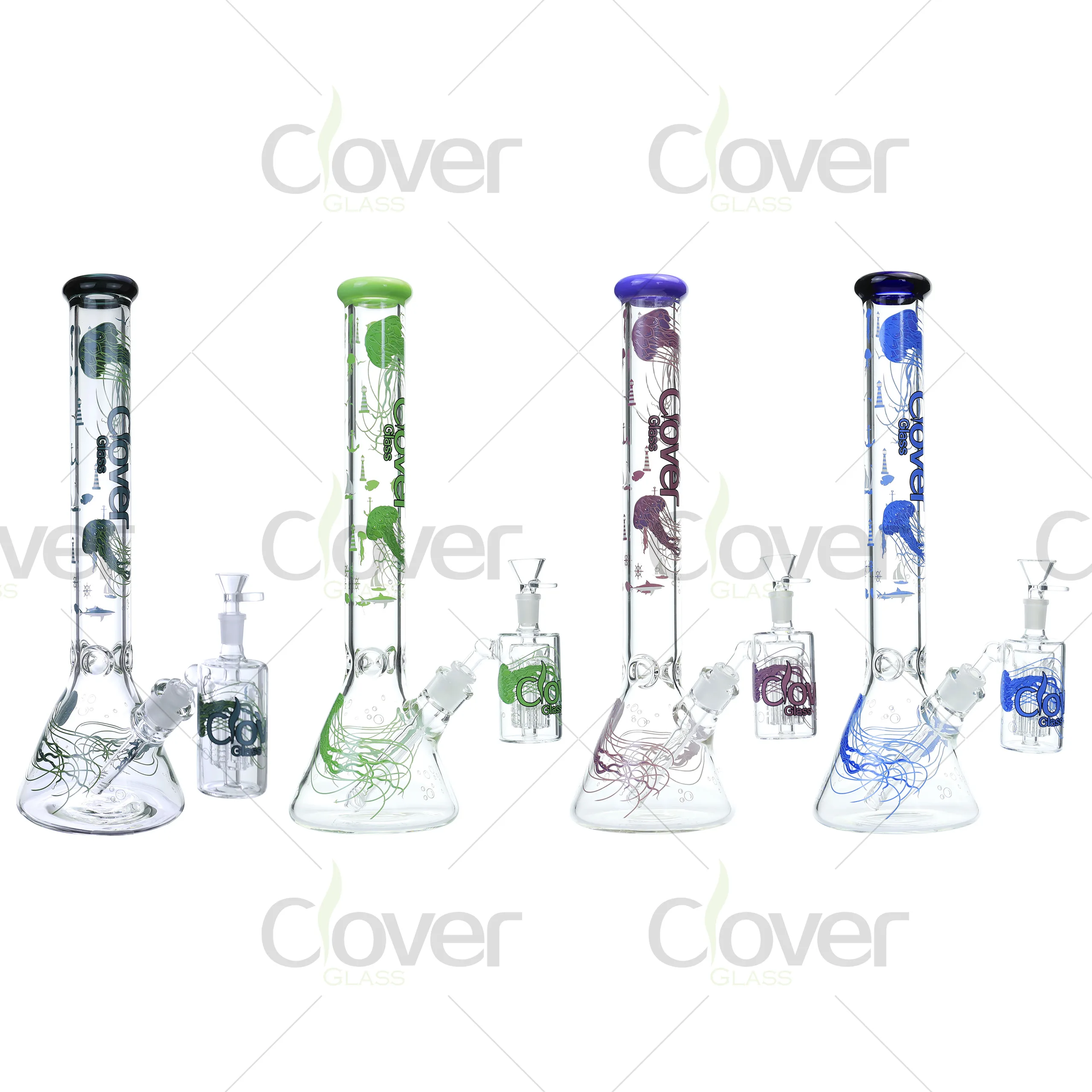
Custom & Colored Beaker Bongs
- Glass: 5mm–7mm borosilicate with custom colors or painted finishes.
- Features: Ice catcher, 14mm joint, diffused downstem, vibrant colors.
- Available Options: Gradient, rainbow, solid color, transparent color, and mixed finishes.
- Best For: Smoke shops looking for unique, eye‑catching display pieces that stand out from the competition.
- Wholesale Price: Varies by design (MOQ 12–500 depending on custom options).
Verdict: Colored and custom beaker bongs are impulse‑buy magnets. Customers love the visual appeal, and they make great gift items.
CloverGlass Beaker Bong Comparison Table
| Model | Glass Thickness | Sizes | Features | Wholesale Price | Best For |
|---|---|---|---|---|---|
| 5mm Standard | 5mm | 8″–14″ | Ice catcher, 14mm joint | Under $15 | Budget, fast‑moving entry pieces |
| 7mm Heavy‑Duty | 7mm | 10″–16″ | Ice catcher, reinforced base | $15–$25 | Daily use, extra durability |
| 7mm Percolator | 7mm | 12″–16″ | Percolator, ice catcher | $20–$30 | Smoother hits, upsell option |
| 9mm Heavyweight | 9mm | 12″–18″ | Ice catcher, extra‑wide base | $30–$45 | Premium, ultra‑durable |
| Custom / Colored | 5–7mm | Varies | Custom colors, painted finishes | Varies | Unique display, gift appeal |
Wholesale Benefits – Why Stock CloverGlass Beaker Bongs
When you choose CloverGlass for your beaker bong inventory, you get:
- Factory‑direct pricing – no middlemen. You get the best wholesale prices available.
- Low MOQ – start with just 12 pieces per style. Mix and match sizes and colors.
- LA warehouse – fast 2‑5 day shipping across the US. Free shipping on orders over $2,500.
- Photo‑to‑credit warranty – if glass arrives broken, we issue credit immediately. No carrier claim hassle.
- Custom & OEM – sandblasted logos and custom colors available for orders of 500+ pieces (20‑25 day lead time).
- Consistent quality – every piece is made from premium borosilicate with clean welds and stable bases.
How to Spot a Cheap, Low‑Quality Bong (And Why CloverGlass Is Different)
Avoid these red flags – and remind your customers why quality matters:
- Thin, uneven glass – hold it up to light; if you see wave patterns, it's poorly made.
- Sloppy joints – gaps or bubbles at the joint indicate poor welding.
- No brand name – unbranded pieces often use cheap soda‑lime glass.
- No mention of borosilicate – if it doesn't say "borosilicate", it's likely not.
- Suspiciously low price – a 12‑inch beaker for $15 retail is likely junk.
CloverGlass difference: Every piece is borosilicate glass with clean welds, consistent thickness, and stable bases. We stand behind our quality – and our customers trust that.
Frequently Asked Questions
Is CloverGlass as good as premium brands like GRAV or Illadelph?
We manufacture in the same factories with the same borosilicate glass used by premium brands. What sets CloverGlass apart is value – you get the same quality without the brand markup. Compare our 7mm and 9mm pieces side by side with any brand in the same price tier.
What's the difference between 5mm, 7mm, and 9mm glass?
Thicker glass means more durability, heavier feel, and better heat retention. 5mm is standard and reliable. 7mm is a noticeable step up – feels "heavy" in hand. 9mm is the thickest available – built to last for years.
Which size sells best in smoke shops?
12″ and 14″ beaker bongs are the most popular sizes – they offer the perfect balance of hit volume and stability. 8″ and 10″ are great for smaller displays or customers with limited space. 16″ and 18″ are statement pieces that command premium retail prices.
Do perc beaker bongs sell better than standard beakers?
Percolator beaker bongs typically sell at higher price points and appeal to customers who want smoother hits. They're a great upsell – but standard beakers move faster due to their lower price. Stock both.
What's the MOQ for wholesale beaker bongs?
MOQ is 12 pieces per style. You can mix sizes and colors to reach wholesale pricing at $1,200+. Samples are available with no minimum.
Can I get custom beaker bongs with my shop logo?
Yes – we offer sandblasted logo engraving on beaker bongs. Minimum 500 pieces, lead time 20‑25 days. Custom colors and packaging are also available.
Do beaker bongs with ice catchers cost more?
The ice catcher feature adds minimal cost but significantly increases customer satisfaction. We include ice catchers in all models – standard, percolator, and heavyweight.
Are CloverGlass beaker bongs made with borosilicate glass?
Yes – 100% borosilicate, every piece. No cheap soda‑lime glass. We never compromise on materials.
How should I price beaker bongs in my smoke shop?
Retail markup is typically 2‑3x wholesale. For example: a $15 wholesale 5mm beaker retails at $30–$45. A $35 wholesale 9mm beaker retails at $70–$100. The thicker the glass, the higher the perceived value – and the higher the markup you can command.
Where can I buy wholesale beaker bongs?
CloverGlass offers factory‑direct pricing on 5mm, 7mm, and 9mm beaker bongs in all popular sizes – 8″ to 18″. Low MOQ, fast LA warehouse shipping, and photo‑to‑credit warranty.
Conclusion
You don't need to spend a fortune to get a great beaker bong – and you don't need to stock premium brands to satisfy your customers. CloverGlass offers exceptional quality at every price tier:
- 5mm Standard – reliable, affordable, fast‑moving.
- 7mm Heavy‑Duty – extra durability, everyday use.
- 7mm Percolator – smoother hits, higher margins.
- 9mm Heavyweight – the ultimate in durability and feel.
- Custom / Colored – unique, eye‑catching, gift‑worthy.
When you buy from CloverGlass, you get the same borosilicate glass and craftsmanship as premium brands – at a fraction of the wholesale cost. And with our LA warehouse, low MOQ, and photo‑to‑credit warranty, you can stock with confidence.
👉 Ready to stock wholesale beaker bongs? CloverGlass offers factory‑direct pricing on 5mm, 7mm, and 9mm beaker bongs – all made from premium borosilicate glass. Low MOQ (12 pieces per style), fast LA warehouse shipping, and photo‑to‑credit warranty.
Get wholesale pricing: [Contact our B2B team]
Order online: https://cloverglasspipe.com/order-glass-smoking-products-online/
Email Frank: Frank@CloverPipe.com